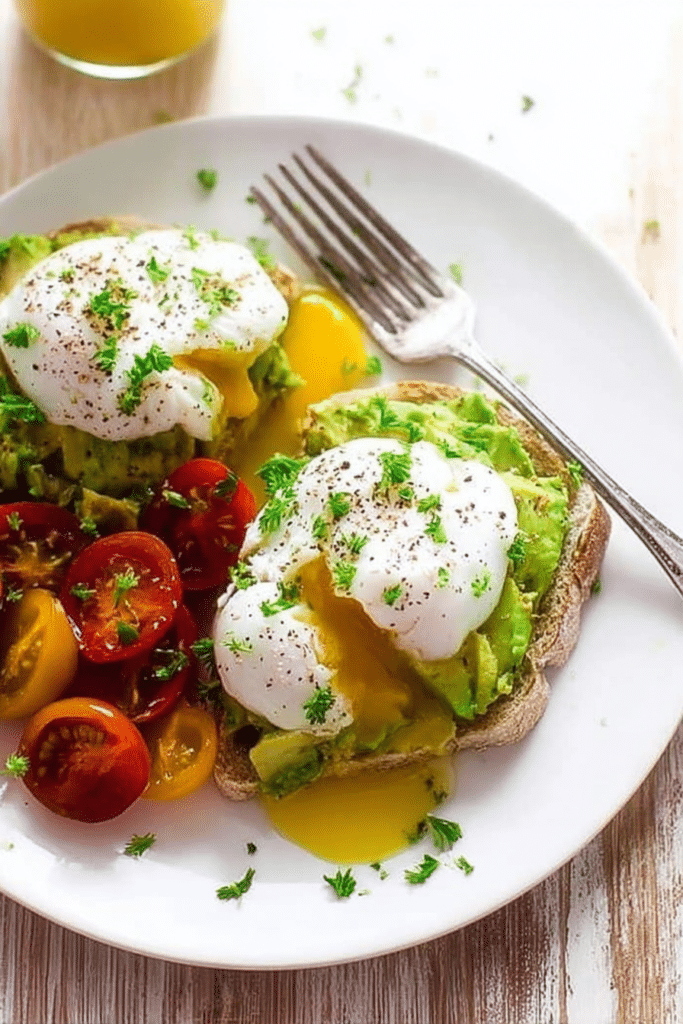
I make this Simple Poached Egg and Avocado Toast on mornings when time is short but I still want something that feels like a proper meal. In my kitchen it’s my go-to because it’s fast, bright, and filling — and once you get the poaching rhythm down, it’s almost effortless. The first time I intentionally timed the whole thing, from kettle to plate, it took me right about 10 minutes. That’s the level of speed we’re talking about here.
What sold me was the instant payoff: a toothsome toasted slice, cool creamy avocado, and a warm, runny yolk that spills golden richness across everything. The texture contrast — crunchy bread, pillow-y white, silky yolk, and a little salty Parmesan — makes breakfast feel like something you made for yourself on purpose, not something you grabbed because you had to.
Over time I learned a few little tricks that keep the process simple and consistent. Small habits — like using mason jar lid rings to shape the eggs and turning off the heat before you add the eggs — are the difference between a sad, ragged white and a tender, silky poach. I’ll walk you through the why and the how so you can get reliably perfect results without stressing over the stove.
Think of this recipe as a blueprint: it works for rushed mornings, relaxed weekends, and everything in between. Once you have the basics down, you can riff on toppings, swap breads, and pair it with your favorite morning drink to suit your mood.
Everything You Need for Simple Poached Egg and Avocado Toast
Below I lay out the essentials in a friendly, conversational way so you know why each ingredient matters and what to reach for if you need a swap.
- Eggs – The star. Fresh eggs poach cleaner with firmer whites. If you’re unsure, use slightly younger eggs rather than ones that are very old.
- Whole-grain bread (or your favorite loaf) – Provides crunch and fiber. Use a sturdier slice if you like a strong texture; softer breads are still fine but may get soggy faster.
- Avocado – Adds creamy, healthy fat and acts as the luscious base for the egg. If an avocado isn’t ripe, mash with a little lemon or lime to improve flavor.
- Parmesan (shaved) – A salty, savory finish that plays well with the egg yolk. Use a crumbly cheese like feta for a tangy swap.
- Salt & pepper – Simple seasoning that pulls everything together. Try flaky sea salt for a nice crunch.
- Fresh herbs (parsley, thyme, or basil) – Brightness and color. Use whatever you have on hand to add fresh aroma.
- Fresh tomatoes (optional) – Add juiciness and acidity on the side. Cherry tomatoes or quartered heirlooms both work great.
The Secret to Perfectly Runny Yolks
The magic is in timing and a little structure. A perfectly runny yolk comes from gently cooking the white until it’s set but not rubbery, while the center stays soft. I like to aim for a short, covered cook so the steam finishes the top while the water holds everything together.
- Shorter cook time = runnier yolk. In practical terms, count minutes carefully: a few minutes less will give you a very soft center, a minute more moves toward a semi-soft yolk.
- Using a mason jar lid ring (the flat outer rim) is my favorite coaching method — it keeps the egg in a tidy shape and helps the white wrap around the yolk evenly.
- Covering the pot traps steam and gently finishes the top of the white without aggressively churning the egg. That’s the gentle nudge your poach needs to be tender.
Why Water Temperature and Vinegar Matter When Poaching
Poaching is basically cooking an egg in hot water, and little changes in temperature make a big difference in how the white sets. You want movement in the water but not a rolling boil that will batter the egg into ragged pieces.
- Bring the water to a boil, then turn the heat off or down so it’s at a gentle simmer when you add the eggs; this reduces violent movement while still providing enough heat to cook through.
- A splash of vinegar in the water helps the egg whites coagulate and cling together faster. It doesn’t flavor the egg noticeably, but it makes a neater poach — especially useful if your eggs aren’t ultra-fresh.
- Adjust based on your stove: electric ranges tend to hold heat longer, so you may need to turn the heat off; gas can be dialed more quickly. If you still see too vigorous bubbles, let the water calm a bit before adding eggs.
How to Make Simple Poached Egg and Avocado Toast (Step-by-Step)
Follow these steps to keep the process calm and predictable. I’ve included timings and common pitfalls so you know what to watch for.
- Fill a pot with enough water to cover eggs lying flat and bring it to a boil. Add a small splash of vinegar if you like a neater white.
- Drop the metal rims (outer rings only) of two mason jar lids into the bottom of the pot so they lie flat — they act as molds for the eggs.
- When the water is boiling, turn off the heat (or reduce to a very gentle simmer). Carefully crack each egg directly into a rim in the pot.
- Cover the pot and let the eggs poach: about 4 minutes for very soft yolks, 4–4:30 for soft, and around 5 minutes for semi-soft. Adjust a minute up for firmer yolks.
- While the eggs cook, toast your bread and smash avocado onto each piece. Season the avocado lightly with salt and pepper.
- When the eggs are done, use a spatula to lift them up. Gently pull the rim off the egg (I usually do this right on the spatula, over the water) and place the poached eggs on the toast.
- Finish with shaved Parmesan, fresh herbs, extra salt and pepper to taste, and serve with quartered fresh tomatoes on the side.
Troubleshooting
- If the white is wispy and spreads: try fresher eggs and add a touch more vinegar to the water.
- If the white is undercooked but the yolk feels set: increase the cook time by 30–60 seconds next time.
- If the egg falls apart when you lift it: make sure your spatula is wide and supportive; slide it fully under the egg before lifting.
Pro Tip for simple poached egg and avocado toast: Use Mason Jar Lid Rings for Consistent Poaches
I started using mason jar lid rings after too many sad-looking poached eggs. They’re cheap, reusable, and they make the early attempts look intentional.
- Place the rings flat on the bottom of the pot and crack eggs into them to keep shape consistent and the white contained.
- If you don’t have jar rings, use a shallow ramekin to lower the egg into the water gently, or try a silicone egg poacher that sits in the pan.
- Experiment: once you’re comfortable, try starting the egg in a small bowl and sliding it into swirling water for a classic free-form poach.
Easy Variations & Toppings to Keep Breakfast Exciting
I get bored easily, so I keep a short list of go-to variations that are quick to throw together. All of these are meant to be mixed and matched to your taste.
- Smoked salmon + capers + thinly sliced red onion for a brunch-worthy bite.
- Feta or goat cheese crumbles + lemon zest for tang and brightness.
- Crushed red pepper flakes or a drizzle of hot sauce for heat.
- Sliced avocado mixed with a spoonful of pesto or mashed with a little garlic for extra flavor.
- Top with microgreens or arugula for peppery freshness.
- Swap the Parmesan for a shower of everything bagel seasoning for an umami hit.
If you’re looking for more egg inspiration, try our classic deviled eggs for a delightful twist on your breakfast routine.
Add a layer of flavor to your toast with the best ever guacamole for a creamy, delicious topping.
How to Store, Reheat, and Make-Ahead Your Avocado Toast
Avocado toast is at its best fresh, but you can make parts ahead to save time. Here’s how I manage leftovers and prep without losing flavor.
- Store smashed avocado separately in an airtight container with a little lemon or lime juice pressed over the surface to slow browning; press a piece of plastic wrap directly onto the avocado before sealing.
- Poached eggs are best eaten the same day. If you must store, keep them in cold water in the fridge for a short time and reheat gently in barely-simmering water for a minute to warm through.
- Toast fresh at serving time to retain crunch. If you must re-toast, do it briefly under a broiler or in a toaster oven rather than microwaving.
- Make components ahead: mash the avocado, chop herbs, and toast bread quickly before you’re ready to eat — then assemble and poach eggs at the last minute.
For tips on keeping your avocado toast fresh and ready to enjoy, check out our guide on how to store, reheat, and make-ahead avocado toast.
Nutritional Breakdown of the Dish
Here’s an overview so you can see how this breakfast fits into your day:
- Calories – About 539 calories per serving (approximate).
- Fat – Around 33 grams, mainly from avocado and egg yolk; these are largely heart-healthy monounsaturated fats.
- Carbohydrates – Roughly 39 grams, depending on the bread you choose; choose whole-grain for added fiber and sustained energy.
- Protein – About 25 grams from the eggs and any cheese or additional toppings, which helps keep you full through a busy morning.
This combo of healthy fats, protein, and complex carbs makes the toast a balanced choice compared with common quick breakfasts like sugary pastries or cereal, which often lack sustained energy and protein.
Pairing Suggestions with Beverages
Pick a drink that matches the mood: light and refreshing for warm mornings, or rich and comforting if you’re easing into a slow weekend.
- Freshly brewed coffee or a latte if you want a bold, warming pairing.
- Green tea or jasmine tea for a lighter, soothing complement.
- Fresh-squeezed orange juice or a grapefruit-tinted mocktail for a bright, acidic counterpoint.
- A sparkling water with lemon if you want something simple and clean between bites.
For a heartier brunch, consider serving this with a savory side like garlic butter shrimp for a more indulgent spread.
Frequently Asked Questions
How long does it take to make poached egg and avocado toast?
This delicious dish takes just about 10 minutes to prepare from start to finish!
Can I use other types of bread for this recipe?
Absolutely! While whole grain bread is recommended, feel free to use your favorite type of bread for toasting.
What should I do if I want a firmer egg yolk?
If you prefer a firmer yolk, simply poach the eggs for about 6–7 minutes instead of 5.
Is there a way to store leftovers?
Yes! You can store any uneaten avocado toast in an airtight container in the fridge, but it’s best eaten fresh.
Can I add other toppings or variations to my toast?
Definitely! Feel free to get creative with toppings like cherry tomatoes, feta cheese, or even a sprinkle of chili flakes for some heat!
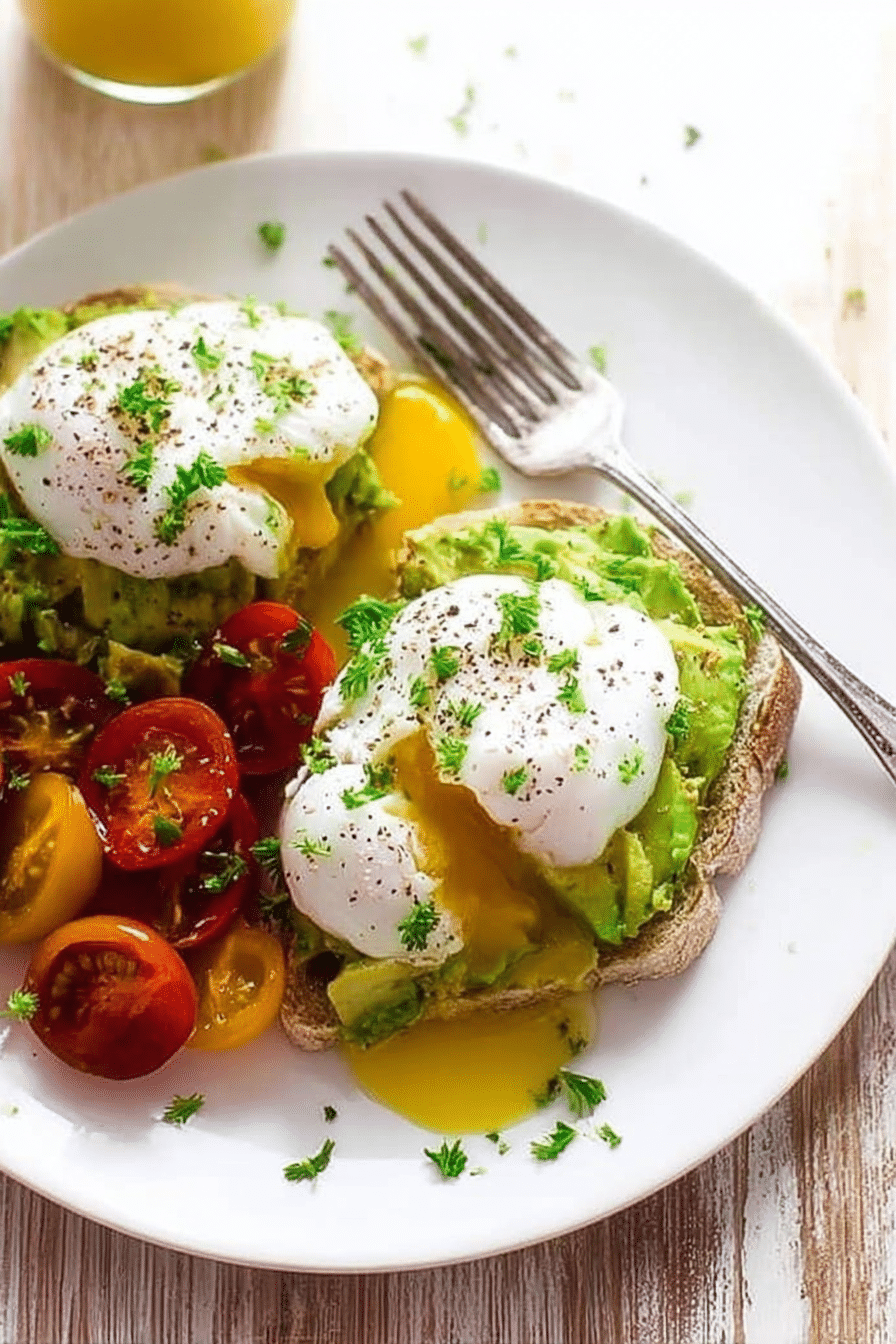
Simple Poached Egg and Avocado Toast
Ingredients
Method
- Bring a pot of water to boil (use enough water to cover the eggs when they lay in the bottom). Drop the metal rims (outer rim only) of two mason jar lids into the pot so they are laying flat on the bottom. When the water is boiling, turn off the heat and carefully crack the eggs directly into each rim. Cover the pot and poach for 5 minutes (4 for super soft, 4:30 for soft, 5 or more for semi-soft yolks).
- While the eggs are cooking, toast the bread and smash the avocado on each piece of toast. When the eggs are done, use a spatula to lift the eggs out of the water. Gently pull the rim off of the eggs (I do this right on the spatula, over the water) and place the poached eggs on top of the toast. Sprinkle with Parmesan cheese, salt, pepper, and fresh herbs; serve with the fresh quartered heirloom tomatoes.