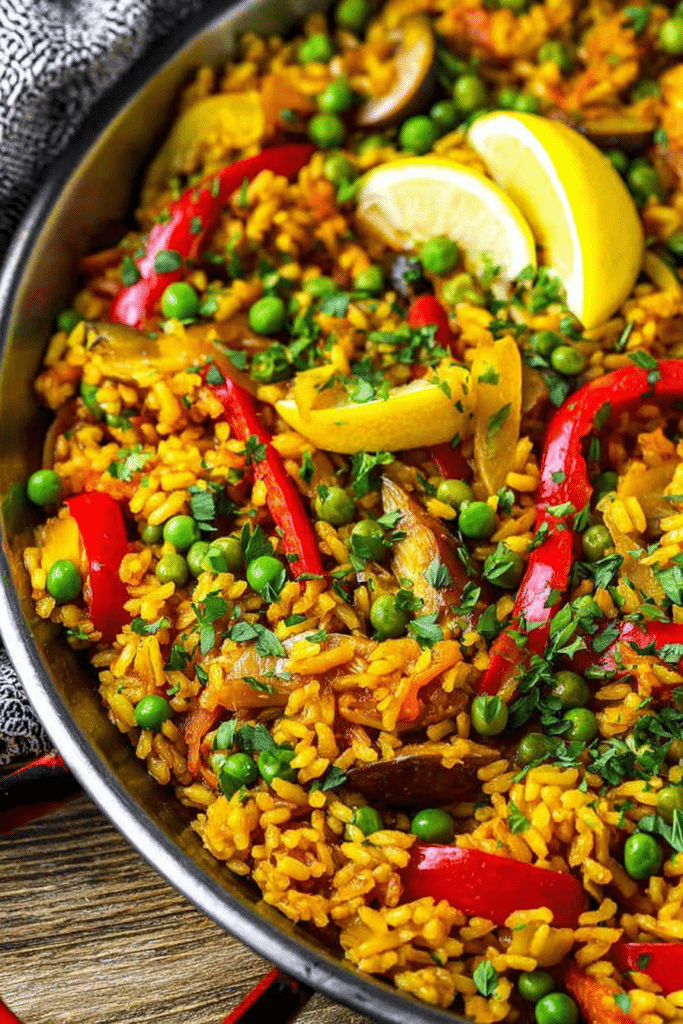
I cook this Spanish vegan paella often when I want a one-pan meal that feels generous without weighing anyone down. In my kitchen it means a pan of bright peppers, sweet tomatoes, and a saffron-tinted broth that fills the room with a warm, earthy aroma. I love how it serves like a celebration yet keeps things simple and nourishing.
I learned to pay attention to small details — warming the broth, toasting the rice briefly, and resisting the urge to stir — and those choices made the difference between a decent rice dish and a paella with a proper golden crust. Over the years I’ve tweaked vegetables by season and kept the recipe lean by avoiding heavy oils or plant-based creams.
What I appreciate most is how satisfying it is despite being lower in saturated fat than meat-based versions. It feels like the kind of meal you can serve to friends and family with confidence: colorful on the plate, fragrant at the table, and balanced on the nutrition panel.
Below I’ll walk you through everything you need to stock your pantry and pan, how to produce that irresistible socarrat, and sensible make-ahead and storage strategies so this can become a weekday staple.
Why this Spanish Vegan Paella is perfect for health-conscious eaters
This vegan paella keeps things filling while staying relatively low in calories. A typical serving is moderate in energy but generous in volume thanks to fiber-rich vegetables and rice, so you leave the table pleasantly satisfied rather than overly full. The absence of animal fats means little to no cholesterol and a lower intake of saturated fat compared with traditional meat- or seafood-based versions.
Protein comes from the rice and vegetables (peas and beans pair nicely if you want to boost protein further), and the fiber from the vegetables helps steady blood sugar. Imagine a plate of glossy, saffron-tinted rice studded with bright peppers and peas — the textures range from tender to slightly crisp, and the aroma of smoked paprika and thyme makes every mouthful comforting and savory.
Everything You Need for Spanish Vegan Paella
Gather good-quality basics and a broad pan. Fresh herbs will brighten the finished dish, while dried herbs are fine in a pinch. A few specialized items — saffron, smoked paprika, and a wide shallow pan — make a big impact on authenticity and flavor without being complicated.
If you’re looking for more vegan inspiration, try our vegan wild garlic pesto pasta for a delightful dinner option.
- Olive oil – The primary cooking fat; use extra virgin for flavor but moderate the amount for a lighter dish.
- Vegetable broth – The backbone of flavor; low-sodium is best so you control the salt level.
- Saffron – Small but essential for color and a delicate floral note; even a little goes a long way.
- Onion & garlic – Build savory depth; use fresh for the best aroma.
- Tomato – Adds acidity and body; canned works if ripe fresh tomatoes aren’t available.
- Bell peppers – Sweetness and color; red peppers give the most visual impact.
- Bomba or short-grain rice – Holds liquid well and yields that classic texture; see the rice section for substitutions.
- Smoked paprika – Gives characteristic smoky warmth; balance with sweet paprika as needed.
- Fresh herbs (thyme, parsley) – Fresh is best for finishing; dried herbs can be added earlier in cooking.
- Frozen peas – A convenient, sweet green that brightens the dish at the end.
- Paella pan or wide skillet – A shallow, wide pan helps the rice cook evenly and encourages socarrat formation.
Choosing the Right Rice and Broth for Texture & Flavor
Rice choice defines paella’s texture. Bomba rice is traditional in Spain because it absorbs a lot of liquid without breaking down, producing separate grains that stay slightly firm. If you can’t find Bomba, a short-grain rice like Arborio will work; it will be creamier and cling a bit more, but you can still get a pleasing result. In some regions you’ll also find Calasparra rice — another short-grain variety prized for paella — and these regional options are worth seeking out if you want an authentic mouthfeel.
Broth matters: using a warm, low-sodium vegetable broth promotes even temperature and helps the rice absorb flavor without becoming oversalted. I always keep the broth on a low simmer while cooking so you can pour it in hot; that small step makes the grains cook evenly and reduces the shock to the pan.
Sensory note: as the rice cooks, you should see the grains swell and hear a gentle simmer. The final texture should be tender with a slight bite in the center of each grain — not mushy, not crunchy.
The Secret to the Perfect Socarrat (Golden Crust)
The socarrat is the prize: a thin, nutty, golden crust at the bottom of the pan that adds texture and aroma. Achieving it is about timing and attention, not high heat alone.
- Bring the broth to a strong simmer after adding it, then reduce to a gentle but steady simmer so the surface moves slightly — not a rolling boil.
- Do not stir the rice after the broth goes in; stirring releases starch and makes the rice creamier instead of allowing the crust to form.
- When most of the liquid has evaporated, raise the heat briefly and listen for faint popping or crackling sounds — those are the grains crisping against the pan.
- Test by sliding a fork to the bottom; if you feel a firmer, slightly golden layer and smell a nutty aroma, the socarrat is forming. If the smell turns sharp or burned, remove the pan immediately.
Troubleshooting tips:
- If the bottom browns too quickly, lower the heat and add a tablespoon of hot broth spread around the pan to slow browning without disturbing the rice.
- If the rice is still too firm when the liquid is gone, cover the pan off heat for a few minutes to let residual steam finish it.
- If socarrat won’t form because your burner is too gentle, move the pan briefly to a hotter ring for the final minute or two, watching and listening closely.
Nutrition Breakdown: What Makes This Paella So Healthy
One serving of this vegan paella is moderate in calories and relatively low in fat, with about 366 kcal and roughly 10 g of fat per serving. Carbohydrates provide sustained energy while vegetables contribute fiber, vitamins, and minerals. Protein comes from rice and peas; adding legumes or a few toasted nuts at the end can raise the protein further without adding saturated fat.
Compared with a traditional paella made with chorizo, chicken, or shellfish, this vegan version typically contains less saturated fat and no dietary cholesterol, and it often supplies more dietary fiber. Those differences make it a smart pick if you’re watching heart health or trying to reduce animal fats without sacrificing flavor.
For a comparison, check out our Spanish seafood paella which highlights a traditional take on this classic dish.
How to Make Spanish Vegan Paella (Step-by-Step)
- Warm the vegetable broth and gently steep the saffron in it so the color and aroma bloom; keep the broth warm on a low heat.
- Heat most of the olive oil in a wide paella pan or skillet over medium heat, then sauté diced onion and sliced bell pepper until softened and lightly colored.
- Add chopped garlic and cook briefly until fragrant, taking care not to let it brown too much.
- Stir in diced tomato and both smoked and sweet paprika; cook a minute to coax out the tomato’s juices and meld the spices. If using dried thyme, add it now.
- Add the rice and a little oil, stirring to coat and toast the grains for a minute; this helps the grains stay separate later.
- Lay fresh thyme sprigs on top (or reserve dried herb additions) and pour the warm saffron-infused broth evenly over the rice. Season with salt and pepper, then stop stirring.
- Bring the pan to a strong simmer for a minute or two, then reduce heat to a gentle simmer. Let the rice cook uncovered for about 15–20 minutes until almost al dente, rotating the pan once or twice so heat distributes evenly.
- When the liquid is nearly gone, pay attention to socarrat formation: you should hear faint snapping and detect a nutty aroma. Increase heat briefly for 1–2 minutes if needed to form the crust, then remove from heat at the first sign of toasty fragrance.
- Scatter thawed peas on top without stirring, cover the pan with foil, and let the paella rest for 5–8 minutes so the rice finishes steaming and the flavors settle.
- Finish with chopped parsley, cracked pepper, and lemon wedges to serve.
Troubleshooting (quick reference):
- If the rice is gummy, you likely stirred after adding broth — avoid stirring and use a wide pan next time.
- If the bottom burns, shorten final high-heat time and check the pan sooner; add a splash of hot broth to rescue and recover moisture.
- If the rice is undercooked when the liquid has evaporated, cover and let it rest off the heat for a few minutes or add a touch more hot broth and return to very low heat briefly.
Pro Tip for spanish vegan paella: Seasonal Veg Swaps & Meal-Prep Shortcuts
Pro-Tips, Troubleshooting, and Variations are listed below as easy-to-scan bullets so you can adapt the recipe to your pantry and season.
- Seasonal swaps – In spring use tender asparagus tips and fava beans; in summer add diced zucchini and sweet corn; in fall try roasted artichoke hearts and baby carrots; in winter use roasted root vegetables for extra sweetness.
- Meal-prep shortcut – Make a large batch of broth and freeze in portions so you always have warm liquid ready; roast vegetables ahead and fold them in at the end to save time on busy nights.
- Protein boost – Stir in cooked chickpeas or white beans before resting the paella to increase protein without changing texture much.
- Diet swaps – Gluten-free as written; for nut-free, avoid nut garnishes; to reduce oil, sauté vegetables in a splash of broth instead of oil and finish with a drizzle of olive oil at the end.
- For a fresh side dish, our mediterranean chickpea salad pairs wonderfully with your paella.
How to Store, Reheat, and Make-Ahead Spanish Vegan Paella
Proper storage and reheating keep texture intact so leftovers remain tasty through the week.
- Storing – Transfer cooled paella to an airtight container and refrigerate for up to three days. For longer storage, freeze in portions with a little extra broth to preserve moisture.
- Reheating on the stovetop – Rewarm in a wide skillet over low heat with a splash of vegetable broth, covering briefly to let steam revive the rice.
- Reheating in the oven – Place paella in an ovenproof dish, sprinkle with a little hot broth, cover with foil, and warm at moderate heat until heated through.
- Make-ahead – Cook the paella to just shy of doneness, cool, and refrigerate. Finish the final simmer and socarrat formation just before serving for the freshest result.
For another quick meal prep idea, try our easy sheet pan salmon dinner, perfect for busy weeknights.
Serving suggestions: pair the paella with lemon wedges and a crisp green salad or the suggested Mediterranean chickpea salad for contrast. I like to serve it family-style straight from the pan so everyone can enjoy the socarrat.
Frequently Asked Questions
What vegetables can I add to my vegan paella? — You can add a variety of vegetables such as green beans, peas, bell peppers, artichoke hearts, onions, and tomatoes. Feel free to experiment with seasonal veggies for a unique twist!
How do I achieve the perfect socarrat in my paella? — To achieve the perfect socarrat, make sure not to stir the rice after adding the broth. Cook on medium-low heat and listen for a popping sound as the bottom layer crisps up. It’s usually ready after about 1-2 minutes of attentive cooking.
Can I substitute the rice used in the recipe? — Yes! While Bomba rice is traditional, you can substitute it with Arborio rice if needed. Just be aware that the texture may differ slightly.
What is the nutritional value of this vegan paella? — This vegan paella is nutritious and filling, with approximately 366 calories per serving, 10 g of fat, 59 g of carbohydrates, and 9 g of protein.
How should I store and reheat leftovers of the paella? — Store leftovers in an airtight container in the fridge for up to 3 days. To reheat, place in a pan on low heat, adding a splash of vegetable broth. Cover to retain moisture.
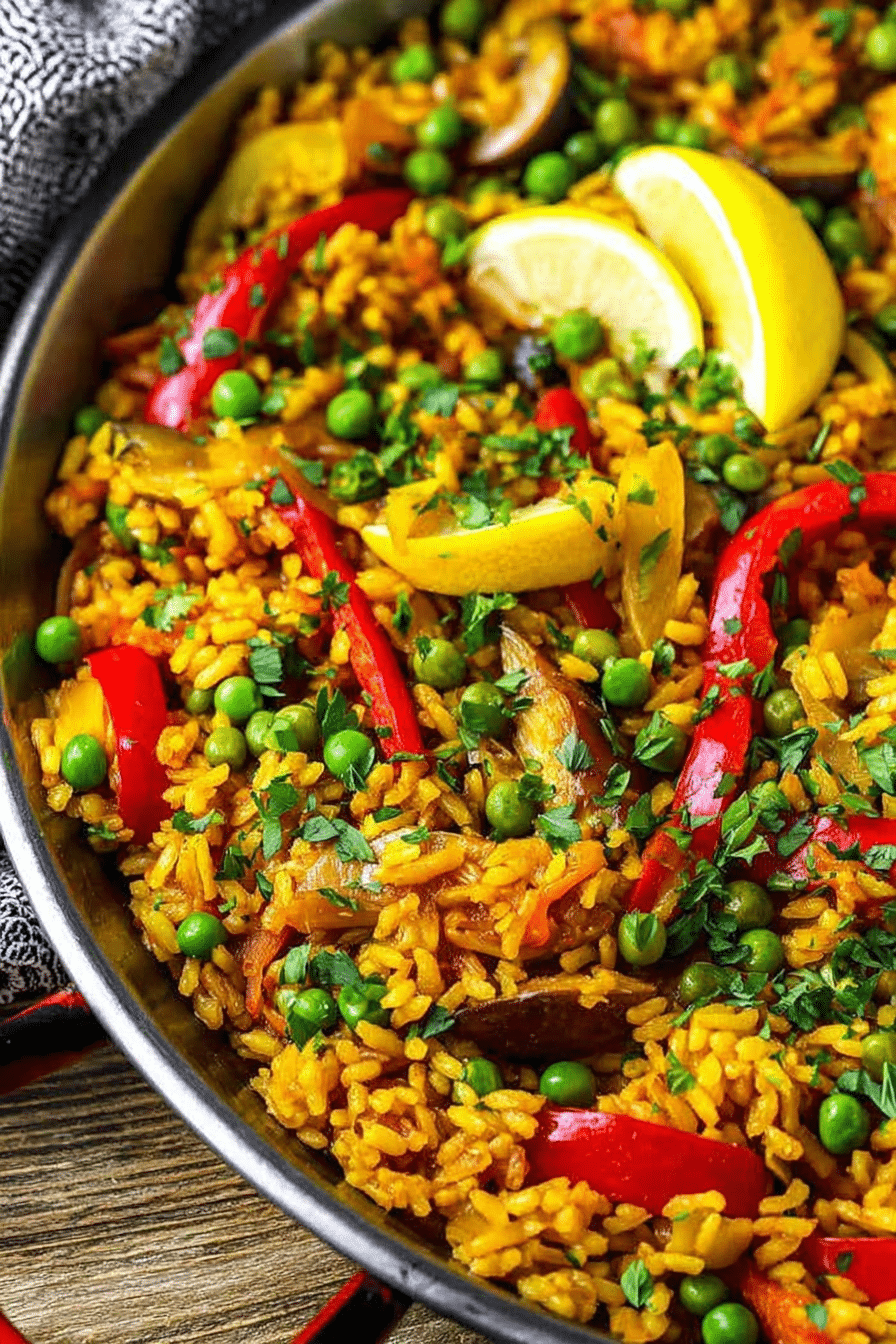
Spanish Vegan Paella
Ingredients
Equipment
Method
- Add vegetable broth in a medium saucepan over medium-high heat. Break up the saffron and add it to the broth. When it begins to simmer, give it 1 minute, and then lower the heat just to keep it warm.
- Heat 2 tablespoons of oil in a paella pan over medium heat. Once heated, add the onions and peppers. Sauté until softened and lightly browned, about 3-5 minutes.
- Add the garlic and sauté for 1 minute.
- Now add the tomatoes, smoked paprika, and sweet paprika. Sauté for 1-2 minutes.
- Add the rice and remaining 1 tablespoon of oil to the pan. Stir to coat well. Cook for 1 minute to lightly toast the rice.
- Add the fresh thyme and slowly pour in broth. Add salt and pepper. Do not stir after this point.
- Turn the heat to medium-high and bring the broth to a heavy simmer for 1-2 minutes.
- Turn the heat down to a mild simmer. Simmer for 15-20 minutes until rice is al dente.
- Once the broth is nearly cooked off, pay close attention to the socarrat forming on the bottom of the pan (1-2 minutes).
- Remove the pan from the heat. Add the peas on top of the rice. Cover the pan with foil and let the paella rest for 5-8 minutes. Serve with fresh-cut parsley and lemon wedges.