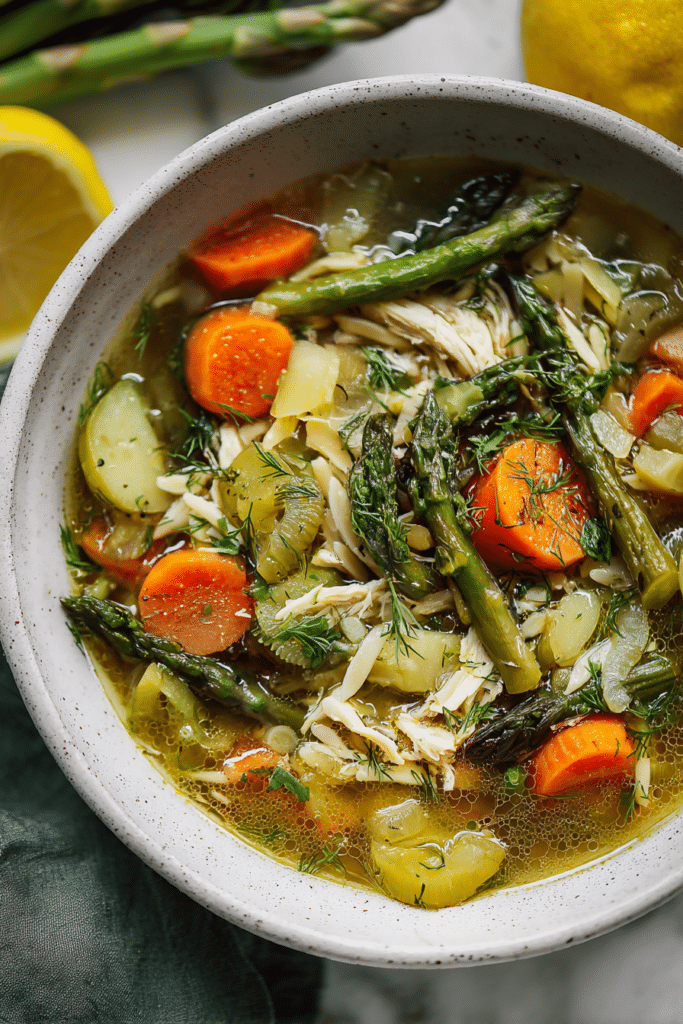
I make this spring vegetable soup on nights when my schedule is stacked and my family still needs a warm, homey dinner. It started as a pantry-and-produce rescue meal in my kitchen: a single pot, a handful of fresh spring vegetables, a bit of pasta, and whatever protein I have on hand. Over the years I’ve tuned the timing and flavor so the vegetables stay vibrant, the orzo stays toothsome, and the whole pot comes together in under an hour.
What I love most is the contrast — cozy warmth from the broth and garlic, bright lift from lemon and fresh dill, and that pop of green from asparagus and snap peas. The kitchen smells like garlic and herbs while the bowl looks like a spring garden: orange carrots, pale green leeks, dark chard, and little flecks of dill. It’s the kind of meal I’m happy to put in front of hungry kids or bring to a potluck.
I’ll be candid: my first tries left the orzo mushy and the asparagus limp. Once I changed when I added the pasta and when I stirred in the greens, everything clicked. Below I share those timing tricks, smart swaps for protein and gluten-free needs, and storage tips I actually use when I want leftovers for lunches all week.
Before we get to the how-to, I’ll walk you through what to buy, what each ingredient does, and the quick fixes I reach for when the pot needs rescuing.
Why this Spring Vegetable Soup is Perfect for Busy Weeknights
This recipe is built for speed and minimal cleanup: one pot, short hands-on time, and flexible ingredients you can swap based on what’s in your fridge or market haul. The cook time and prep add up to about 50 minutes—long enough to feel comforting but short enough for a weeknight. I often chop vegetables while the oil heats so I’m not waiting around, and I usually use pre-cooked chicken or canned beans to shave off extra time.
Nutrition-wise, it’s a win: fresh vegetables provide fiber, vitamins, and color without relying on processed ingredients. Using low-sodium broth and adding lemon at the end brightens the bowl so you don’t need heavy creams or extra fat to feel satisfied.
Picture the stove: garlic sizzling, the aroma of Italian seasoning blooming, and a pot that’s doing most of the work for you. That sensory simplicity — warm, herby, citrus-fresh — is why I reach for this soup on busy nights.
Everything You Need for Spring Vegetable Soup
- Olive oil – For sautéing and building the first layer of flavor; swap for avocado oil if you prefer a higher smoke point.
- Yellow onion – Adds savory sweetness and depth; shallots can be used for a milder taste.
- Garlic – Aromatics that give the soup its homey backbone; use more or less to taste.
- Carrots – Provide sweetness, color, and bite; small dice for quicker softening or larger for more texture.
- Asparagus – The spring star: adds green color and a pleasant snap; trim woody ends and choose thicker spears for better texture.
- Snap peas – Add crunch and freshness; snow peas are a fine substitute.
- Leek (white part) – Offers a gentle allium flavor; clean well to remove grit.
- Italian seasoning – A simple herb blend that ties the broth together; replace with a mix of oregano and thyme if you prefer.
- Vegetable broth (low sodium) – The liquid base; use chicken broth if you want a meatier backbone.
- Orzo – Tiny pasta that makes the soup feel substantial; use gluten-free orzo or a small GF pasta if needed.
- Swiss chard – Tender leafy green that holds color well; spinach or kale can be used with slight timing adjustments.
- Cooked chicken – For protein and heartiness; white beans, chickpeas, or lentils are great plant-based swaps.
- Fresh dill – Finishes the soup with a floral, grassy lift; parsley is a milder substitute.
- Lemon – Acid to brighten the whole pot; add juice sparingly and adjust to taste.
- Salt + pepper – Season to taste and adjust at the end once the flavors have developed.
The Secret to Tender Veggies and Perfectly Cooked Orzo
- Sauté aromatics first: I heat the oil until it shimmers, then add onion and garlic so they soften and release their aroma without browning — that gentle sizzle is where the base flavor comes from.
- Add sturdier vegetables early: Carrots and leeks go in before delicate greens. This keeps carrots from being crunchy and prevents chard or spinach from overcooking into a gray mush.
- Control the boil for the orzo: Bring the broth to a boil, then add the orzo and reduce to a lively simmer. Stir once or twice to prevent sticking but avoid constant stirring which can make the pasta break down.
- Time delicate items last: Add asparagus, snap peas, and swiss chard once the orzo has just a few minutes left so they stay vibrant and slightly crisp.
- Finish off heat with fresh herbs and lemon: I always stir in dill and lemon at the end, off the heat, to preserve the herb’s bright flavor and the lemon’s fresh acidity.
Best Protein Swaps: Chicken, Beans, and Vegan Options
- Shredded chicken — Use shredded cooked chicken to keep the soup hearty without extra cooking time. Add it when you add the pasta so it warms through.
- White beans — One can of rinsed white beans (such as cannellini) adds creaminess and plant-based protein. Stir them in with the greens so they don’t break apart from long simmering.
- Chickpeas or lentils — Canned chickpeas are easy; pre-cooked lentils (green or brown) are great if you want a firmer bite. Add with the orzo so they heat through.
- Shrimp option — If you want seafood, add peeled shrimp in the last 2–3 minutes of cooking so they stay tender.
If you’re looking for a protein swap, try adding garlic butter shrimp to enhance your soup.
- Tofu or tempeh — Firm tofu cubed and lightly sautéed, or sliced tempeh, can be browned first for texture and added toward the end.
Bright Flavors: Using Fresh Dill and Lemon the Right Way
Fresh dill has a delicate, feathery aroma that lifts the soup; dried dill lacks brightness and can taste flat. I chop dill leaves finely and stir them in off the heat so the herb stays fragrant rather than turning dull from long cooking. If you must use dried, use less and add it earlier in the simmer so it rehydrates.
Lemon juice is the balancing act: it brightens the broth and cuts through any heaviness. I zest the lemon first (if I want an extra burst) and then juice it, adding a little at a time and tasting. Too much lemon can make the soup sharp; add in increments until the bowl sings.
Step-by-Step: Make Spring Vegetable Soup
- Heat oil in a large, deep pot over medium-high heat until it shimmers.
- Add chopped onion and minced garlic; stir and cook for several minutes until softened and aromatic, not browned.
- Stir in carrots, leeks, and Italian seasoning; season lightly with salt and pepper and cook briefly to mellow the herbs.
- Add the broth, cover, and bring to a boil.
- Once boiling, add the uncooked orzo and reduce to a simmer; cook for the time indicated on your orzo package, stirring occasionally to prevent sticking.
- When the orzo has a few minutes left, stir in asparagus, snap peas, and chopped swiss chard; continue to simmer until the pasta is al dente and the vegetables are tender-crisp.
- Stir in cooked shredded chicken (or your chosen protein) to warm through.
- Finish off heat by stirring in fresh dill and lemon juice; taste and adjust salt and pepper before serving.
- Common hiccups I fix in my kitchen: if the soup is too salty, add a peeled potato to absorb salt for a few minutes then remove; if the orzo swells too much after refrigeration, cook extra orzo separately and add to bowls when serving.
Note: Pro-Tips, Troubleshooting, and Variations are presented below as bulleted lists for easy scanning.
Pro Tips for Spring Vegetable Soup: Make it Gluten-Free & Vegan
- Use gluten-free orzo or a small-shaped gluten-free pasta (look for brands labeled as pasta-style orzo); quinoa also works as a grain alternative if you prefer no pasta.
- For a vegan version, use vegetable broth and replace chicken with canned white beans or cooked lentils for protein and body.
- If using canned beans, rinse and drain them to remove excess sodium and keep the broth clear.
- To maintain texture when freezing for meal prep, undercook the orzo slightly and finish cooking when reheating, or store cooked orzo separately and combine at serving.
- For a silky broth without dairy, blend a small portion of the soup (remove a cup of broth and beans/veggies, blend, then stir back) to add body while keeping it vegan.
Troubleshooting
- If your orzo turns mushy: reduce simmering time and add orzo later next time; cook al dente and expect it to soften more when stored.
- If the vegetables are overcooked: add delicate greens and peas in the last minutes and check texture frequently.
- If the soup tastes flat: add a squeeze of lemon and a pinch more salt; acid at the end brightens flavors dramatically.
- If the pot is boiling over: lower the heat to a steady simmer and partially tilt the lid to release steam while keeping most liquid covered.
- If the broth is too thin: simmer uncovered a bit longer to concentrate flavors or stir in a small spoonful of mashed beans for thickness.
Storing, Reheating, and Meal-Prep Tips
- Cool the soup before refrigerating in airtight containers; it will keep well in the fridge for up to three days.
- For longer storage, freeze in portioned freezer-safe containers for up to 3 months. Leave extra room at the top to allow for expansion.
- When reheating from the fridge, warm gently on the stove over medium-low to avoid breaking down the pasta; add a splash of water or broth if it has thickened.
- To reheat from frozen, thaw overnight in the fridge and rewarm on the stove, or use the defrost setting on your microwave before finishing at medium power.
- Meal-prep tip: store the orzo/pasta separately from the broth if you plan to eat leftovers several days later to avoid mushy pasta.
- Pair your soup with delightful zucchini corn fritters for a satisfying meal prep option.
Serving Ideas for Families, Meal Prep, and Gatherings
For a weeknight family dinner, serve bowls of soup with crusty bread or a simple mixed green salad. For larger gatherings, present the soup family-style in a large tureen alongside a platter of toasted bread and a small bowl of grated Parmesan (or a vegan alternative) so guests can customize their bowls.
Portioning ideas: make it a light lunch by serving small bowls with a side salad, or turn it into a filling dinner by adding extra beans or chicken and a hearty bread. Consider topping bowls with more fresh dill and lemon wedges so each person can adjust brightness to taste.
Consider pairing this soup with creamy garlic parmesan mushrooms for a delightful side dish. For dessert after a spring meal, finish off your meal with some springtime crinkle cookies for a sweet treat.
Frequently Asked Questions
How long does it take to prepare and cook the Spring Vegetable Soup? The total time to prepare and cook the Spring Vegetable Soup is approximately 50 minutes.
Can I substitute the orzo for a gluten-free option? Yes! You can use gluten-free pasta or grains such as quinoa or rice instead of orzo.
What are some good protein options for this soup? You can add shredded chicken for protein, or for a vegetarian option, use white beans or chickpeas.
How should I store leftovers of the soup? Store leftovers in an airtight container in the refrigerator for up to 3 days. You can also freeze it for longer storage.
Can I make this soup vegan? Absolutely! Simply omit the chicken and use vegetable broth instead. You can also add beans for protein.
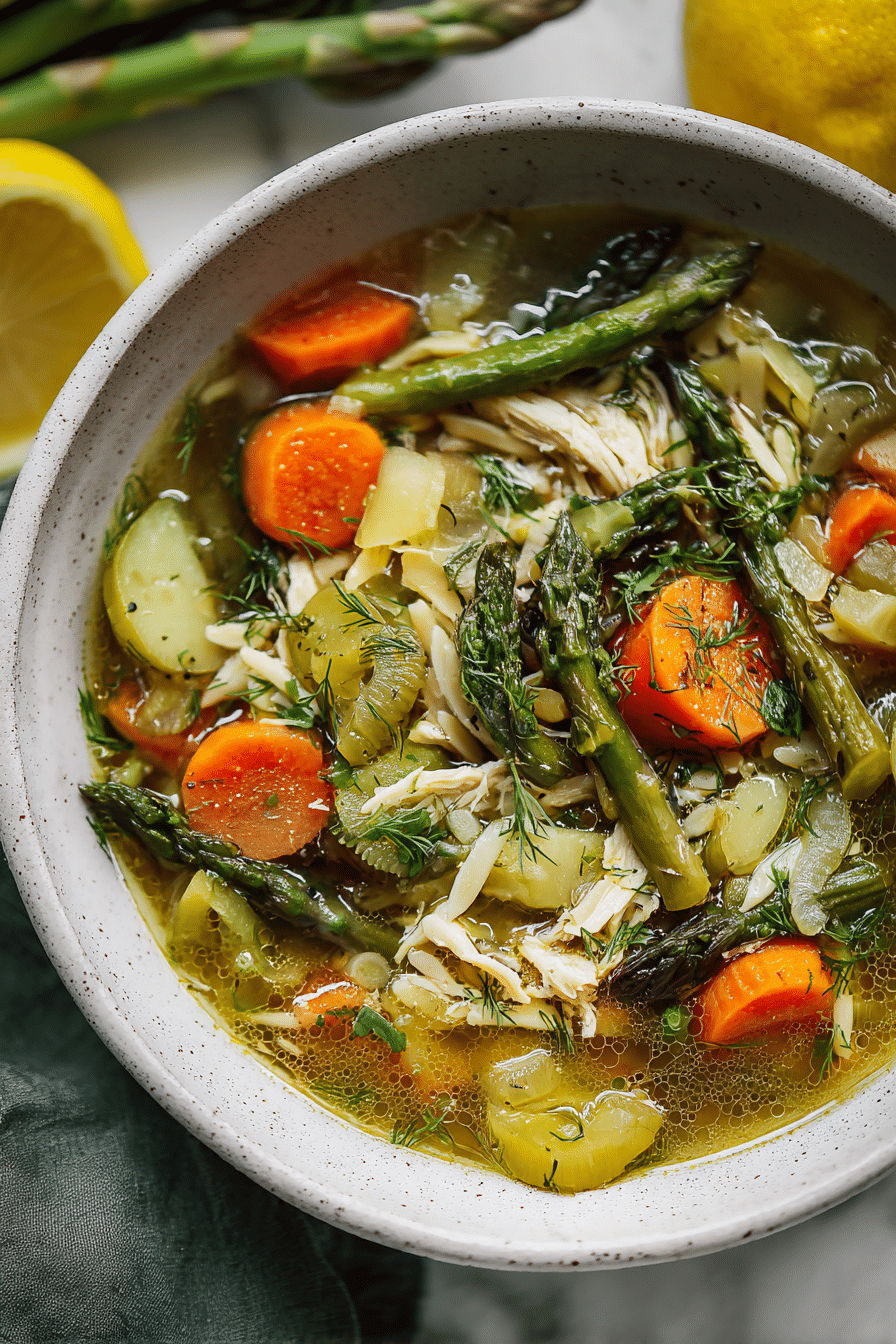
Spring Vegetable Soup
Ingredients
Method
- Heat olive oil in a large, deep pot over medium-high. Add in chopped onion and minced garlic. Stir and cook for 5 minutes.
- Next, add chopped carrots, asparagus, snap peas, leeks, and Italian seasoning to the pot. Season with salt and pepper, then stir to cook for about 3 minutes.
- Pour in vegetable broth. Cover the pot and bring broth to a boil.
- Once broth is boiling, stir in the uncooked orzo, chopped swiss chard, and shredded chicken. Cook for 6 minutes.
- Finally, stir in the fresh dill and lemon juice. Taste and add more salt + pepper as needed, before serving into bowls!