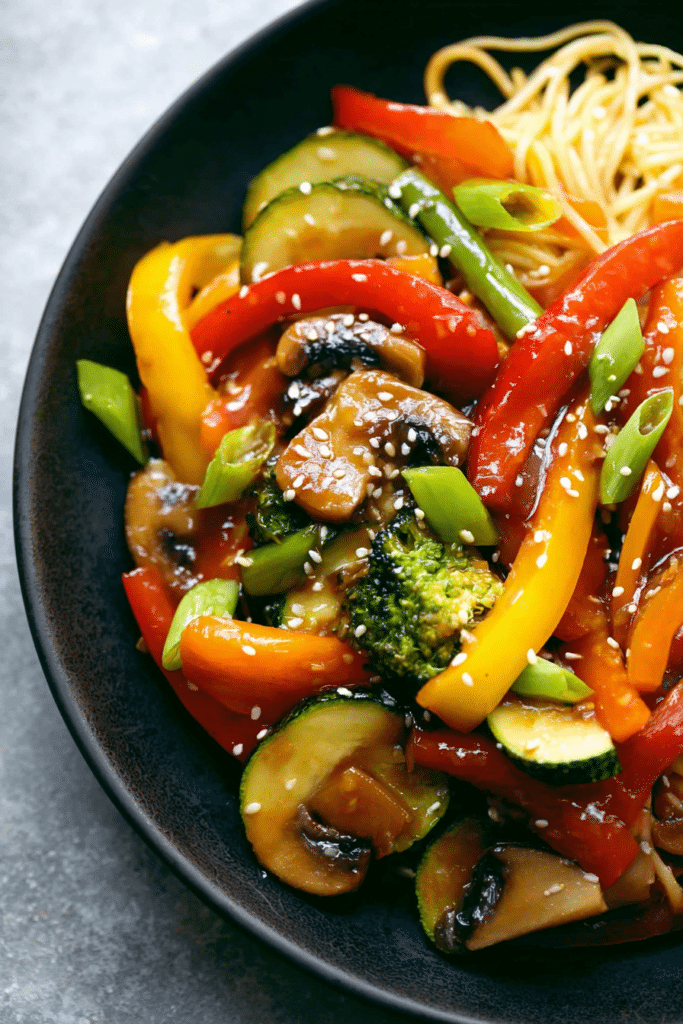
I make this vegetable stir fry on the busiest nights in my kitchen because it’s fast, forgiving, and everyone can pick what they want on their plate. I like that it takes under 30 minutes from chopping board to table—most of that time is passive while the pan does the work. The colors, quick sizzle, and the garlic-soy aroma tell me dinner is ready long before the timer goes off.
Over the years I’ve learned small habits that save time: chop once, keep a jar of mixed sauce in the fridge for the week, and cook proteins separately so the vegetables stay crisp. I’ve also experimented with winter and summer veg—this recipe is deliberately loose so you can use what’s in your crisper or what’s seasonal at the market.
Pro-Tips, Troubleshooting, and Variations are presented as bulleted lists below for quick scanning. I’ll share exactly what I keep on hand, the simple chemistry that keeps the veggies vibrant, and quick fixes when something goes sideways. By the end you’ll have an adaptable formula that reliably produces bright, crisp-tender vegetables and a silky sauce your family will actually eat.
Expect bright greens, a little caramel at the edges of the carrots and peppers, and that brief, satisfying snap when you bite into a perfectly cooked sugar snap pea. That sensory payoff is what makes this my go-to weeknight meal.
Everything You Need for Vegetable Stir Fry
Below I list the essential ingredients and tools in a conversational way so you know why each item is useful and how to substitute when needed. I don’t include measurements here—this is about purpose and swaps, so you can scale to your family’s appetite.
- Olive or neutral oil – Provides the hot cooking medium; use a high-smoke-point oil if you want more sear.
- Bell peppers – Add sweetness and color; any color works.
- Zucchini or summer squash – Tender vegetable that soaks up sauce without turning mushy.
- Sugar snap peas or snow peas – Give crunchy snap and fresh green color.
- Carrots – Add sweetness and structure; slice thin for faster cooking.
- Mushrooms – Bring umami and soak up sauce.
- Broccoli – Holds up to heat and gives nice contrast in texture.
- Baby corn & water chestnuts – Optional pantry items that add sweetness and crunch.
- Garlic – The aromatic backbone; use fresh for the best flavor.
- Soy sauce (or tamari) – Gives salty umami; swap for tamari to go gluten-free.
- Brown sugar or another sweetener – Balances the salty sauce and helps with light caramelization.
- Sesame oil – Use sparingly for toasty finish flavor.
- Chicken broth or vegetable broth – Adds body to the sauce; use veggie stock to keep it plant-based.
- Cornstarch – Thickens the sauce into a glossy coating; arrowroot or potato starch work as alternatives.
- Wok or large skillet – A roomy, hot pan is the single most important tool for even searing.
- spatula or tongs – For quick, confident tossing without bruising the veg.
The Secret to Crisp-Tender Vegetables
Keeping vegetables bright and slightly crunchy is all about quick, high-heat cooking and staggered timing. You want surface browning for flavor while preserving internal snap.
- High heat gives you light caramelization on edges — that browning creates flavor without overcooking the interior.
- Harder vegetables take longer: think root vegetables and broccoli stems; give them a head start so their centers cook through.
- Delicate vegetables only need seconds in the pan — add them last so they stay vibrant and tender-crisp.
- Stir or toss frequently but not constantly; short periods of contact with the hot metal produce the best color and mouthfeel.
- Sample timing guide: dense veg first, medium-firm like broccoli and carrots next, then tender veg and aromatics just before finishing.
Why Temperature and Timing Matter
Temperature controls texture and flavor. Too low and the vegetables stew and lose color; too crowded and the pan temperature drops, which prevents browning.
- Preheat the wok or skillet until it’s very hot; you want an immediate sizzle when ingredients hit the pan.
- Work in batches if needed — overcrowding is the most common reason stir fries go limp.
- Sequence for adding ingredients: start with aromatics very briefly, then add the densest vegetables, then medium-density vegetables, and finish with quick-cooking items and sauce.
- Add the sauce only when the vegetables are nearly done so it reduces quickly and coats each piece instead of steaming them.
How to Make Vegetable Stir Fry (Step-by-Step)
Follow these steps in order. Use the timings as a guide and trust the visual cues: bright color, light browning, and a slight snap.
- Prep everything first: slice vegetables so pieces are uniform in size for even cooking; whisk your sauce until smooth.
- Heat the wok or skillet over medium-high to high heat until it’s shimmering and nearly smoking.
- Add oil, then aromatics (garlic) for just a few seconds until fragrant — don’t let garlic burn.
- Add the densest vegetables first (carrots, broccoli stems), stir for a minute or two to get some color.
- Add medium vegetables (broccoli florets, mushrooms, baby corn) and continue to toss so they cook evenly.
- Add the quick-cooking vegetables last (bell peppers, zucchini, snap peas, water chestnuts); they only need a brief toss to heat through.
- Pour in the mixed sauce and stir constantly as it thickens; coat the vegetables and cook until the sauce is glossy and the vegetables are tender-crisp.
- Finish with a drizzle of sesame oil, give a final toss, and remove from heat immediately to prevent overcooking.
- Garnish with sliced green onions and sesame seeds if you like, and serve right away with rice or noodles.
Troubleshooting
- If the pan steams instead of sizzles, I pull the pan off heat, wipe out excess moisture, and let it reheat before continuing—moisture is the enemy of browning.
- If veggies are soft and pale, I know the pan was too cool or the vegetables were overcrowded; next time I’ll cook in two batches or chop larger pieces for longer contact time.
- If the sauce is too thin, I’ll mix a little more cornstarch slurry and cook a minute longer off the direct heat—this gives a glossy finish without overcooking the veg.
Pro Tip for vegetable stir fry recipe: Gluten-Free & Dietary Swaps
I use swaps all the time to make this work for different diets without losing flavor. Below are quick, practical changes that keep texture and taste intact.
- Swap soy sauce for tamari to make it gluten-free — tamari keeps the same salty umami without gluten.
- Replace chicken broth with a full-flavored vegetable broth or mushroom stock to keep it vegan while preserving depth.
- Use arrowroot or potato starch in place of cornstarch if you avoid corn.
- To add plant protein, pan-fry extra-firm tofu separately until golden and toss in at the end so it keeps its crust.
- For an oil-free option, use a nonstick skillet and toss quickly without oil, finishing with a splash of broth.
If you’re looking for another healthy dish, try our curried broccoli chickpea salad, perfect for gluten-free diets.
Easy Variations: From Chinese to Thai and Indian Flavors
These variations change the profile with just a few pantry swaps. Each idea below is a quick way to travel across cuisines without changing technique.
- Chinese-style: Add oyster sauce or hoisin sparingly, finish with toasted sesame oil and white pepper; use napa cabbage and bok choy for a traditional texture.
- Thai-style: Stir in a spoonful of red curry paste or fish sauce and finish with fresh lime juice and Thai basil; toss in snap peas and Thai eggplant if available.
- Indian-inspired: Use a touch of garam masala or curry powder in the sauce, add mustard seeds to the oil at the start, and include cauliflower and green beans.
- Sweet-savory option: Add chunks of pineapple or a splash of rice vinegar and brown sugar to mimic sweet-and-sour notes.
For a delicious twist, check out our mango chicken stir fry that adds a sweet and savory touch to your meal.
How to Store, Meal Prep, and Reheat Your Stir Fry
Make-ahead and storage tips that keep the dish usable throughout the week without turning everything into mush.
- Store leftovers in an airtight container in the refrigerator for up to three days; separate rice or noodles from the stir fry when possible.
- To reheat, warm a skillet over medium-high heat, add a splash of water or broth, and toss the stir fry quickly until heated through—this revives texture much better than the microwave.
- For meal prep, keep sauces separate and roast or steam denser vegetables ahead of time; reheat quickly and toss with fresh quick-cooking veggies to restore vibrancy.
- If you plan to freeze, cook without delicate vegetables like snap peas or bell peppers; freeze the sturdier base and add fresh vegetables when reheating.
Alongside your vegetable stir fry, why not prepare a warm bowl of potato leek soup for a comforting meal?
Serving this immediately preserves the contrast between glossy sauce and crisp-tender vegetables—it’s the little difference that makes weeknight cooking feel thoughtful without extra effort.
Frequently Asked Questions
Can I use any vegetables for stir fry? Absolutely! This recipe is very versatile, so feel free to use whatever vegetables you have on hand.
How do I store leftover stir fry? Store leftover stir fry in an airtight container in the refrigerator for up to 3 days. Reheat on the stovetop or in the microwave.
Is this vegetable stir fry gluten-free? Yes! You can easily make it gluten-free by using tamari instead of soy sauce and ensuring your chicken broth is gluten-free.
What are some protein options I can add? You can add cooked chicken, shrimp, tofu, or beef for extra protein. Just cook it separately and add it back to the pan when the vegetables are almost done.
How can I make my stir fry more flavorful? Consider adding fresh herbs, chili paste, or a splash of rice vinegar for an extra kick of flavor!
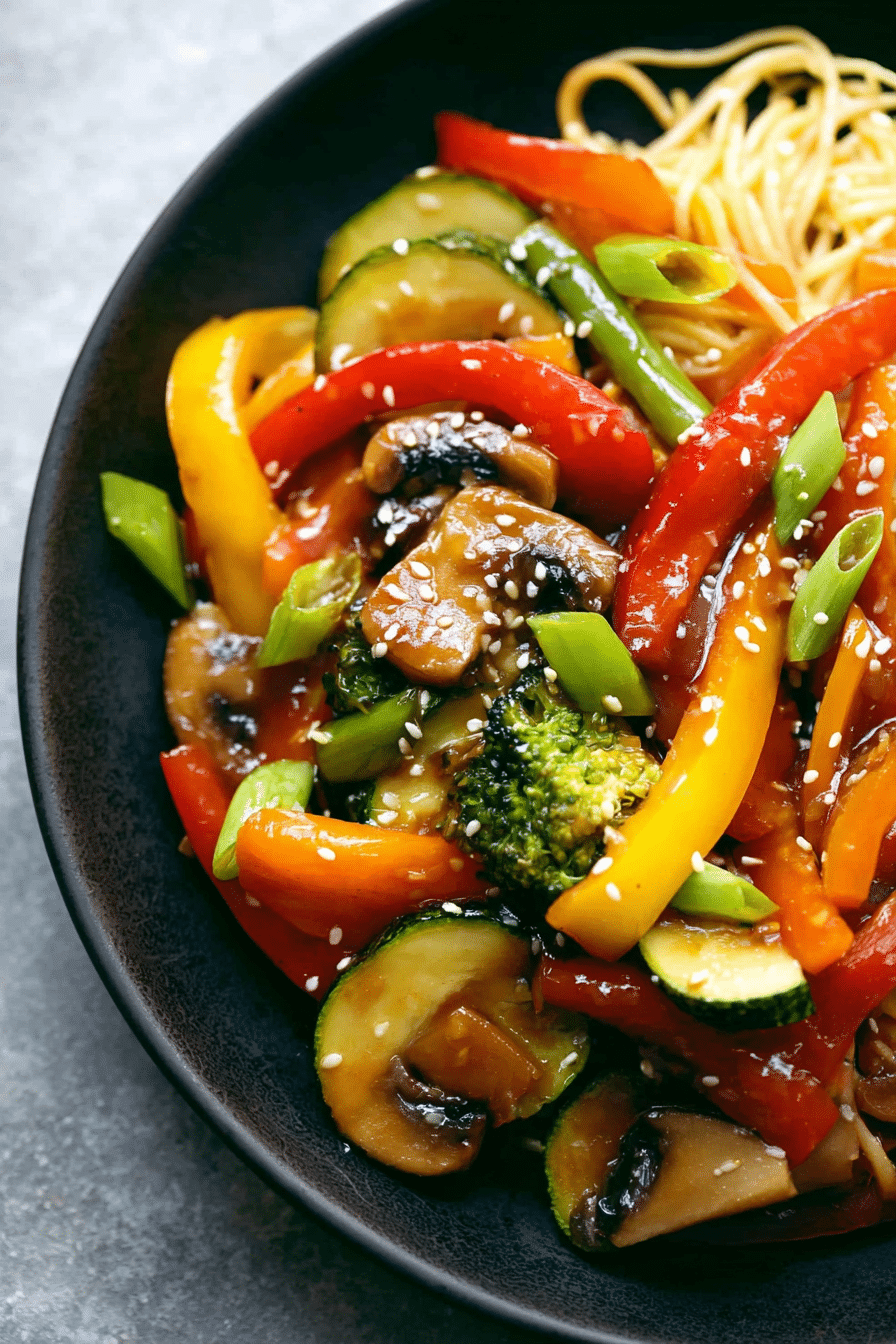
Vegetable Stir Fry Recipe
Ingredients
Method
- Add olive oil over medium-high heat in a wok or large skillet. Add sliced red bell pepper, sliced yellow bell pepper, sliced zucchini, sugar snap peas, sliced carrots, sliced mushrooms, broccoli, baby corn, and water chestnuts. Cook for 2-3 minutes, stirring frequently until the veggies are almost tender.
- In a small bowl, whisk together soy sauce, minced garlic, brown sugar, sesame oil, chicken broth, and cornstarch.
- Pour the sauce over the veggies and cook until the sauce has thickened and the veggies are tender. Garnish with green onions and sesame seeds if desired.