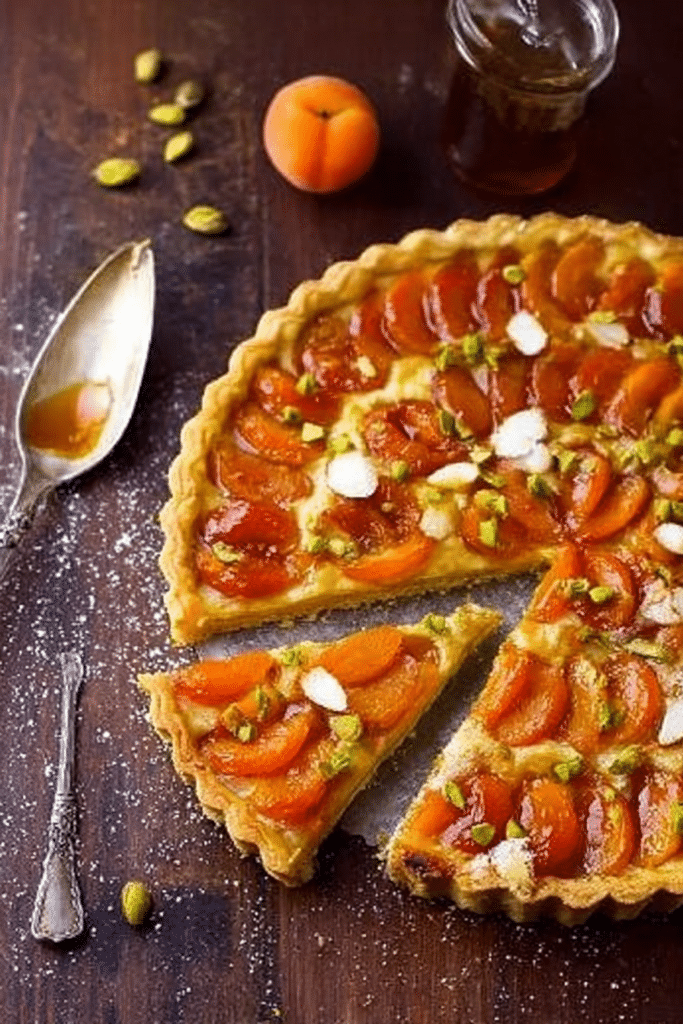
I first made this apricot crème fraîche tart for a small dinner party on a humid July evening, and the moment I slid it from the oven the room changed. The apricots, arranged like a sunburst, gleamed under a breath of honey while the pistachio-scented crust sent a subtle nutty warmth through the kitchen. Guests paused, glasses in hand, waiting for the first slice — that quiet anticipation is why I keep this tart in my entertaining repertoire.
Over the years I’ve refined a few small moves that matter: chilling the crust at the right moments so it stays crisp, choosing apricots that are ripe but still firm, and tempering a silky crème fraîche custard so it sets without curdling. These are details that reward you when you serve this tart to friends — it looks like something from an elegant pâtisserie, but every step remains entirely doable at home.
I encourage you to think of the tart as a composed dessert rather than a quick bake: the contrast between the creamy custard and the honeyed fruit is what guests notice first, while the pistachio crust is your secret finishing note. Keep a few of my practical tips in your back pocket and you’ll have a show-stopping, make-ahead dessert that travels well to picnics, potlucks, and dinner parties.
As you read through the sections below you’ll find precise techniques for texture and presentation — from keeping the crust crisp to arranging apricots so they hold their shape — written in a way that helps you feel confident in your oven.
Why this Apricot Crème Fraîche Tart Is Perfect for Entertaining
This tart presents beautifully: concentric halves of apricot form a glossy, sun-kissed mosaic that demands attention on any dessert table. The visual contrast between the pale, nut-speckled pistachio crust and the warm orange of the fruit is immediately striking, and the honey glaze gives the apricots a polished sheen that photographs well and slices cleanly.
Flavor-wise, the tart balances sweet and tangy. The crème fraîche custard offers a cool, slightly tangy richness that offsets the fruit’s natural acidity, while a drizzle of honey ties the components together with a floral, warm note. The pistachio crust contributes a toasty, buttery aroma that frames each bite and makes the dessert feel elevated — perfect when you want a dessert that reads as elegant but tastes familiar.
Everything You Need for Apricot Crème Fraîche Tart
Below I describe the ingredients in terms of their role and suggest straightforward substitutions so you feel prepared before you begin. After the ingredient notes, you’ll find the essential tools I rely on in my kitchen.
- Pistachios – Ground pistachios add flavor and a delicate nutty texture to the crust; use roasted unsalted for deeper flavor, or substitute finely ground almonds for a milder profile.
- All-purpose flour – Provides structure to the crust; for a gluten-free version, use a coarse almond flour crust to keep texture and flavor.
- Butter – Cold butter creates a tender, flaky crust and carries the buttery aroma; use unsalted so you can control the seasoning.
- Powdered sugar – Smooths the crust and helps it bake to a fine, even texture; if you prefer less sweetness, reduce slightly or swap for a superfine sugar substitute.
- Almond extract – A whisper of almond amplifies stone-fruit notes; omit if you prefer a pure nut flavor from the pistachios.
- Apricots – Choose small to medium apricots that are ripe but still firm so they keep shape while baking; see the apricot section below for tips on selection and frozen options.
- Crème fraîche – Provides a tangy creaminess for the custard; if unavailable, use full-fat sour cream or a mix of heavy cream and plain yogurt as a substitute.
- Egg yolk – Adds richness and helps the custard set; use the freshest yolk you have for the cleanest flavor.
- Honey – Sweetens the custard and finishes the tart with floral notes; choose a mild honey so it doesn’t overpower the apricots.
Essential tools – You will want a food processor to pulse the crust, a removable-bottom tart pan (8 or 9-inch), a rimmed baking sheet for safe carrying, a fork for docking, and an oven thermometer for even baking. A small offset spatula or the back of a spoon helps press the crust neatly into the pan.
The Secret to a Crisp Pistachio Crust
Achieving a crisp crust relies on cold butter, minimal handling, and the right thickness. Aim for an even shell that is firm enough to hold the fruit and custard but not so thick that it overwhelms each bite.
- Keep the butter cold and cut into small chunks before pulsing so it barely incorporates; you should see pea-sized pieces in the dough before you press it into the pan.
- Pulse just until the mixture clumps; over-processing will warm the fat and yield a dense, greasy crust instead of a tender, crisp one.
- Press into the pan evenly: push the dough into the sides first, then the base, smoothing with your fingers or the flat of a measuring cup to form clean corners and an even thickness of about a quarter-inch.
- If the dough softens while you work, chill the pan briefly — 5 to 10 minutes — to firm it up so you can refine the edges without stretching.
- Prick the base lightly with a fork to prevent air pockets, then freeze or chill until firm before blind-baking; this keeps the sides from collapsing and helps the crust remain crisp when filled.
- When blind-baking, place the tart pan on a rimmed sheet and rotate halfway through for even color; aim for a pale, golden edge rather than a deep brown so it doesn’t taste bitter under the custard.
Getting the Apricots to Hold Their Shape
Select apricots that are ripe but still slightly firm; they’ll release less juice and keep their silhouette during baking. The way you halve and arrange them also makes a difference.
- Choose fruit with a fragrant aroma but a bit of resistance when pressed — this signals ripeness without over-softness.
- Halve and pit each apricot and arrange the pieces cut-side up in concentric circles, starting at the outer edge and working toward the center so they support one another.
- Work with uniform-size fruit so slices bake evenly; if some apricots are much larger, quarter them to match the others.
- When placing slices, let them overlap slightly so they nestle together and maintain structure as the custard flows around them.
- If you’d like a touch more flavor or a glossy finish, warm a spoonful of jam until loose and brush lightly over the cooled tart.
To enhance your dessert, consider using classic strawberry jam as a topping for additional flavor.
Crème Fraîche Custard: Timing and Texture
The custard should be silky and barely set — think thick cream rather than a firm flan. Timing is key: underbake and it will be too soft; overbake and it can become grainy.
- Whisk the crème fraîche with the egg yolk and honey just until combined; avoid vigorous whipping that incorporates air, which can make the custard foam or crack as it bakes.
- Pour the custard gently over the arranged apricots so it settles between the pieces without displacing them; use a small spoon to nudge any apricot that shifts out of place.
- Bake until the center only wobbles slightly when the pan is shaken; the residual heat will finish the set as it cools, so err on the side of a faint jiggle.
- If you’re unsure, cool the tart at room temperature and then chill briefly — an hour in the fridge helps the custard firm up without drying the surface.
How to Make Apricot Crème Fraîche Tart (Step-by-Step)
Below is a clear sequence of actions that walks you from dough to serving. These steps focus on technique rather than exact quantities so you can follow along while using your preferred recipe card.
- Make the pistachio crust: pulse your dry ingredients with the nut, cold butter, and almond extract until the mixture just clumps; press evenly into the tart pan and chill until firm.
- Dock and blind-bake the shell until the edges are pale gold and the base feels dry to the touch; let it cool slightly on a baking sheet.
- Prepare the apricots: halve and pit, then arrange cut-side up in concentric rings inside the warm shell.
- Mix the crème fraîche with the egg yolk and honey until smooth and pourable; strain if you want an ultra-silky custard.
- Gently pour the custard over the apricots so it fills the gaps without submerging them completely.
- Bake the assembled tart until the custard is set with a slight wobble; rotate the pan halfway through for even browning.
- Cool the tart completely, then chill if needed to firm the custard before finishing with a drizzle of honey and chopped pistachios.
- To remove the tart from the pan, set the base over an inverted bowl and ease the sides away for a clean release; slice chilled or at room temperature.
Pro Tip for apricot creme fraiche tart: Low-sugar swaps and frozen-apricot guidance
Note: the Pro-Tips, Troubleshooting, and Variations sections are presented as bulleted lists for quick scanning.
- Low-sugar sweetening: Replace part of the honey in the custard with a mild liquid sweetener like agave or a natural erythritol blend; taste the custard before baking because crème fraîche and apricots lend natural sweetness.
- Using frozen apricots: Choose whole or halved fruit without added syrup; thaw completely in a colander so excess liquid drains away, then pat dry lightly with paper towel before arranging.
- Flavor adjustments: Add a small scrape of lemon zest to the custard for brightness, or fold in a tiny pinch of ground cardamom for a warm perfume that complements apricot.
How to Store, Make-Ahead, and Serve the Tart
This tart is very friendly to make-ahead service, which makes it ideal for entertaining. A few simple storage rules will preserve texture and flavor.
- To make ahead: bake the crust and prepare the apricot-topped tart up to the point of the final bake, then refrigerate for a few hours and finish baking on the day of serving for the best texture.
- Storage: keep leftovers tightly covered in the refrigerator for up to three days; the crust will soften somewhat, but the flavors remain excellent.
- Serving: drizzle a little extra honey and scatter chopped pistachios just before serving for contrast; serve slices chilled or at cool room temperature to show off the custard’s texture.
Pairing Suggestions: Wines and Complementary Desserts
Think light, slightly off-dry wines or frizzante-style wines that echo the tart’s fruit and honey notes. An off-dry Riesling or a Moscato d’Asti offers bright acidity and floral aromatics that complement apricot and crème fraîche. For a white with a touch more body, look to a Vouvray or an unoaked Chenin Blanc with refreshing stone-fruit character.
For a different pairing angle, serve alongside a nut-forward dessert to mirror the pistachio crust, or offer a bright lemon cake to contrast the tart’s creaminess.
For a unique dessert experience, pair the tart with our decadent pistachio tiramisu.
A slice of lemon poppy seed loaf makes a wonderful accompaniment to the tart’s flavors.
Variations on Apricot Crème Fraîche Tart
Below are simple, elegant ways to riff on the original while keeping the structure and technique intact.
- Stone-fruit medley: replace some apricots with thin-sliced peaches or nectarines for a mixed stone-fruit tart.
- Herbed honey: fold a small amount of finely chopped fresh thyme into the honey before drizzling for an herbaceous counterpoint to the fruit.
- Crust swaps: use almond flour for a gluten-free crust or add a dusting of cardamom to the pistachio mix for warmth.
- Fruit glaze variations: warm a neutral jam or preserve and brush very lightly over the cooled tart for extra shine; if you love fruit tarts, try our best ever strawberry tart for another delightful dessert option.
Troubleshooting Common Issues
I’ve faced these issues in my kitchen, and here are the fixes that saved the tart more than once. Use these short remedies while you work — they’re the kind of adjustments I make instinctively now.
- If the crust shrinks away from the pan sides: the dough was overworked or too warm — chill the dough thoroughly before blind-baking and press it firmly into the sides again before baking.
- If the custard is grainy or curdled: it was overbaked or the temperature was too high — remove the tart earlier next time and allow residual heat to finish the set; an immediate cool-down helps stop carryover cooking.
- If the apricots release too much juice: choose firmer fruit or pat thawed frozen apricots dry; you can also dock the crust base more to encourage evaporation while blind-baking.
- If the crust is soggy after a day: this is normal as the custard hydrates the base — reheat slices briefly in a low oven to revive crispness or serve chilled if you prefer.
Frequently Asked Questions
Can I make this tart gluten-free?
Absolutely! Simply use a gluten-free almond flour tart crust instead of regular flour, and you’re good to go!
How can I ensure my apricots hold their shape while baking?
Be sure to use ripe but firm apricots, and arrange them cut side up in the tart to help them maintain their shape during baking.
What can I substitute for crème fraîche?
If you don’t have crème fraîche on hand, you can use sour cream or a mix of heavy cream and yogurt as an alternative.
How do I store leftovers?
Store any leftover tart in the refrigerator for up to three days. The crust may soften slightly, but the flavor will still be fantastic!
Can I use frozen apricots for this recipe?
Yes! Frozen apricots can work, but make sure to thaw and drain them well before using to maintain the tart’s texture.
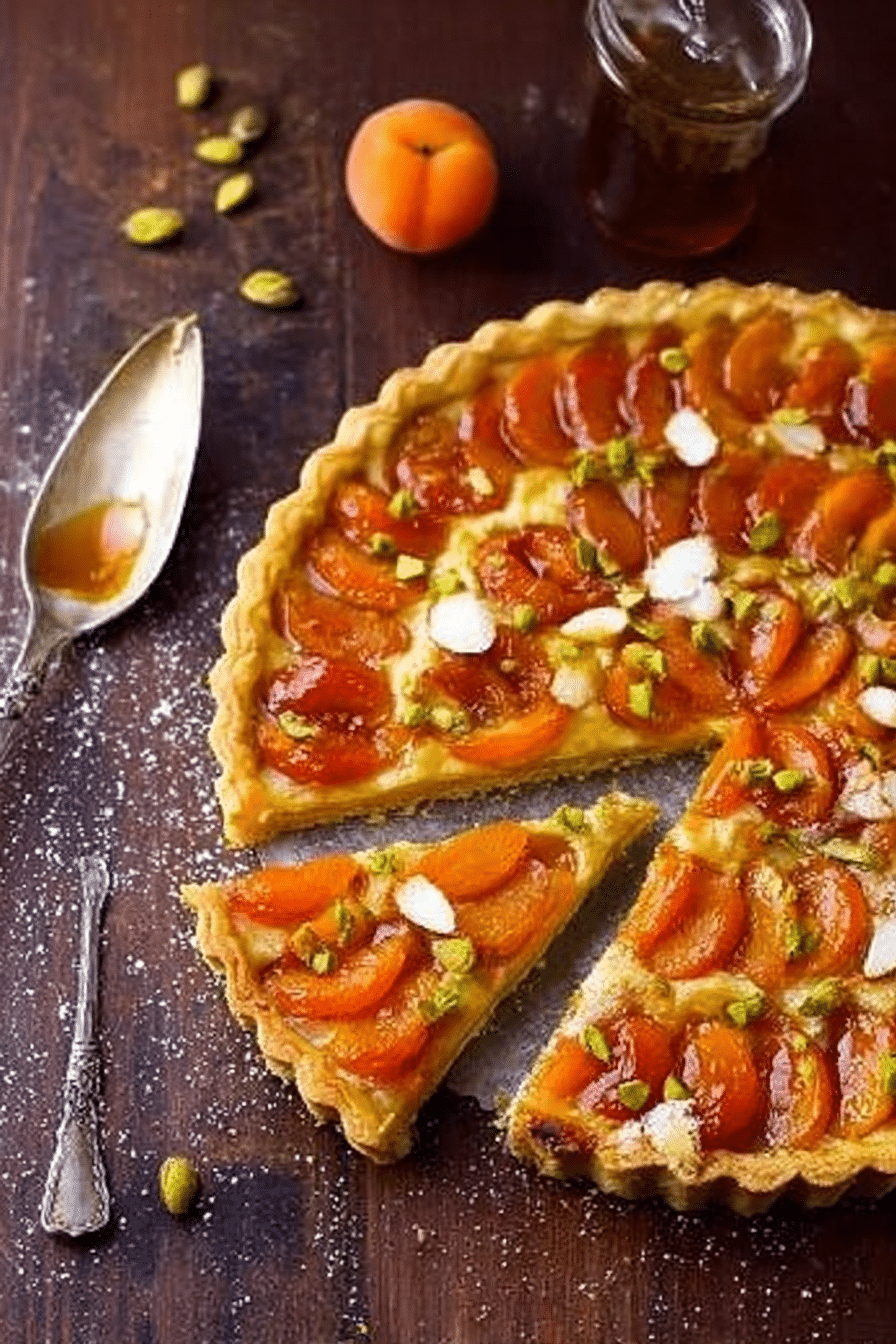
Apricot Crème Fraîche Tart
Ingredients
Method
- Position a rack in the lower third of the oven and preheat to 350º.
- In the bowl of a food processor, pulse the powdered sugar, salt and flour to combine. Add the pistachios, cold butter cubes, and almond extract, and pulse until the mixture just begins to clump together. Press the dough into the sides and bottom of an 8 or 9-inch tart pan.
- Prick the bottom of the crust all over with a fork. Freeze the crust until firm, about 15 minutes.
- Bake the unlined crust until dry and pale golden, about 15-18 minutes, rotating halfway.
- Halve the apricots and arrange them, cut side up, in the warm tart shell.
- Whisk together the crème fraîche, egg yolk, and honey. Pour the custard evenly over the apricots.
- Bake until the custard is set, about 50-60 minutes. Let the tart cool completely.
- Just before serving, drizzle additional honey and sprinkle with chopped pistachios. Serve wedges chilled or at room temperature.