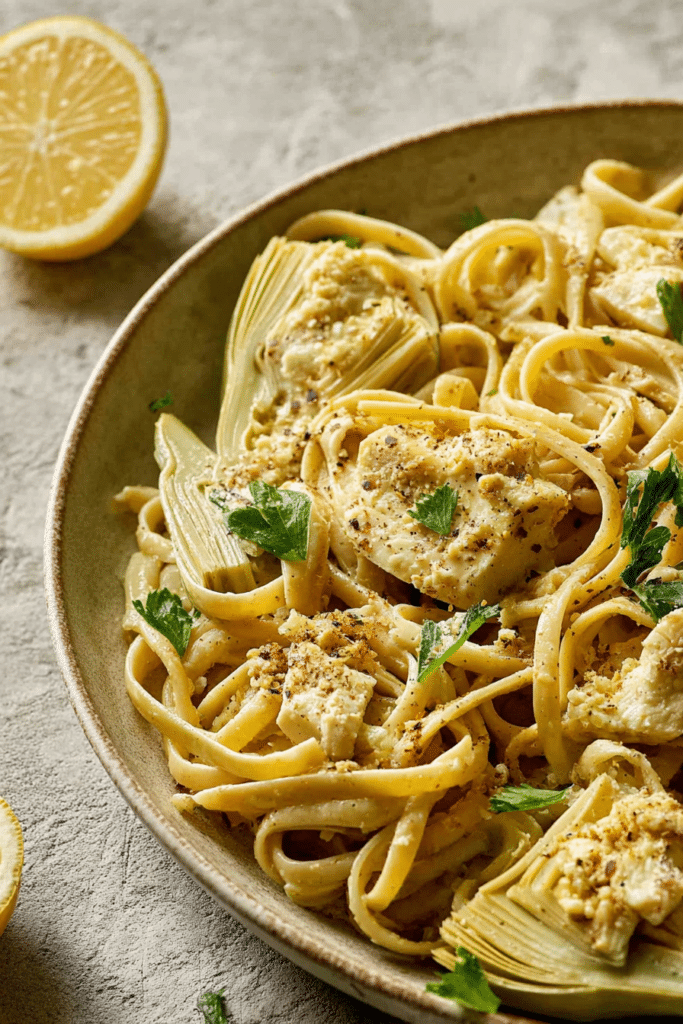
I make this artichoke and lemon linguine on nights when time is short but I still want something bright and satisfying on the table. In my kitchen it’s the go-to when the calendar is full and I need dinner that cooks quickly without skimping on flavor. The pasta comes together fast, the lemon keeps it lively, and the artichokes add a gentle, savory bite that feels substantial.
Over the years I’ve tweaked the balance so the sauce clings to each strand without needing heavy cream — a little pasta water and the right fat are all you need. I like to keep the pantry stocked with canned artichokes and capers for evenings when fresh produce isn’t an option. That small habit makes this a genuinely spontaneous weeknight meal.
I also pay attention to textures: the tender artichokes, the pop of capers, thinly sliced shallot, and the bright lemon zest. The aroma of garlic sautéing in olive oil and butter is always the first sign dinner will be worth the effort. This is quick, fresh, and fuss-free — exactly the kind of pasta I turn to when evenings are busy but I still want something home-cooked.
Everything You Need for Artichoke and Lemon Linguine
Tools and a few ingredient notes will make the process smoother. Use a large pot for the pasta so the water stays at a rolling boil, and a wide, deep skillet to finish the sauce and toss the pasta. A microplane for zesting and a good sharp knife for the shallot speed things up.
- High-quality extra virgin olive oil – Adds fruity depth and carries the garlic aroma; don’t use a neutral oil here if you want flavor.
- Salted butter – Helps create a silky mouthfeel when combined with olive oil; if you prefer, use unsalted and add salt later to taste.
- Shallots and garlic – Build a fragrant base; shallots are milder than onions and blend beautifully with lemon.
- Artichokes (canned or fresh) – Provide body and a mild, nutty flavor; see the next section for choosing between options.
- Capers – Small briny pops that brighten the dish and contrast the lemon.
- Dry white wine – Adds acidity and a subtle backbone; it reduces quickly and concentrates flavor.
- Lemon zest and juice – Zest for aroma, juice for immediate brightness; both are essential.
- Fresh parsley – Finishes the dish with color and a fresh herb note.
- Parmigiano-Reggiano (optional) – Adds savory umami if you include dairy; omit for a dairy-free version.
Choose the Best Artichokes: Canned vs. Fresh (What I Use)
Canned artichokes are a busy cook’s friend: they’re already tender and trimmed, which cuts prep time dramatically. The trade-off is a slightly softer texture and less fresh vegetal aroma than a just-cooked fresh artichoke. When I have time, I use fresh—I steam or braise the hearts until tender and then finish them in the skillet to get a touch of caramelization.
When choosing fresh artichokes, feel for firmness, compact leaves, and a bright green color. Avoid artichokes with brown spots or very loose leaves. Store fresh artichokes wrapped in a damp towel in the refrigerator and use them within a few days for best texture.
If you want a fresh-artichoke side to practice with, try this Grilled or Steamed Artichokes recipe with Lemon Pepper Garlic Butter for a great companion dish: Grilled or Steamed Artichokes.
The Secret to Sauce That Clings — No Dairy Required
The trick to a silky sauce that grabs the pasta is simple: starch, fat, and timing. The starchy pasta water acts like glue when you emulsify it with the olive oil and a little butter (or plant-based butter for vegan). Lemon juice and zest then sharpen the flavors without adding heaviness.
- Reserve starchy pasta water before draining; it will help bind the sauce to the noodles.
- Toss the hot pasta in the skillet with the sauce off the heat, adding pasta water a little at a time until the sauce clings.
- Use both zest and juice: zest for aroma and oil-soluble lemon oils, juice for bright acidity.
For more on sauce techniques that achieve a creamy feel without cream, this Creamy Garlic Pasta article has useful tips: Creamy Garlic Pasta.
How to Adjust This Recipe for Vegan or Gluten-Free Diets
Making this dish fit dietary needs is straightforward and doesn’t sacrifice flavor.
- Gluten-free: Use your favorite gluten-free linguine alternative; cook to package directions and watch timing closely since some brands can get soft faster.
- Vegan: Swap the butter for a plant-based butter or extra olive oil and omit the cheese or use a vegan Parmesan substitute like nutritional yeast for a savory finish.
- Reduced-sodium: Choose low-sodium capers and rinse canned artichokes to control salt; adjust final seasoning to taste.
How to Make Artichoke and Lemon Linguine (Step-by-Step)
- Bring a large pot of water to a boil and salt it generously so the pasta absorbs flavor as it cooks.
- While the water heats, warm olive oil and a bit of butter in a wide, deep skillet over medium heat until fragrant.
- Add thinly sliced shallot and minced garlic; sauté briefly until the shallot is tender and translucent but not browned—this builds a sweet, aromatic base.
- Toss in drained artichoke hearts, capers, lemon zest, and crushed red pepper. Cook gently until the artichokes are warmed through and start to take on a little color.
- When the pasta is nearly al dente, reserve a cup of pasta cooking water, then drain the pasta.
- Increase heat, add white wine to the skillet, and reduce it by about half so the alcohol cooks off and the flavor concentrates.
- Lower the heat, add the pasta, a pinch of salt, freshly ground black pepper, and lemon juice. Toss to coat the noodles evenly.
- As the pasta absorbs the sauce, add pasta water in small additions until the sauce becomes silky and clings to each strand.
- Finish by folding in chopped parsley, taste and adjust salt and lemon, and serve with Parmigiano-Reggiano if using.
Pro Tip for Artichoke and Lemon Linguine: Save Pasta Water for a Creamy Sauce
- Always reserve at least one cup of pasta water before draining; start by adding a few tablespoons and increase until you reach the desired sauce consistency.
- If the sauce feels too thin, give it a minute over medium heat while tossing so the starch helps thicken it.
- For a richer mouthfeel without cream, use a small knob of butter or a splash of the reserved water emulsified into the oil.
Troubleshooting
- If the sauce is watery, simmer briefly to reduce, or add a little more pasta to absorb excess liquid.
- If the pasta is sticking, toss it with a splash of reserved pasta water and a drizzle of olive oil immediately after draining.
- If the dish tastes flat, add a final squeeze of lemon and a pinch of salt to brighten flavors.
- If the artichokes are too soft, brown them slightly in the skillet before adding liquids to regain texture.
Variations
- Add roasted cherry tomatoes for sweetness and color contrast.
- Fold in baby spinach at the end for extra greens and a pop of color.
- Stir in toasted pine nuts or chopped almonds for crunch and a nutty note.
- For a heartier version, add shredded cooked chicken or canned tuna toward the end of cooking.
How to Store, Reheat, and Modify Artichoke and Lemon Linguine
Store leftovers in an airtight container in the refrigerator for up to three days. To prevent the pasta from drying out, add a splash of water, broth, or a drizzle of olive oil before reheating.
- Reheat gently on the stove over low heat, tossing frequently and adding a little liquid to loosen the sauce.
- Microwave reheating works in a pinch—cover and heat in short intervals, stirring and adding a splash of water between heats.
- Turn leftovers into a new meal by frying the cooled pasta in a skillet like a pasta frittata—here’s a great idea for that: Leftover Pasta Frittata.
Nutritional Information for Health-Conscious Diners
This dish balances carbohydrates from pasta with healthy fats from olive oil and micronutrients from artichokes and lemon. Olive oil provides monounsaturated fats, while artichokes add fiber and antioxidants. The overall calories and macronutrient split will vary depending on portion size and whether you include cheese or butter.
- Calorie awareness: The meal is moderate in calories per serving and can be lightened by using less butter or skipping the cheese.
- Protein: Add a lean protein like grilled chicken or white beans to increase protein per serving.
- Fiber & vitamins: Artichokes contribute fiber and micronutrients that support digestion and satiety.
Suggested Wine Pairings to Elevate the Meal Experience
A dry white wine complements the lemon and artichoke flavors without overwhelming them. I prefer wines with bright acidity and moderate body to match the dish’s freshness. Serve chilled but not too cold to allow the aromatics to come forward.
- Sauvignon Blanc — crisp acidity and herbaceous notes echo the lemon and parsley.
- Pinot Grigio — light, clean, and unobtrusive; it keeps the focus on the pasta.
- Vermentino or a light unoaked Chardonnay — offers slight weight if you want a rounder mouthfeel.
- For more pairings and tips on serving temperature and glassware, see these Wine Pairings suggestions: Wine Pairings.
Frequently Asked Questions
Can I use fresh artichokes instead of canned?
Absolutely! While canned artichokes are convenient, using fresh artichokes can elevate the dish. Just make sure to pre-cook them so they’re tender before adding them to your linguine.
Is there a way to make this dish gluten-free?
Yes! Simply replace the linguine with a gluten-free pasta alternative. There are many great options available that will work beautifully in this recipe!
What type of wine works best for this recipe?
A dry white wine is ideal for this dish. Varieties like Sauvignon Blanc or Pinot Grigio can enhance the flavors of the artichokes and lemon.
How can I make this recipe vegan?
To make this dish vegan, substitute the butter with a plant-based butter and omit the Parmigiano-Reggiano or use a vegan cheese alternative. You’ll still enjoy a delicious meal!
Can I store leftovers, and how should I reheat them?
Yes, you can store leftovers in an airtight container in the fridge for up to 3 days. To reheat, warm it gently on the stove with a splash of water or broth to loosen the sauce.
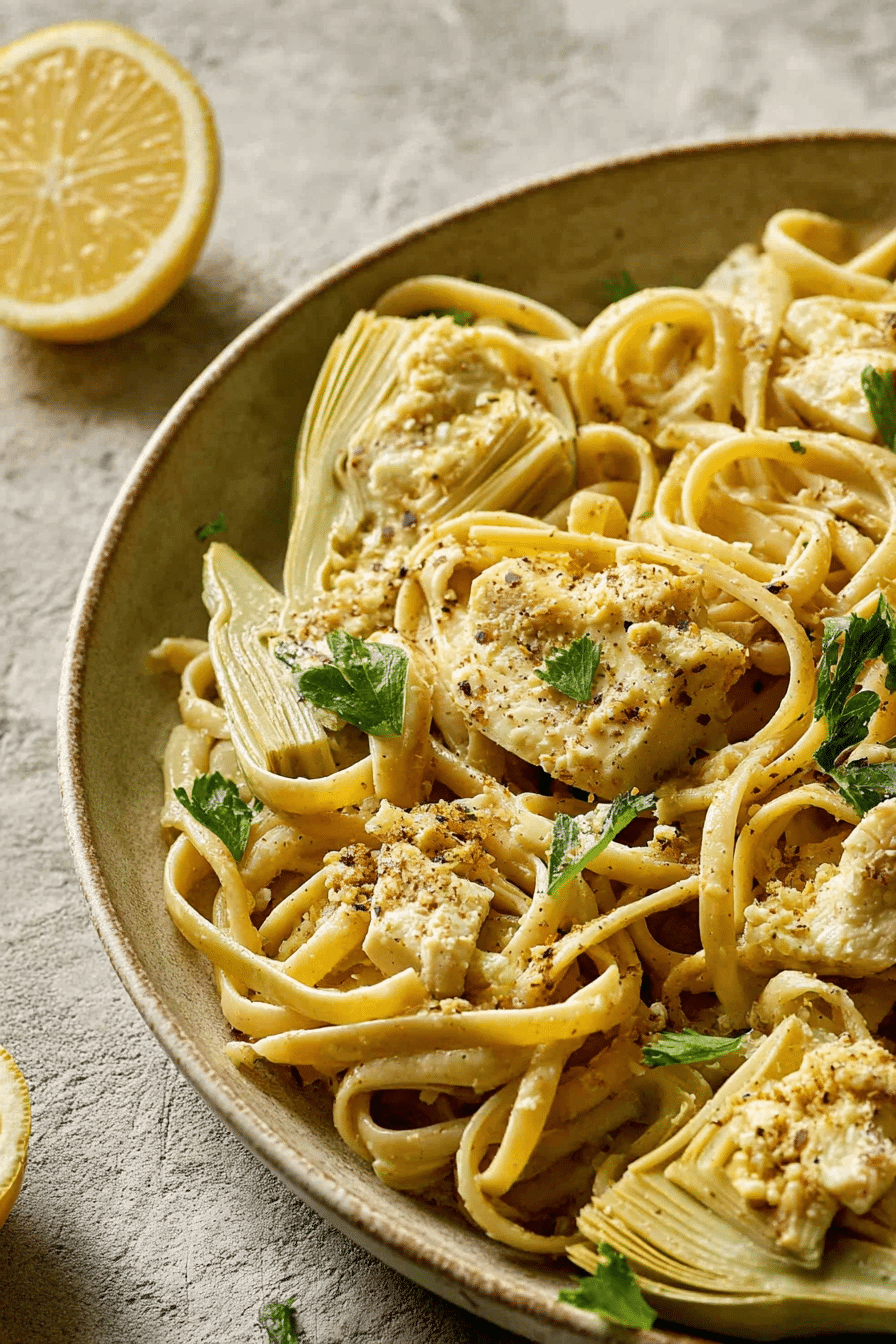
Ingredients
Method
- Bring a large pot of water to a boil. Add the pasta with plenty of salt (about 1 tablespoon) and stir. Cook until just shy of al dente, according to the package directions.
- Meanwhile, heat the oil and butter in a large deep skillet set over medium heat. Add the shallots and garlic and cook, stirring, being careful not to burn, until the shallot is tender, about 2 minutes.
- Add the artichokes, capers, lemon zest, and red pepper flakes and toss until the artichokes are well coated and slightly tender. Reduce the heat to low.
- Once the pasta is fully cooked, reserve 1 cup of the pasta water and set aside. Drain the pasta and set aside.
- Increase the heat to medium-high. Add the wine and cook, stirring, until reduced by half, about 2 minutes.
- Reduce the heat to medium and add the pasta, salt, pepper, and lemon juice and toss to coat. Once the pasta begins to absorb the sauce, add 2/3 cup of the pasta water and gently toss again to combine. Add the parsley and toss once more.
- Divide the pasta among 4 plates and garnish with Parmigiano-Reggiano (if using) and additional parsley.