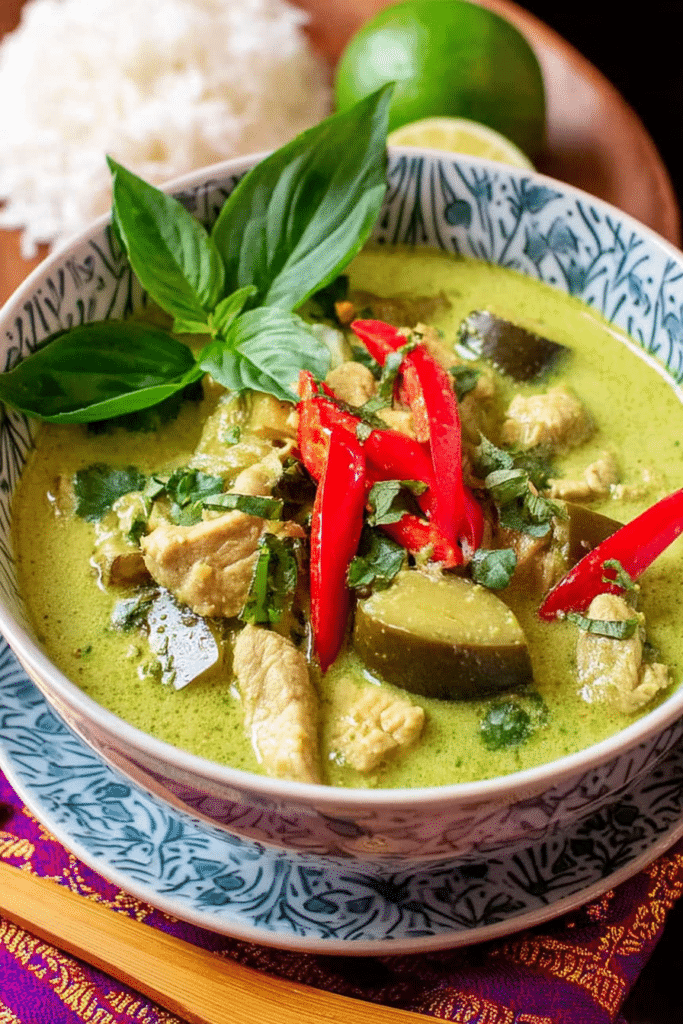
I cook green curry regularly in my kitchen because it is one of those dishes that rewards small, deliberate choices: pounding fresh herbs instead of relying only on a jarred paste, letting the coconut milk clarify with the curry, and using makrut lime leaves for their perfume. Over the years I learned how quick this can be for weeknight dinners and which shortcuts are worth taking when time is short.
I remember the first time I pounded basil and fingerroot together for a curry paste — the aroma that filled my kitchen told me I was on the right track. The bright green colour and the lift from fresh basil make a real difference; it’s not just about heat but clarity of flavor. I now reach for a mortar and pestle whenever I can, but I’m realistic: a blender has its place, and I’ll show you how to get the best from both methods.
If you’re balancing busy evenings with the wish to cook something truly Thai, this version sits between convenience and tradition. It comes together in about 35 minutes and keeps its character when you use a couple of traditional touches — makrut lime leaves and a little fermented shrimp paste (gapi) — that give the curry its authentic backbone.
Pro-Tips, Troubleshooting, and Variations in this article are presented as clear bulleted lists so you can scan them quickly and get straight to cooking.
Why This Authentic Thai Green Curry Chicken Belongs on Your Weeknight Menu
Quick prep and a short simmer make this curry a practical weeknight option without sacrificing authenticity. The balance of creamy coconut milk, aromatic herbs, pungent fermented shrimp paste, and a touch of palm sugar gives you savory, sweet, salty, and herbaceous notes in a single pot. In my experience, serving it with steaming jasmine rice turns a busy night into something that feels considered and comforting.
Sensory cue: the kitchen will smell of coconut and green herbs while the curry simmers, and the bright green curry against pale jasmine rice is a simple, appealing plate that eats well and looks like effort even when it isn’t.
Everything You Need for Authentic Thai Green Curry Chicken
Below I list the essential ingredients and a few brand or sourcing suggestions to keep the dish authentic without making it fussy. If you like other Thai-style curries, try this related recipe for a different take: Coconut Curry Chicken Meatballs.
- Coconut milk – The foundation for richness; choose a full-fat variety for silky texture.
- Green curry paste – You can use a good-quality store-bought paste as the base or make your own for a brighter result.
- Chicken (thigh) – Bone-free, skinless thigh gives you tender, forgiving pieces; breast is a leaner substitute.
- Makrut (kaffir) lime leaves – These provide a floral, citrusy perfume that is hard to replicate with lime zest.
- Fermented shrimp paste (gapi) – Small amount adds depth and umami; available in Asian markets or to buy in small jars online.
- Palm sugar – Gives the curry a rounded, caramelized sweetness; light brown sugar can be used if needed.
- Thai eggplant or bamboo shoots – Thai eggplant offers texture and mild bitterness; canned bamboo shoots are a pantry-friendly swap.
- Thai basil – Fresh leaves added at the end bring an anise-like lift; don’t substitute with regular basil unless in a pinch.
- Fish sauce – The primary salty seasoning; use a good fish sauce for clarity of flavor.
- Optional aromatics (fingerroot/krachai) – Traditional in many green curry pastes; it adds warm, peppery notes.
- Tools – A heavy-bottomed pot for even heat and a mortar and pestle if you plan to pound fresh aromatics; a blender works if you prefer.
Why Makrut Lime Leaves and Gapi Make It Truly Thai
Makrut lime leaves and gapi are small additions that carry a lot of cultural and flavor weight in Thai cooking. Makrut leaves give a citrus aroma that is different from ordinary lime zest — more floral and sharp in the top notes — and they infuse the broth while simmering so the fragrance is consistent throughout. Gapi, the fermented shrimp paste, contributes a savory, oceanic depth that melds with fish sauce and palm sugar to round the curry.
Sourcing notes: look for fresh or frozen makrut leaves at Asian markets, and buy gapi in small jars because a little goes a long way. If you can’t find gapi, a tiny extra splash of high-quality fish sauce will help, but the fermented funk from gapi is unique and worth seeking out for authenticity.
Pounding vs. Blending: A Traditional Technique for Brighter Paste
Pounding aromatics in a mortar and pestle remains a preferred method because it breaks down cell walls at a measured pace and creates an emulsion that sits differently in coconut milk. A mortar allows you to control texture — small fibrous bits remain and bloom in the curry — and I find the aroma far brighter when ingredients are hand-pounded.
- Pounding: Use a mortar and pestle to grind fresh basil, fingerroot, and shrimp paste into a paste. The action releases essential oils gradually and gives a lively green color.
- Blending: A high-speed blender is faster and still produces excellent results—add a splash of stock to help the blades and stop before it becomes too smooth; a little texture is fine.
- Technique tips: If pounding, work in small batches and scrape the mortar frequently so nothing sticks. If blending, pulse to retain texture and strain if you want a silkier paste.
The Secret to Tender Chicken and Perfectly Cooked Thai Eggplant
Timing is everything: chicken thighs stay tender with a gentle simmer rather than a rolling boil, and Thai eggplant benefits from brief contact with heat so it keeps a slight bite. Here are concise, practical steps I follow every time.
- Start by briefly sautéing the curry paste in part of the coconut milk until the oils separate; this unlocks aroma without adding oil.
- Add chicken and stir so pieces are coated, then add stock and the rest of the coconut milk and simmer gently—no hard boil—to keep thighs tender.
- Add Thai eggplant later and press them into the curry for the first minute so they don’t oxidize at the surface; cook only until fork-tender with a little resistance.
- Finish by turning off the heat and stirring in sliced peppers and Thai basil so they keep color and fragrance without overcooking.
Pro Tip for Authentic Thai Green Curry Chicken: How to Boost Store-Bought Paste
- Add fresh herbs: pound or blitz a handful of Thai basil into the paste to brighten the color and aroma.
- Fold in aromatics: a small amount of fingerroot or galangal blended with the paste adds traditional warmth.
- Introduce gapi sparingly: a pea-sized amount of fermented shrimp paste deepens umami without overpowering.
- Adjust balance: taste for salt and sweetness during cooking and add fish sauce or palm sugar in small increments until the curry sings.
- Ratio guideline: for each jar-based portion, consider adding one part fresh crushed herbs and a whisper of gapi to lift the paste—taste as you go.
How to Make Authentic Thai Green Curry Chicken (Step-by-Step)
Below are the practical steps I use in my kitchen. If you want another simple dinner that cooks in a single pan, see this option: One-Pan Thai-Inspired Yellow Curry Chicken Rice.
- Prepare aromatics: if using, pound Thai basil and fingerroot with gapi and green curry paste in a mortar, or blend with a little stock until smooth.
- Heat coconut milk: in a heavy pot bring a portion of the coconut milk to a full boil over medium heat so the oil separates slightly; this helps bloom the curry paste without adding oil.
- Sauté paste: add the curry paste (or the pounded/blended mixture) and stir until fragrant and oil begins to separate; deglaze with a bit of stock if it sticks.
- Add chicken: stir in the chicken pieces so they are coated with the paste.
- Add liquids and seasoning: pour in the stock and remaining coconut milk, then add palm sugar and an initial measure of fish sauce; bruise and tear makrut lime leaves into the pot for aroma.
- Simmer gently: bring to a simmer and cook gently until chicken is fork-tender, about 10–15 minutes depending on piece size.
- Add vegetables: push Thai eggplant into the curry so they stay submerged initially, cook until just tender; if using canned bamboo shoots, stir in toward the end to heat through.
- Finish off-heat: turn off the heat, stir in sliced red pepper and Thai basil so they wilt in the residual heat and retain color.
- Taste and adjust: add more fish sauce or palm sugar as needed; serve with jasmine rice.
Troubleshooting
- If the curry tastes flat: add a small splash of fish sauce and a pinch of palm sugar, stir and taste again.
- If the curry is too salty: add a bit more coconut milk or a small spoon of sugar to rebalance.
- If the color is dull: fold in freshly pounded basil or a small handful of blanched spinach blended into the paste for color without changing the flavor profile too much.
- If the chicken is tough: lower the heat and simmer gently until tender; thighs are forgiving but high heat tightens the proteins.
How to Store, Reheat, and Meal-Prep Authentic Thai Green Curry Chicken
- Storage: cool the curry to room temperature and keep in an airtight container in the refrigerator for up to 3–4 days.
- Freezing: curry freezes well for up to 2 months; freeze in portions for easy thawing and reheating.
- Reheating: warm gently on the stove over low heat so the coconut milk doesn’t break; add a splash of water or stock if it tightens.
- Meal-prep idea: cook the curry without the basil and fresh peppers, pack into portions with rice, and add fresh basil at serving to maintain herb brightness.
Dietary Variations and Swaps
If you need lighter or alternative versions, here are straightforward swaps that keep the soul of the dish. For a lighter, fresh option elsewhere on the site, see this salad-inspired recipe: Thai Spring Roll Pasta Salad.
- Vegan: replace chicken with tofu or mushrooms, swap fish sauce and gapi for a fermented soybean paste and extra soy sauce or tamari for saltiness.
- Gluten-free: ensure your fish sauce and store-bought curry paste are tested gluten-free; use tamari labelled gluten-free when substituting soy.
- Lower-calorie: use chicken breast and light coconut milk, but beware that thinning coconut milk changes mouthfeel—compensate with a touch more seasoning.
- Allergen swap: for shrimp-paste allergies, omit gapi and increase the umami with a small amount of miso (adjust salt accordingly).
Culinary Tips for Balancing Flavors and Adjusting Spice Levels
Balancing this curry is about small adjustments and tasting as you go. For more on balancing flavors across curries, this other recipe includes useful tips: Delicious Chicken Curry.
- Taste early and often: check for salt, sweetness, and heat after the curry has simmered and again after the final rest.
- To increase heat: add fresh green chilies sliced toward the end of cooking or a touch more curry paste early on.
- To cool the heat: add a little more coconut milk or a squeeze of palm sugar; acidity (a tiny splash of lime) can also balance heat.
- Layer ingredients: add delicate herbs and peppers off the heat so they keep freshness and color.
Frequently Asked Questions
What goes into an authentic Thai green curry?
An authentic Thai green curry typically includes coconut milk, green curry paste, chicken, palm sugar, fish sauce, makrut lime leaves, Thai eggplant, and Thai basil. For this recipe, specific ingredients like fingerroot and fermented shrimp paste (gapi) can also elevate the flavor!
Can I use store-bought green curry paste?
Absolutely! Using store-bought green curry paste is a great shortcut. You can enhance its flavor by pounding or blending it with fresh ingredients like Thai basil, fingerroot, and shrimp paste, as suggested in the recipe.
How can I make this dish healthier?
You can make this dish healthier by using skinless chicken breast instead of thighs to reduce fat content. Additionally, serving it with brown rice or cauliflower rice can provide a healthier carbohydrate option.
What is the best way to store leftovers?
Store any leftovers in an airtight container in the refrigerator for up to 3-4 days. You can reheat it on the stove or in the microwave until warm. Just be sure to stir gently to maintain the texture.
Can I customize the spice level?
Yes! You can easily adjust the spice level by adding more or less green curry paste and including or omitting spicy peppers. Taste as you go to find your perfect balance!
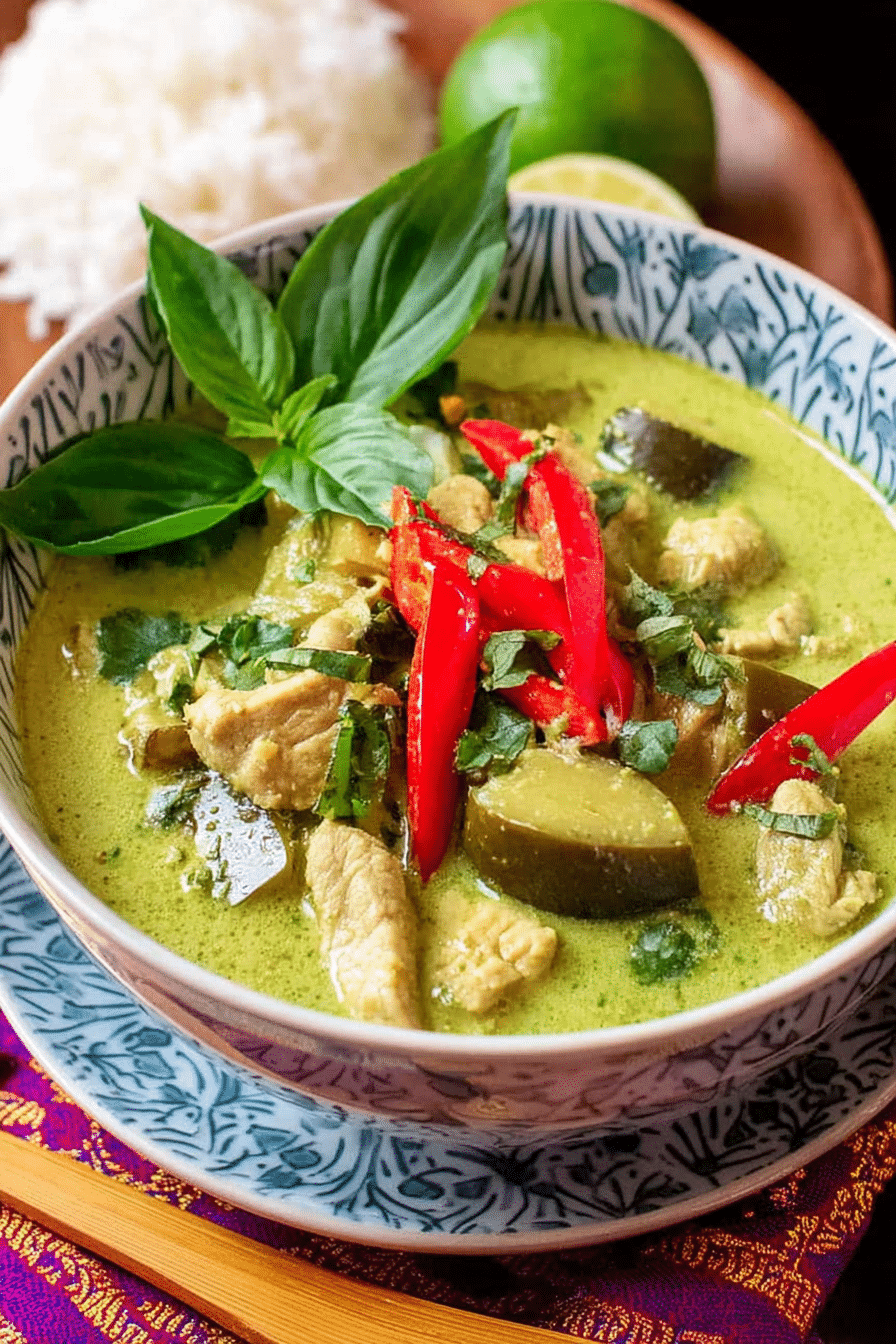
Authentic Thai Green Curry Chicken
Ingredients
Method
- Pound julienned Thai basil into a fine paste. Mix in fingerroot and shrimp paste. Combine with green curry paste.1 cup chicken stock, 1 lb chicken thigh, 2 Tablespoons finely chopped palm sugar
- In a pot, boil coconut milk, add curry paste, add chicken and stock, season, and simmer until chicken is tender.2 Tablespoons finely chopped palm sugar
- Add eggplant, cook until tender, then stir in red peppers and Thai basil.½ lb Thai eggplant, Jasmine rice
- Serve hot with jasmine rice.