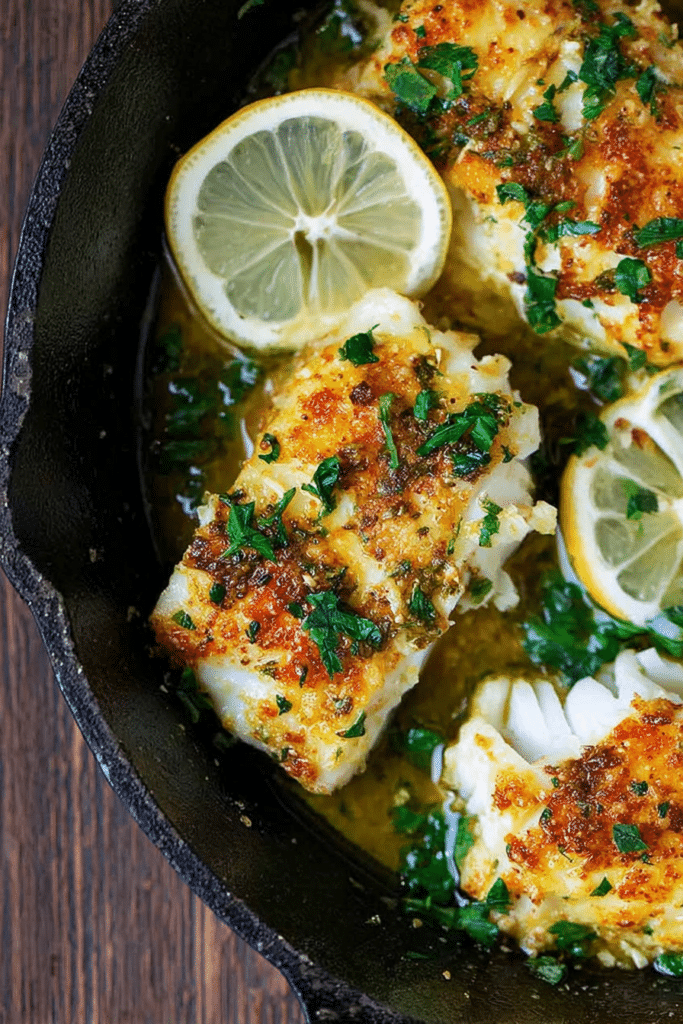
I keep a few weeknight recipes on repeat in my kitchen, and this baked cod is one of them. The first time I made it for a hungry weeknight crowd, I remember the lemon-and-garlic aroma filling the house and everyone asking what was for dinner. It comes together fast, uses pantry-friendly ingredients, and cleans up quickly when life is busy.
I often start this dish while I toss a salad — the whole thing is ready before I finish setting the table. I especially love how the garlic hits the hot olive oil and the bright lemon cuts through the richness; that scent alone makes me feel like I spent more time on dinner than I actually did. I’ve tweaked the method over the years so the fish stays tender and flaky every time.
Because I cook this regularly, I’ve learned small habits that save time without sacrificing flavor: patting the fish very dry, a quick sear in a hot skillet for color, and finishing in a hot oven so the fish never overcooks. In my kitchen this is the go-to when the clock is against me but I still want a satisfying, Mediterranean-style meal.
If you like simple dinners that taste like you put in more effort than you did, this is the recipe you’ll reach for on busy nights—no fuss, lots of flavor, and quick cleanup.
Why this baked cod recipe is perfect for busy weeknights
This recipe takes under 30 minutes from start to finish, so it fits into hectic evenings without compromising on taste. You get the bright aroma of lemon and the savory warmth of garlic filling the kitchen while the fish bakes, which makes dinner feel special even when time is short. Because it’s essentially a one-pan meal, you spend less time washing up afterward.
I remember a night when a last-minute guest showed up; I had cod in the freezer and a lemon on the counter. Five minutes of prep and a quick sear later, I popped the skillet in the oven and had something everyone loved within half an hour. That kind of convenience is what makes this recipe a weekday staple for me.
Everything You Need for Baked Cod Recipe
Use fresh, simple ingredients and a sturdy pan for the best results. If you can, choose sustainably sourced cod or a similar firm white fish to keep the flavors clean and bright. A cast-iron or oven-safe skillet helps you go straight from stovetop sear to oven without extra dishes.
- Cod fillets – The star of the dish; substitute another firm white fish if needed.
- Fresh parsley – Adds color and a fresh, herby finish.
- Lemons – Provide acidity to brighten the fish.
- Extra virgin olive oil & butter – Olive oil brings fruitiness; butter adds a silkier mouthfeel.
- Garlic – The aromatic backbone—use more or less to taste.
- All-purpose flour – Gives a thin coating for slight crust and helps hold the sauce; swap for gluten-free options if needed.
- Warm spices (coriander, paprika, cumin) – Build depth and a subtle Mediterranean note.
- Salt & pepper – Essential seasonings to taste.
For seafood lovers, pairing baked cod with lemon garlic scallops elevates your meal.
The secret to tender, flaky cod every time
The most important things I do are simple: dry the fillets, give them a quick sear for color, and finish them in a hot oven for just a few minutes. Patting the fish dry removes surface moisture so the flour and sauce adhere better and the sear browns instead of steams. The quick sear builds flavor and a touch of texture while the oven gently finishes cooking to a tender, flaky finish.
Resist the urge to overcook. Fish continues to carryover-cook after it comes out of the oven, so you should pull it when it just starts to flake. The sensation of flaky, moist cod breaking apart with a fork—that gentle, almost buttery texture—is the goal.
Timing and temperature: why it bakes so fast
High oven heat and a quick stovetop sear are what make this dish fast. Preheating the oven ensures the pan is already hot when it goes in, so the fish finishes quickly and evenly. The olive oil and butter in the lemon sauce help distribute heat and add richness, which lets you bake for only a short time without drying the fillets.
Listen for the sizzle when you sear the fish; that sound tells you the pan is hot enough to develop color. Start checking the fish around the 10-minute mark in the oven—thin fillets will be done sooner, thicker ones may need a couple more minutes. Pull the fish when it flakes easily with a fork and still looks just opaque in the center.
Make it your own: toppings, herbs, and flavor swaps
This recipe is a great canvas for seasonal and regional flavors. Try summer cherry tomatoes and basil for a bright topping, winter citrus and fennel for a sharper note, or a scattering of olives and capers for extra Mediterranean character. Fresh herbs added at the end keep their color and lift the dish visually and aromatically—imagine bright green parsley against the white fish.
For a Mediterranean twist, consider adding Mediterranean chicken gyros as a topping for your cod.
Variations
- Summer: Top with blistered cherry tomatoes, basil, and a drizzle of extra olive oil.
- Winter: Swap parsley for thinly sliced fennel fronds and orange zest for a bright contrast.
- Spicy: Add chopped chilies or a pinch of smoked paprika for warmth and depth.
- Herb-forward: Use dill and lemon instead of parsley and coriander for a Nordic twist.
How to Make Baked Cod Recipe (Step-by-Step)
- Preheat your oven so it’s very hot—this helps the fish finish quickly and evenly.
- Mix the lemon juice, olive oil, and melted butter in a shallow bowl; set aside (don’t add the garlic yet).
- In another shallow dish, combine the flour with the spices, salt, and pepper.
- Pat the fish dry with paper towels. Dip each fillet into the lemon-butter-olive oil mix, then coat lightly in the flour-spice mixture. Shake off excess flour.
- Heat a couple tablespoons of olive oil in an oven-safe skillet over medium-high heat. When the oil shimmers, sear the fillets 1–2 minutes per side to get color—do not fully cook them.
- Remove the skillet from the heat. Stir minced garlic into the reserved lemon sauce and spoon it over the seared fillets.
- Transfer the skillet to the hot oven and bake until the fish flakes easily with a fork—start checking around 10 minutes.
- Remove from the oven, sprinkle with chopped parsley, and serve immediately so the fish stays moist and tender.
Note to the reader: Pro-Tips, Troubleshooting, and Variations are presented as bulleted lists for quick scanning and easy reference.
Pro Tip for baked cod recipe: easy gluten-free and low-carb swaps
- I often swap the all-purpose flour for a gluten-free flour blend or almond flour to keep the texture similar while avoiding gluten.
- For a low-carb version, skip the flour entirely and season the fillets well—sear and finish the same way for a lighter crisp from the pan.
- Pair the fish with low-carb sides like roasted broccoli, sautéed spinach, or cauliflower couscous for a balanced meal.
Troubleshooting
- If your fish sticks to the pan, I recommend letting it sear undisturbed for the full minute or two before flipping—this helps a crust release naturally.
- If the fillets seem dry, I’ve found they were overcooked; next time reduce oven time and pull the fish when it just starts to flake.
- If the garlic flavor is too sharp, use roasted garlic or add the raw garlic after the fish comes out of the oven for a milder finish.
- If the coating is soggy, make sure you shake off excess lemon sauce before dredging in flour and pat the fish very dry first.
How to Store, Reheat and Make-Ahead Baked Cod
Store leftover cod in an airtight container in the refrigerator and use within 2 days for best texture. When reheating, warm gently in a low oven so the fish reheats evenly without drying out. A quick 8–10 minute reheat at low temperature (covered with foil) preserves moisture better than the microwave.
To make this dish ahead: mix the lemon-olive oil sauce and the flour-spice mix separately, and store them in the fridge. Pat the fish dry and keep it covered until you’re ready to coat and sear—this halves evening prep and keeps the fish from getting soggy.
Cultural Adaptations of Baked Cod
You can translate this basic method into many regional takes. Try a Mexican-inspired version with lime, cilantro, and a touch of chili; a Scandinavian version with dill and mustard; or keep it Mediterranean with olives, capers and tomatoes. The technique stays the same—sear, spoon over sauce, and finish in the oven—while the toppings and spices change the profile.
Try pairing this dish with Cajun garlic butter salmon for a delightful seafood experience.
If you love seafood, check out this recipe for garlic butter shrimp that complements the cod beautifully.
Serving suggestions: keep sides simple and quick—steamed greens, buttered new potatoes, or a herby couscous work beautifully. Finish with a lemon wedge and extra parsley for color.
Frequently Asked Questions
How long does it take to bake cod?
Baking cod in this recipe typically takes about 10-12 minutes once the oven is preheated. It’s a quick and easy dish that’s perfect for busy weeknights!
Can I customize the flavors in this baked cod recipe?
Absolutely! You can add different herbs, spices, or toppings to make it your own. Consider adding dill, thyme, or even some grated cheese for extra flavor.
What should I serve with baked cod?
Baked cod pairs wonderfully with a variety of sides. You can serve it with steamed vegetables, a fresh salad, or some fluffy couscous to complete the meal.
How do I know when the cod is fully cooked?
The cod is done when it flakes easily with a fork. You can start checking around the 10-minute mark to ensure it doesn’t overcook.
Can I make this recipe gluten-free?
Yes! You can substitute the all-purpose flour with a gluten-free flour blend or almond flour for a gluten-free option.
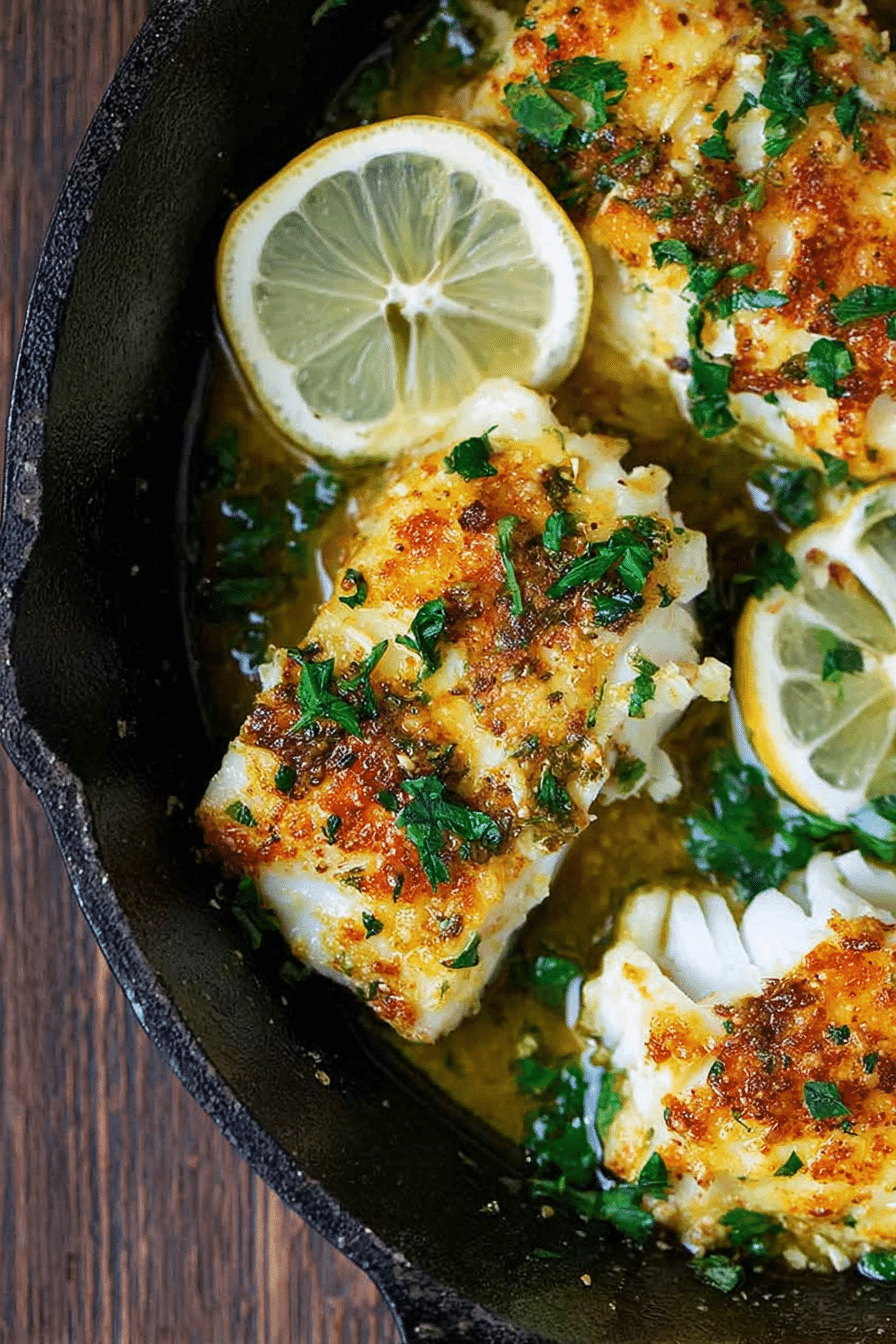
Baked Cod Recipe with Lemon and Garlic
Ingredients
Method
- Preheat oven to 400 degrees F.
- Mix together the lemon juice, olive oil, and melted butter in a shallow bowl (do not add the garlic yet). Set aside.
- In another shallow bowl, mix the all-purpose flour, spices, salt and pepper. Set next to the lemon sauce.
- Pat the fish dry. Dip the fish in the lemon sauce then dip it in the flour mixture. Shake off excess flour. Reserve the lemon sauce for later.
- Heat 2 tbsp olive oil in a cast iron skillet (or an oven-safe pan) over medium-high heat. Add the fish and sear on each side to give it some color, but do not fully cook (about 2 minutes on each side). Remove the skillet from heat.
- To the remaining lemon sauce, add the minced garlic and mix. Drizzle all over the fish fillets.
- Bake in the heated oven until the fish flakes easily with a fork (about 10 minutes). Remove from the heat and sprinkle chopped parsley. Serve immediately.