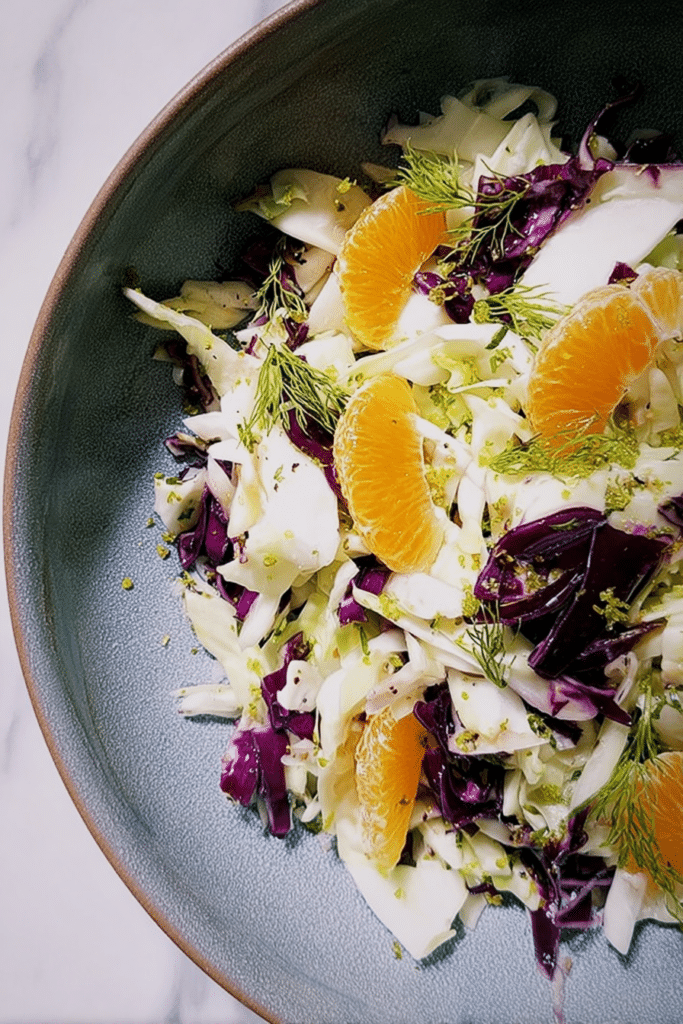
I’ve been making versions of this cabbage, fennel and citrus salad for years in my kitchen when I want something that feels both light and substantial. I love how a few crisp vegetables and a pop of citrus can turn a simple bowl into a meal that feels intentional and wholesome. In my experience, the trick is in keeping the textures bright so the salad never goes limp.
What drew me to this combination at first was the contrast: crunchy cabbage against the delicate anise of fennel and the juicy sweetness of orange. Over time I refined how I cut and dressed the vegetables so the salad stays crunchy from first bite to last—especially handy when I’m prepping lunches for the week.
As someone focused on healthful eating, I also appreciate how easy this salad is to adapt. With a handful of seeds, or a bit of grilled protein, it becomes a fully balanced plate. I keep a jar of the dressing on hand and reserve it for last-minute tosses so everything stays fresh and vibrant.
Below I’ll walk through what I use in my kitchen, the small techniques that make a big difference, and the ways you can change the salad to suit seasonality or dietary needs. fresh,vibrant,wholesome
Why Cabbage Fennel Citrus Salad Is Perfect for Clean-Eating Meals
Cabbage is a low-calorie, high-fiber base that helps with satiety and digestion while keeping the calorie count friendly. Fennel brings antioxidants and naturally occurring compounds that support digestive comfort and add a subtle, aromatic bite. Citrus fruits supply vitamin C and organic acids that brighten flavors and help your body absorb plant-based iron. Together they deliver color, crunch, and nutrition without relying on heavy dressings or processed ingredients.
Everything You Need for Cabbage Fennel Citrus Salad
Use fresh, crisp produce for the best texture and flavor. If you want a composed plate, pair the salad with a warm side so contrasting temperatures make the meal feel complete.
For an extra flavor component, serve alongside roasted carrots with whipped ricotta to complement the salad.
- Red Cabbage – Provides crunch and vibrant color; swap with green cabbage if needed.
- Fennel Bulb + Fronds – Adds anise-like aroma; substitute celery for crunch if fennel isn’t available.
- Orange or Other Citrus – Brings sweetness and acidity; see section on citrus choices for alternatives.
- Pepitas (Pumpkin Seeds) – Offer toasty crunch; nuts or other seeds make good swaps.
- Lemon Zest & Juice – Brightens the dressing; use extra citrus for more tang.
- Dijon Mustard & Honey – Create balanced emulsification and a touch of sweetness; substitute maple syrup for a vegan option.
- Olive Oil – The dressing base; choose a fruity extra-virgin for more aroma.
- Salt & White Pepper – Seasoning staples; adjust to taste or use black pepper if you prefer.
- Essential Tools – A sharp chef’s knife, a mandoline or very sharp knife for thin slicing, a large mixing bowl, and a whisk or jar for emulsifying the dressing.
The Secret to a Crunchy, Long-Lasting Slaw
- Slice thin and consistent: Use a mandoline or a very sharp knife to slice fennel and cabbage uniformly—thin ribbons feel delicate but still provide crunch.
- Rinse and dry: After shredding cabbage, rinse briefly in cold water and dry thoroughly in a salad spinner or with clean towels; chilled, dry leaves snap more on the bite.
- Keep components separate until serving: Store citrus segments, seeds, and dressing apart to avoid steam or moisture softening the veg.
- Mind the acid: Citrus juice can soften cabbage over time. If you need to prep early, hold the citrus juice and add it with the dressing just before serving.
- Toasting pepitas or nuts: Lightly toast seeds in a dry pan until fragrant to intensify crunch and aroma, then cool before adding—this keeps them crisp longer.
Best Citrus Choices and How They Change the Flavor
Different citrus fruits will shift the salad’s personality. Sweet mandarins or navel oranges add gentle sugar and bright color, while grapefruits introduce a tart, slightly bitter note that pairs well with oilier dressings. Blood oranges lean floral and berry-like, giving a more complex sweetness. Lemon is your tool for brightening and lifting the entire bowl without changing the fruit texture.
Balance sweetness and acidity by tasting the segments and adjusting the dressing: if citrus is very sweet, add a touch more mustard or acid; if it’s tart, add a little honey or milder oil. Use seasonal citrus for the freshest flavor—late winter to early spring often yields the most varied and vibrant options.
Boost the Nutrition: Nuts, Seeds, and Protein Options
Add texture and substance with these options depending on whether you want a side or a full meal.
- Pepitas – The original crunchy element here; rich in magnesium and healthy fats.
- Almonds or Walnuts – Provide omega-3s (walnuts) or a clean, nutty texture (almonds); chop or toast for best mouthfeel.
- Sunflower or Chia Seeds – Small seeds add a concentrated nutrient boost without overwhelming texture.
- Chickpeas – A plant-based protein that turns the salad into a filling meal; roast them for extra texture.
- Grilled Chicken or Shrimp – Quick proteins that pair well with citrus; sliced and served warm or chilled.
For a heartier meal, consider adding slices of creamy garlic parmesan chicken to your salad.
How to Make Cabbage Fennel Citrus Salad (Step-by-Step)
- Prepare your vegetables: You should slice the fennel as thin as you can and cut the cabbage into bite-friendly pieces so every spoonful has mixed texture.
- Segment the citrus: Remove peel and pith, then cut between membranes so you have clean citrus segments that won’t leak juice into the bowl until you want them to.
- Assemble dry components: Combine cabbage, sliced fennel, and pepitas in a large bowl so you can toss evenly when you add dressing.
- Make the dressing: Whisk mustard, honey, lemon zest and juice, orange zest, salt and pepper together, then slowly stream in olive oil until the dressing reaches the texture and balance you like.
- Toss carefully: Dress as much of the salad as you plan to eat immediately—reserve the rest of the dressing in a sealed container for later.
- Finish and garnish: Scatter fennel fronds on top for aroma and a fresh green note just before serving.
Pro Tip for Cabbage Fennel Citrus Salad: Dress Just Before Serving
- Dress only the portion you’ll eat right away to preserve crunch; keep extra dressing in a jar in the fridge.
- If prepping ahead, store citrus segments and seeds separately and toss them with the greens at the last minute.
- Leftover dressing will keep for several days refrigerated—use it to brighten roasted vegetables or grain bowls.
Easy Variations to Try Next Time
- Make it more Mediterranean: Add olives, crumbled feta, and a splash more lemon.
- Make it nut-free: Use toasted sunflower seeds or roasted chickpeas instead of pepitas.
- Turn it into a grain bowl: Serve over cooked farro or quinoa and add warm protein.
- Herb-forward version: Stir in chopped parsley, mint, or tarragon for a fresher finish.
- Try different citrus blends: Mix blood orange with grapefruit for a more complex sweet-tart profile, or use mandarins in winter for sweetness.
Try an interesting twist by incorporating elements from our Mediterranean chickpea salad for added flavor.
Troubleshooting
- If the salad tastes flat: Check the salt-acid balance—add a little more lemon juice or a pinch of salt to wake the flavors up (I do this almost every time before serving).
- If fennel is too strong: Use more cabbage and thinly slice the fennel so it complements rather than dominates; I often reserve some fronds for garnish only.
- If the salad becomes soggy: Don’t dress too far ahead and keep citrus segments separate until serving; I learned this the hard way when prepping lunches.
- If seeds lose crunch: Toast them lightly and cool completely before adding; store any extra seeds separately in an airtight container.
How to Store, Meal-Prep, and Reuse Leftovers
Store components separately for up to a couple of days: keep greens and sliced fennel in one container, citrus segments in another, and dressing in a small jar. When you’re ready to eat, combine and toss so the salad feels fresh. For meal prep, assemble bowls with uncooked grains or roasted vegetables on the bottom and the salad on top so textures remain distinct until reheating the base.
If you’re looking for meal prep ideas, check out our quick southwest chicken salad that pairs perfectly with your leftover ingredients.
I hope this gives you a clear, practical way to make a bright, nutritious salad that fits easily into clean-eating routines. I reach for this bowl when I want something simple, colorful, and satisfying without fuss—fresh, vibrant, wholesome.
Frequently Asked Questions
Can I make this salad ahead of time? Yes, you can prepare the ingredients ahead of time and store them separately. Just dress the salad right before serving to keep it fresh and crunchy!
What if I don’t have fennel? If you don’t have fennel, you can substitute it with celery for a similar crunch, though it will change the flavor profile slightly.
Can I add protein to this salad? Absolutely! Grilled chicken, shrimp, or even chickpeas are great additions for a protein boost.
What are some good citrus alternatives I can use? You can try using grapefruit or mandarins for a different twist, or even lemon if you prefer a more tart flavor.
How long will leftovers last? Leftovers can last about 1-2 days in the fridge, but it’s best to store the dressing separately to maintain the salad’s texture.
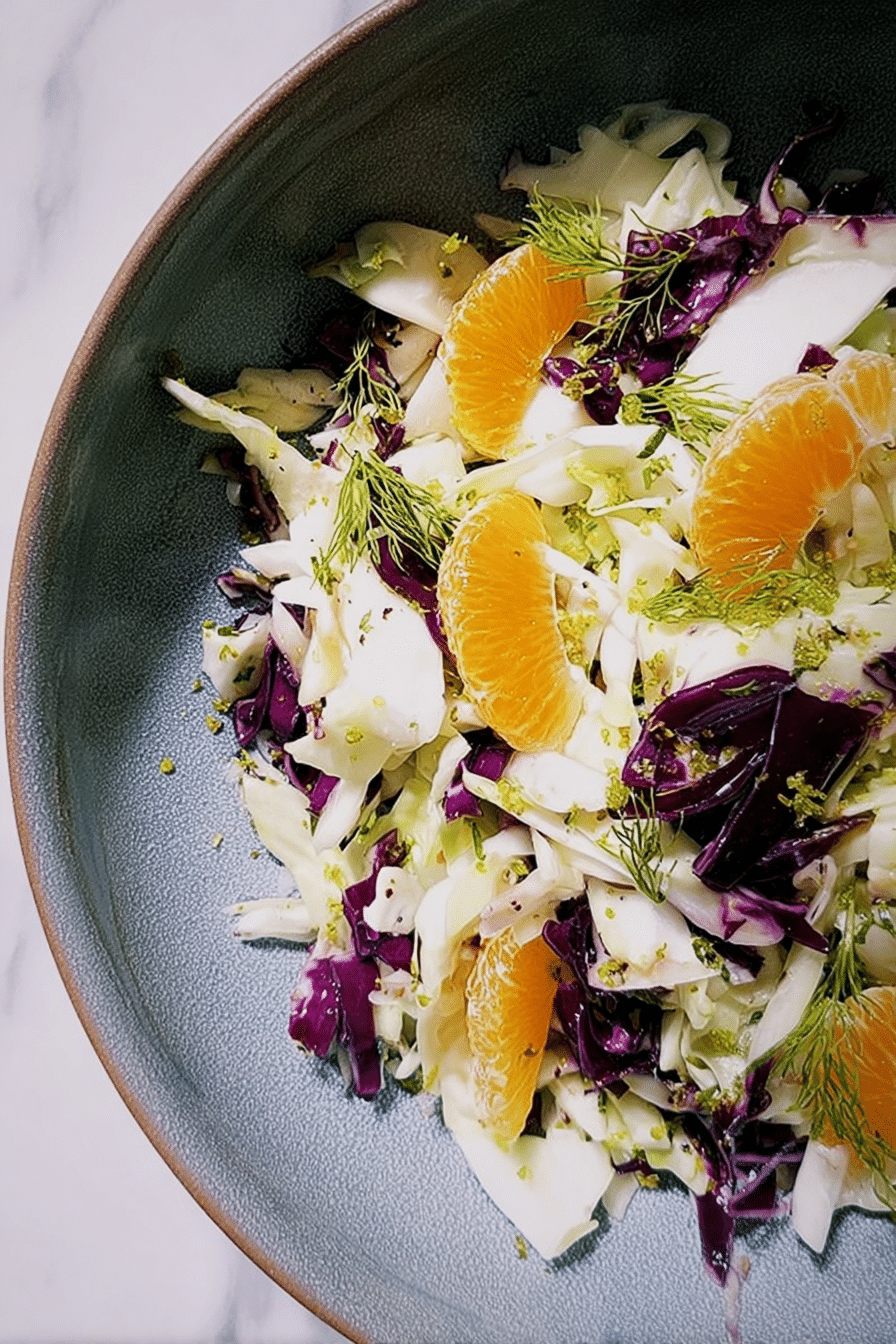
Cabbage, Fennel & Citrus Salad
Ingredients
Method
- Chop the cabbage into bite sized chunks and add to a mixing bowl.1 bulb Fennel + Fronds
- Slice the fennel bulb as thinly as you can and add to the bowl. Also chop some fennel fronds for topping and set aside.1 Orange
- Segment the orange and add the slices to the bowl with the cabbage + fennel.2 Tbs Raw Pepitas
- Add the pepitas.1 lemon Zest 1 Lemon
- To make the dressing, add all of the ingredients to a bowl, then whisk in the olive oil until you get to your desired taste + consistency.1/2 lemon Juice 1/2 Lemon, 1 orange Zest 1 Orange, 1/2 tsp Salt, 1/4 tsp White Pepper, 1 tsp Dijon Mustard, 1 1/2 tsp Honey, 1/4 cup Olive Oil + Additional If Needed
- The dressing will make more than you need for this salad, so toss as much dressing as you'd like with the salad. Top with the fronds and serve!