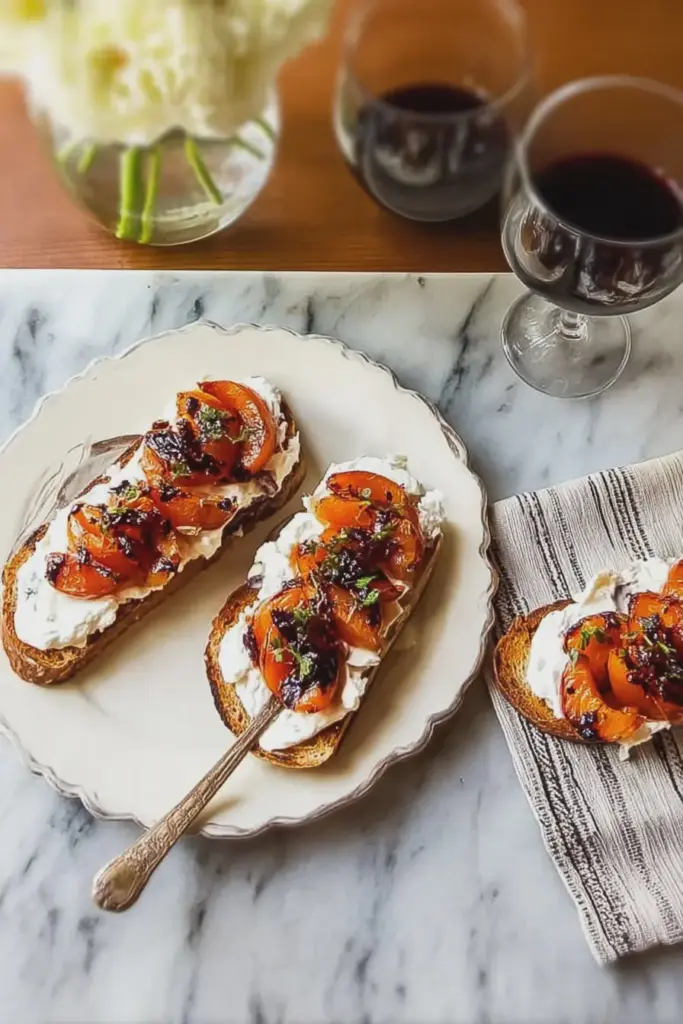
I make a lot of open-faced sandwiches when I host — they’re elegant, forgiving, and they leave room on the table for conversation. This caramelized apricot & ricotta tartine became my go-to the summer I wanted something bright on the brunch menu: the apricots bring color and warmth, the ricotta brings a cool silkiness, and a ribbon of hot honey finishes it with an unexpected spark.
In my kitchen this tartine is both a showpiece and a weeknight shortcut. I love that the steps are simple enough to do while guests are arriving, but the results look deliberate: glossy apricot halves, a cloud of lemon-kissed ricotta, and the charred edges of good bread. I especially appreciate recipes that let you prep components ahead so your hands are free for greeting people and topping plates.
Over the years I learned small habits that make a big difference here — how long to hold apricots in the pan so they caramelize without turning to jam, how to coax ricotta into a silky spread with just a little lemon, and which breads stand up to the juicy fruit without becoming soggy. Read on and you’ll find those practical notes, plus a few presentation tips that will make the tartines look like they came from a boutique café rather than my hurried weekend counter.
Why This Caramelized Apricot & Ricotta Tartine Is Perfect for Entertaining
This tartine is visually striking: warm amber apricot halves against a pale, creamy ricotta base makes for a plate that guests notice first, then taste. It’s fast to assemble, so you spend less time at the stove and more time with people. The recipe scales easily — arrange single tartines for an intimate brunch or line a board with many for a buffet.
Sensory notes: imagine the sweet, lightly caramelized apricot aroma mingling with the bright citrus lift of lemon in the ricotta, a whisper of rosemary in the background, and the toasty crunch of good bread under your fork. Those contrasts — warm/cool, sweet/tangy, creamy/crisp — are why I bring this out when I want a dish that is both pretty and balanced.
Everything You Need for Caramelized Apricot & Ricotta Tartine
Below I list the ingredients and tools you’ll want on hand. You should be able to assemble everything quickly once the apricots start caramelizing.
- Fresh apricots – The flavor and color are best with ripe, but still-firm fruit; frozen can work if fully thawed and drained.
- Fresh ricotta – Provides the creamy base; choose a high-quality, full-fat ricotta for richness or a lighter version if preferred.
- Lemon – Zest and a squeeze of juice brighten the ricotta and cut the fruit’s sweetness.
- Shallot – Thinly sliced and caramelized for a savory-sweet counterpoint to the apricots.
- Fresh rosemary – Adds a fragrant, herbaceous note while cooking; remove sprigs before serving.
- Rustic bread (sourdough or ciabatta) – A sturdy loaf that toasts well and holds up to the toppings.
- Butter and olive oil – Use for toasting the bread and caramelizing aromatics.
- Hot honey – Drizzled at the end for a spicy-sweet finish; regular honey is fine if you prefer mild heat.
- Salt and pepper – Small amounts to season the ricotta and the finished tartine.
Tools: a heavy skillet for caramelizing fruit, a small pan for shallots, a grater for lemon zest, and either a grill, griddle, or panini press to toast the bread. Have a bowl and a whisk ready for smoothing the ricotta.
The Secret to Silky, Spreadable Ricotta
The trick to a spreadable ricotta is patience: bring the cheese to room temperature before working with it so it loosens naturally. I add bright lemon zest and a touch of juice to lift the dairy’s richness, then whisk or beat briefly to smooth the curds — this creates a cloud-like spread without losing the ricotta’s gentle texture.
If your ricotta feels grainy, pass it through a fine-mesh sieve or use a small whisk to press out the lumps — you don’t need a food processor. For more hands-on guidance, consider a short how-to on making ricotta at home to get the creamiest texture:
Learn how to make homemade ricotta.
Caramelizing Apricots Without Losing Shape or Sweetness
- Heat a heavy skillet over medium-high heat and add a drizzle of neutral oil; the pan should be hot enough that the fruit sizzles when it hits the surface.
- Place apricot halves cut-side down and press gently to ensure even contact; let them brown undisturbed so a caramelized crust forms.
- Keep the heat moderate — too high will blacken the sugar before the fruit softens, too low will yield syrupy apricots that collapse.
- Add a few whole rosemary sprigs while the apricots cook to infuse a subtle piney aroma; remove the sprigs before plating.
- Watch the apricots closely; they’re done when the cut sides are golden and the flesh yields slightly to the tip of a spoon but still holds its shape.
- If you prefer a glaze, splash a little lemon juice or a touch of honey in the pan at the end and let it reduce just enough to coat the fruit.
Choosing Bread, Herbs, and Presentation for Maximum Impact
Choose bread with a firm crumb and crunchy crust so it contrasts with the soft ricotta and juicy apricot. Toast one or both sides until golden — the browned surface adds flavor and structural support. For herbs, rosemary is classic during cooking, while mint or basil leaves placed on the finished tartine give a fresher finish.
- Bread choices: sourdough, country loaf, or ciabatta for texture and structure.
- Herb swaps: basil for a brighter note, thyme for earthy depth, or mint for freshness.
- Plating tips: arrange tartines on a long board with sprigs of rosemary and lemon wedges; drizzle hot honey just before serving to create a glossy finish.
- Garnish ideas: a light grind of black pepper, a few flakes of flaky sea salt, or a scatter of microgreens for color.
For a complementary toast idea that plays with fruit and ricotta, try pairing your tartine with a crostini variation:
How to Make Caramelized Apricot & Ricotta Tartine (Step-by-Step)
- Bring the ricotta to room temperature, then whisk it with lemon zest, a squeeze of lemon juice, and a pinch of salt until fairly smooth.
- Heat a skillet with oil over medium-high heat and place apricot halves cut-side down; add rosemary sprigs to the pan for flavor and remove before serving.
- Caramelize shallots separately in olive oil until golden and sweet; remove and set aside.
- Butter or oil your bread and toast on a hot pan, grill, or panini press until deeply golden.
- Spread a generous layer of the lemon-ricotta on each slice, season with a little salt and pepper, then arrange the caramelized apricots on top.
- Add the caramelized shallots, finish with a drizzle of hot honey and a few flakes of sea salt, and serve immediately.
Pro Tip for Caramelized Apricot & Ricotta Tartine: Quick Gluten-Free & Dairy-Free Swaps and Timing Tips
- Gluten-free bread: choose a dense, artisanal gluten-free loaf or sturdy seed bread to hold the toppings; toast slightly longer to firm it up.
- Dairy-free ricotta: use a store-bought dairy-free ricotta or make a cashew-based ricotta (soaked cashews blended with lemon and a touch of oil) and season it the same way.
- Timing for frozen apricots: thaw fully and pat dry; they will release more liquid, so cook them a little longer over slightly higher heat to concentrate the sugars.
- Make-ahead tip: caramelize shallots and apricots up to a day ahead; reheat briefly in a warm skillet before assembling to refresh their texture.
Instruction for content production: please generate the “Pro-Tips,” “Troubleshooting,” and “Variations” sections as bulleted lists for high scannability.
How to Store, Make Ahead, and Reheat Caramelized Apricot & Ricotta Tartine
- Make-ahead components: I often caramelize the shallots and apricots a day ahead and refrigerate them in airtight containers; bring them to room temperature or warm gently before assembling.
- Storage: store apricots and shallots separately from the ricotta and bread to avoid sogginess; keep the ricotta covered and chilled for up to two days.
- Reheating: warm the apricots briefly in a skillet over low heat to avoid overcooking, and re-toast the bread just before assembling to restore crunch.
- Leftovers: assembled tartines are best eaten immediately; if you must store a finished tartine, keep it refrigerated and eat within a day, adding any delicate garnishes fresh.
- Troubleshooting (from my kitchen): if the apricots get too soft, reduce cooking time next time and increase pan heat slightly so caramelization happens faster than juicing; if the ricotta seems thin, strain it briefly in a fine sieve to concentrate texture.
Nutritional Benefits of Ingredients
Apricots are a good source of vitamins A and C and add a natural sweetness without refined sugar. Ricotta contributes protein and calcium, making these tartines satisfying as a light meal. Fresh herbs like rosemary add micronutrients and antioxidants while imparting aromatic complexity.
If you want to explore other ricotta-forward dishes that add vegetables and extra nutrients to your menu, try a roasted-vegetable pairing:
Explore more with roasted carrots with whipped ricotta and hot honey.
Pairing Suggestions
- Wines: a crisp rosé or a lightly oaked white like unoaked Chardonnay complements the fruit and creamy ricotta.
- Salads: a simple arugula salad with lemon vinaigrette, or a fennel and cucumber salad, keeps the meal bright and balanced.
- Drinks: a refreshing aperitif like a sparkling water with lemon and mint, or a light spritz cocktail, pairs well with the tartine’s sweetness.
- Heartier pairing: serve alongside a savory main such as garlic parmesan crusted chicken for a fuller spread:
This tartine goes well with garlic parmesan crusted chicken.
Frequently Asked Questions
Can I use frozen apricots for this recipe?
Yes, you can use frozen apricots! Just make sure to thaw them completely and drain any excess moisture before caramelizing.
What type of bread works best for tartines?
Rustic breads like sourdough or ciabatta are great choices because they hold up well when toasted and provide a nice texture.
How can I make this recipe gluten-free?
You can simply swap the rustic bread for your favorite gluten-free bread. Be sure to check all other ingredients for gluten.
How do I know when the apricots are properly caramelized?
The apricots should be tender and slightly golden on the cut side. Keep an eye on them to ensure they don’t cook too long and turn mushy.
Is there a dairy-free alternative for ricotta?
Yes! You can use a dairy-free ricotta or a blended mixture of soaked cashews and nutritional yeast for a similar creamy texture.
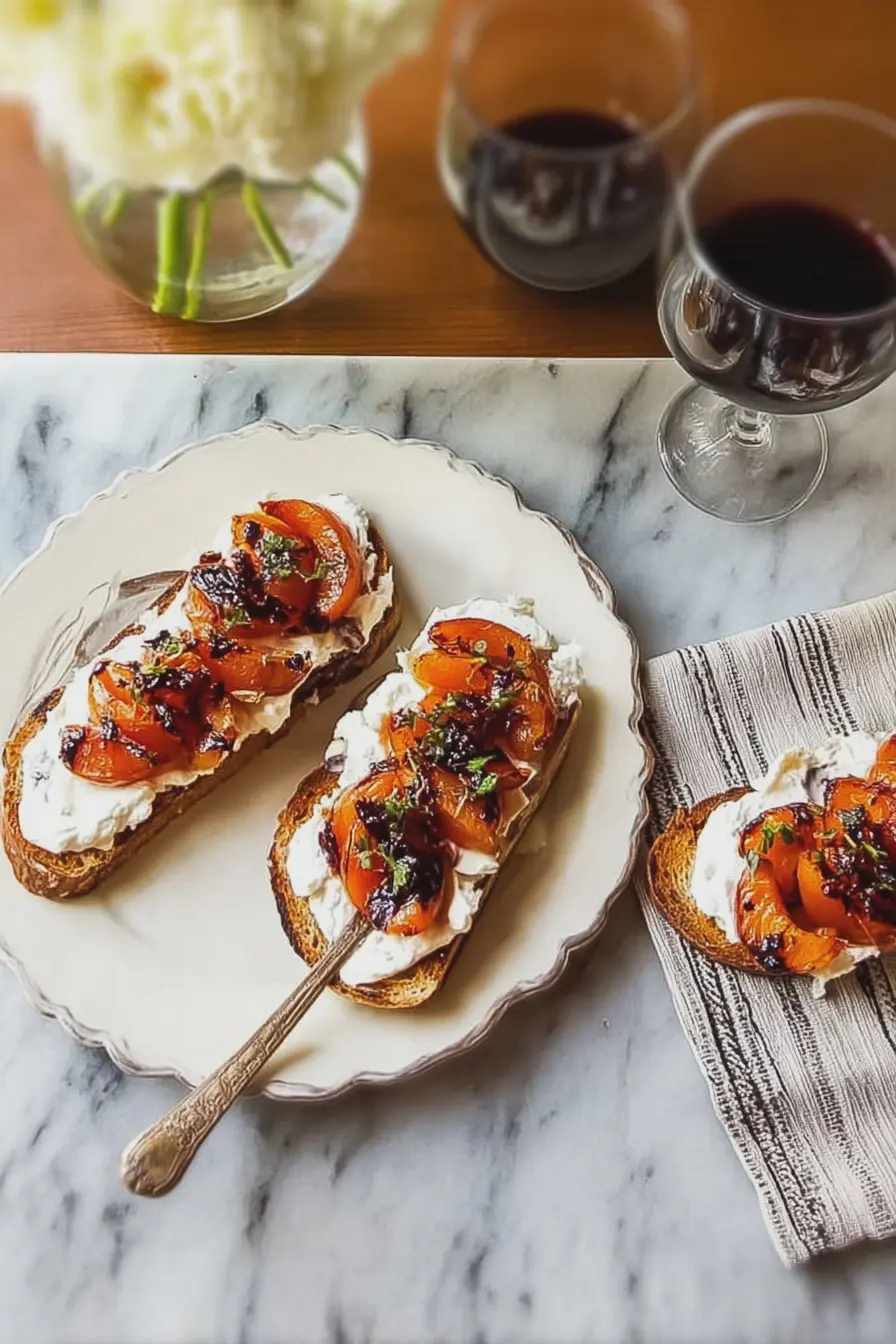
Caramelized Apricot & Ricotta Tartine Recipe
Ingredients
Method
- Drizzle some oil in a skillet, and place the apricots cut-side down into the pan. Cook until tender and they have started to caramelize. Add fresh rosemary for flavor.4 slices rustic bread, 1/2 to 3/4 cup fresh ricotta cheese
- In a separate pan, caramelize the shallots in olive oil until golden. Remove from the heat and put into a bowl.1 shallot, sliced thin
- Butter one (or both) sides of the bread and fry or grill until golden brown.1/2 to 3/4 cup fresh ricotta cheese, to taste olive oil
- Add lemon juice and zest to the ricotta cheese and whip until smooth.to taste Fresh rosemary, to taste softened butter
- Spread ricotta on the toasted bread, layer with caramelized apricots and shallots, then drizzle with hot honey.1/2 to 3/4 cup fresh ricotta cheese, to taste Fresh rosemary, 1 lemon, to taste hot honey