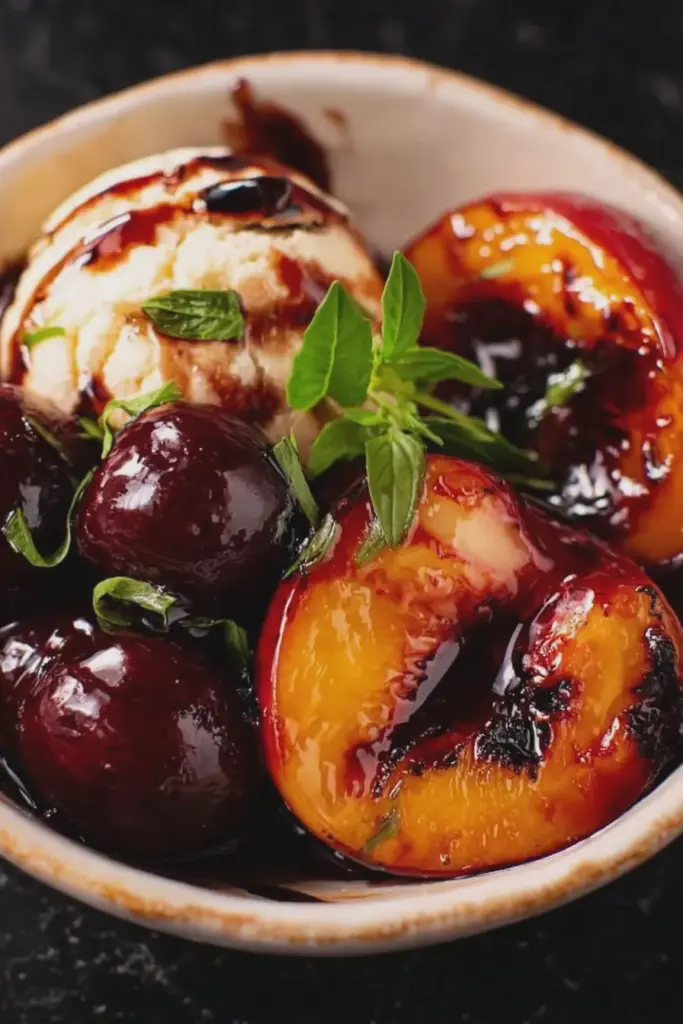
I remember the first time I grilled peaches: the fruit was sweet, the grill was hot, and I worried the slices would collapse into a saccharine puddle. What saved the evening was a short, focused sear and a glaze that cut through the fruit’s natural sweetness. I’ve spent seasons refining timing and temperature so the peaches are always tender, never mushy.
In my kitchen I rely on a small set of tricks—pick the right ripeness, brush the cut side with a little butter, and resist the urge to fuss with the fruit while it sears. The result is a glossy, caramelized surface with a soft interior that still holds its shape. Paired with a tart-sweet cherry balsamic glaze, the peaches become something decidedly more refined than a bowl of fruit.
What I love most is how simple this can be when you plan the order of work. Make the glaze first so it can reduce slowly while you prep the fruit; then finish the peaches on a very hot grill for just minutes. The contrast between smoky grill marks and the dark, syrupy glaze is what makes this feel like a chef’s dessert without complicated technique.
Pro-Tips, Troubleshooting, and Variations are presented as bulleted lists below for quick reference — I use lists in my own notes when I prep because they keep timing and temperature front and center.
Why Grilled Peaches with Cherry Balsamic Glaze are the Easiest Way to a Gourmet Summer Dessert
Grilling concentrates the peach’s sugars and adds caramelized complexity without complicated preparation. The cherry balsamic glaze provides an acidic counterpoint that brightens the fruit and adds an elegant visual contrast. This dish is inherently seasonal: peak peaches and cherries deliver the most perfume and color, so it reads as intentionally seasonal on any table. Serve it simply plated with a drizzle of glaze and a scattering of fresh herbs, or pair it with richer accompaniments to broaden its role from dessert to appetizer or side.
Everything You Need for Grilled Peaches with Cherry Balsamic Glaze
Choose the best-quality balsamic vinegar you can find; it will be front and center. The ripeness of the peaches matters: too soft and they’ll be mushy; too firm and they won’t develop enough caramelization. A few simple tools—clean grill grates, a long-handled spatula, and a small saucepan for the glaze—make the process feel composed and easy. Aim for late summer when both peaches and cherries are at their aromatic peak.
- Peaches – The hero; choose fruit that yields slightly to gentle pressure but still feels firm at the pit.
- Cherries (fresh or frozen) – Provide depth and natural sweetness to the glaze.
- Balsamic vinegar – Use a good-quality, rich balsamic for body and balanced acidity.
- Butter – Brushed on the cut side to help caramelize and prevent sticking.
- Fresh herbs (basil or thyme) – Finish the peaches with a bright herbal note.
- Essential tools – A hot grill, a small saucepan for reduction, and a wide spatula make the job effortless.
Serve your grilled peaches with a refreshing pineapple coconut smoothie to enhance the summer vibe.
The Secret to Juicy, Not Mushy Grilled Peaches
The texture comes down to two things: ripeness and timing. The sugar on the cut surface caramelizes quickly at high heat, which seals the flesh and keeps the interior intact. Overcooking at low temperature draws out juices and collapses the structure; a short, hot sear produces a tender, structured half peach.
- Pick peaches with a slight give but no bruises; they’ll finish with the best texture.
- Preheat your grill to high so the cut surface sears immediately and forms a caramelized crust.
- Brush the cut side lightly with melted butter to encourage browning and prevent sticking.
- Grill cut-side down first for a few minutes, then flip to the skin side to finish—this protects the flesh while still allowing caramelization.
- Watch the timing closely; most halves need only a short total cook time to be soft but not collapsing.
How to Get Perfect Grill Marks Without Burning the Fruit
Great grill marks are a visual cue of flavor, but fruit burns faster than meat. Temperature control and restraint are the keys.
- Preheat the grill until it’s very hot—this creates an immediate sear rather than slow cooking.
- Place peaches cut-side down and leave them undisturbed for the initial sear; moving them too soon tears the flesh.
- To create crosshatch marks, rotate each peach 45 degrees halfway through the sear without lifting it entirely.
- If marks are uneven, adjust by moving to a cooler zone of the grill briefly rather than increasing time over direct flame.
- If flare-ups occur, move the peaches to indirect heat and finish there to avoid charring.
The One Ingredient That Makes the Glaze Sing
High-quality balsamic is the single most transformative ingredient in the glaze: it provides a glossy body and an acid balance that cuts through the peaches’ sugar. Paired with cherries, the vinegar’s tang harmonizes with the fruit, creating a glaze that is both sweet and sophisticated. Small additions—like a strip of citrus zest or a sprig of thyme—can add secondary notes without overpowering the primary cherry-balsamic theme.
If you’d like an alternative glaze that showcases similar interplay between fruit and vinegar, try this delightful variation: blackberry balsamic glaze, which pairs wonderfully with summer fruits.
- Use a dense, syrupy balsamic for body; lighter balsamic will make the glaze thin.
- Fresh cherries add brightness; frozen cherries are an excellent standby and reduce down beautifully.
- Consider a small pinch of black pepper or a sliver of star anise for subtle warmth.
- For a dairy contrast, finish with a soft cheese—mascarpone or ricotta—rather than only ice cream.
How to Make Grilled Peaches with Cherry Balsamic Glaze (Step-by-Step)
These steps keep the work efficient and the flavors focused. Follow the order: make the glaze, prep peaches, then grill quickly.
- Make the glaze: Combine cherries and balsamic in a small saucepan and bring to a simmer. Reduce until syrupy, then cool slightly; it will thicken as it cools.
- Prep the peaches: Halve and pit the fruit, brush cut sides lightly with melted butter, and season with a whisper of salt if you like sweet-salty contrast.
- Preheat the grill to high and clean the grates so the peaches won’t stick.
- Grill cut-side down first until a deep caramel color appears; rotate for crosshatch marks if desired.
- Flip to the skin side to finish and warm through without overcooking; the halves should be tender but maintain shape.
- Arrange peaches on a platter, spoon or brush the cherry-balsamic glaze over the cut surfaces, and finish with a chiffonade of fresh basil or thyme.
If you’re a fan of peaches in more extravagant ways, try making these peach cobbler cinnamon rolls for a delightful breakfast treat using the same lovely stone fruit.
Troubleshooting
Below are common problems and how I remedy them in my kitchen; I refer to these when timing feels uncertain.
- If peaches are sticking, raise the heat briefly to sear then use a wide spatula to lift gently.
- If the flesh is too soft, choose slightly firmer fruit next time and shorten the contact time on the grill.
- If the glaze is too thin, simmer longer to reduce; if it’s too sweet, add a dash more balsamic to balance.
- For flare-ups, move peaches to indirect heat until the flames subside and finish there.
High Heat, Short Sear for Firm, Juicy Grilled Peaches
This is the single principle I return to most often: quick, intense heat seals the fruit while preserving interior structure. I learned this after several disappointing batches where a slow approach left the halves syrupy and shapeless.
- Preheat your grill thoroughly; aim for a very hot surface to achieve immediate caramelization.
- Sear the cut side only until golden and marked, then flip to the skin side to finish quickly.
- Use direct heat for the sear, then shift to indirect heat if the peaches need more internal warming without additional charring.
- Keep an eye on timing: a handful of minutes per side is usually sufficient.
Creative Topping Ideas for Grilled Peaches
These toppings expand the dish’s possibilities beyond vanilla ice cream—think textures, temperatures, and savory notes to balance the glaze.
- Mascarpone or ricotta with a drizzle of honey and cracked black pepper for richness and a hint of savory.
- Toasted nuts (almonds, pistachios, or walnuts) for crunch and a nutty counterpoint.
- Crumbled prosciutto or a scattering of microgreens for a sweet-and-salty, appetizer-style presentation.
- Swirl of Greek yogurt with a touch of lemon zest for tang and creaminess.
- Seasonal berries or stone fruit halves for color and layered fruit flavors.
For a sweet and savory topping, consider serving your grilled peaches with some honey garlic roasted carrots for a colorful and flavorful dish.
How to Store, Reheat, and Reuse Leftover Grilled Peaches
Leftovers are a joy when handled properly; the fruit keeps well and can be reimagined in several preparations.
- Storage: Cool completely, then store in an airtight container in the refrigerator for up to three days.
- Reheating: Warm gently under low broiler or in a hot oven for just a minute or two to avoid further softening.
- Reuse ideas: Chop and fold into summer salads, layer into yogurt or ricotta bowls, or heat with a splash of balsamic to make a quick compote for pancakes or oatmeal.
- Freezing: Freeze peeled and halved grilled peaches on a sheet tray, then transfer to a bag for longer storage—use later in smoothies or compotes.
Serve the peaches simply with a final brush of glaze and a few torn herb leaves, or dress them up with one of the topping ideas above for a more lavish presentation. A single hot sear and a glossy cherry-balsamic finish is all you need to make this an elegant summer offering.
Frequently Asked Questions
Can I use other fruits besides peaches for this recipe?
Absolutely! While peaches are delicious, you can also try grilling plums, nectarines, or even pineapple for a fruity twist.
How do I know when the peaches are done grilling?
The peaches are done when they have nice grill marks and feel noticeably softer. This usually takes about 6-8 minutes total on the grill.
Can I make the cherry balsamic glaze ahead of time?
Yes! You can prepare the glaze and store it in the refrigerator for up to a week. Just reheat it gently before serving.
What can I serve with grilled peaches?
Grilled peaches are versatile! They make a great dessert with ice cream or can be served as a side dish with meats like grilled chicken or pork.
What is the best way to store leftover grilled peaches?
Store leftover grilled peaches in an airtight container in the refrigerator for up to 3 days. Reheat gently before enjoying them again!
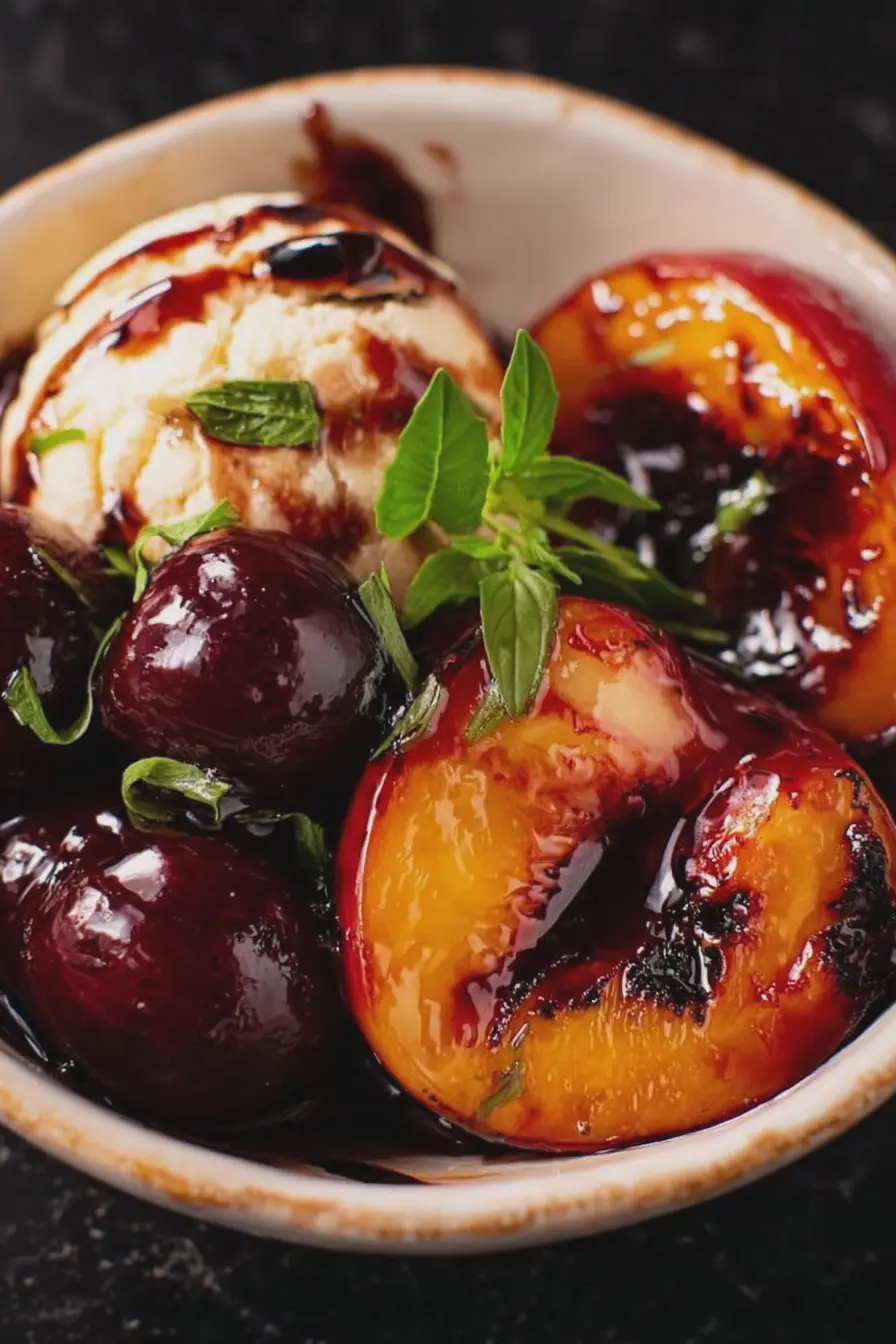
Grilled Peaches with a Cherry Balsamic Glaze
Ingredients
Method
- Preheat your grill to 450 degrees F. Ensure your grill grates are clean and free of any other food remnants.
- In a medium saucepan, combine the balsamic vinegar and cherry halves. Bring to a boil, then reduce heat and simmer for 5-10 minutes until thickened.
- Brush the cut sides of each peach with melted butter and grill for 3-4 minutes cut side down. Flip and cook for an additional 3-4 minutes until softened.
- Transfer peaches to a platter, drizzle with cherry balsamic sauce, and sprinkle with sliced basil. Serve as is or with vanilla ice cream.