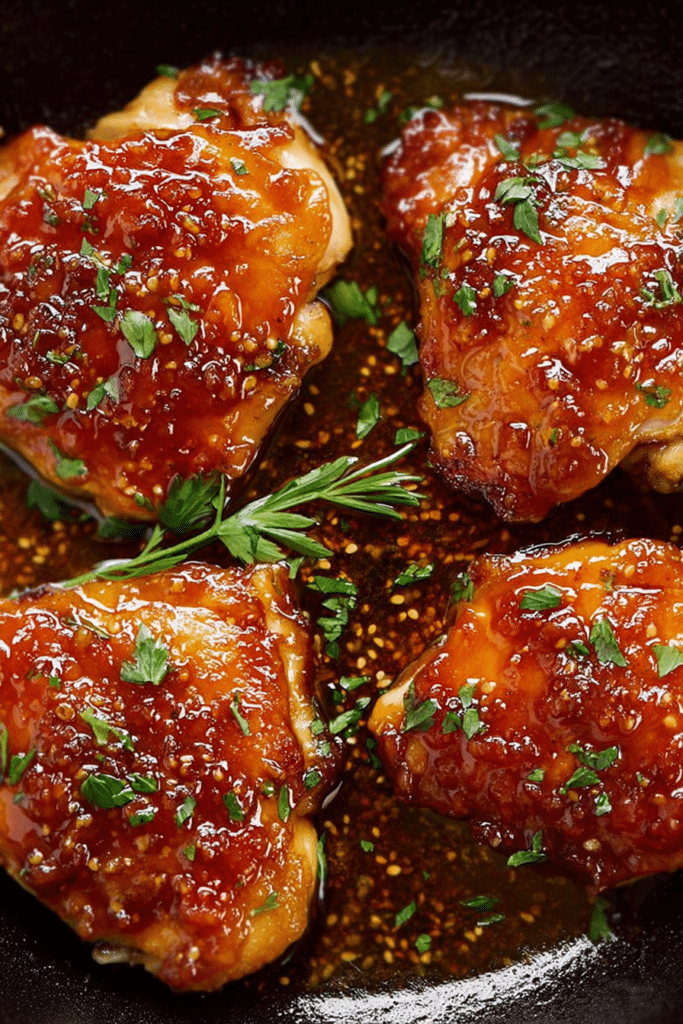
I cook this apricot-glazed chicken when I need a fast, satisfying dinner that still feels a little special. In my kitchen it’s a weeknight go-to because it comes together quickly in one skillet and the glaze only needs a few pantry staples. I love that the finished dish looks like you spent more time on it than you did.
I pay attention to the skin—crispy, golden skin is what turns simple chicken into something I want to photograph for friends. The glaze becomes glossy and sticky, and the aroma of ginger and garlic filling the house is a reliable sign dinner is almost ready. I’ve tweaked the timing so the thighs stay juicy without the glaze burning.
Cleanup matters to me as much as flavor. Because everything finishes in the oven in the same skillet you seared the chicken in, you’ll spend less time at the sink and more time at the table. Serve it over plain rice or roasted vegetables for an easy weeknight meal that still gets compliments.
I’ve also tested quick swaps for dietary needs and different equipment—so whether you’re using bone-in thighs or boneless, casting iron or an air fryer, you’ll have options that keep this recipe fast and flexible.
Why This Easy Apricot-Glazed Chicken Is Perfect for Busy Weeknights
This recipe can be prepared in about 30 minutes, making it ideal when you have limited time after work. The one-skillet approach means you finish in the oven with minimal hands-on time and very little cleanup. The balance of sweet apricot, bright vinegar, and a touch of chili makes it broadly appealing—kids and adults both tend to reach for seconds.
Visualize juicy, golden-brown chicken thighs glazed with a shiny, slightly sticky sauce. The kitchen will smell bright with ginger and garlic while the skin crisps and the glaze concentrates. If you love quick and flavorful meals, you might also enjoy our garlic butter chicken, which is perfect for busy weeknights.
Everything You Need for Easy Apricot-Glazed Chicken
Below are the ingredients and tools I consider essential. Read them as purpose-driven notes so you know what to prioritize at the store or in your pantry.
- Apricot preserves – The base of the glaze; choose a high-quality preserve for the best bright, fruity flavor.
- Rice vinegar – Adds brightness and cuts the sweetness so the glaze isn’t cloying.
- Soy sauce or tamari – Provides savory depth and a touch of saltiness; use tamari for gluten-free.
- Fresh ginger – Grated ginger gives a peppery, zesty lift that keeps the glaze from tasting flat.
- Garlic – Minced garlic adds savory aroma and rounds out the flavor profile.
- Red pepper flakes – A pinch brings gentle heat and contrast to the sweet fruit notes.
- Bone-in, skin-on chicken thighs – They stay juicy and give you that crisp skin; you can use boneless if needed.
- Neutral oil (olive or similar) – For rendering and browning the skin without smoking.
- Fresh cilantro – A bright finish to lift the dish at the end.
- Cooked rice or other grains – Classic serving choice to soak up the glaze.
- Cast-iron or oven-safe skillet – Helps achieve even browning and allows you to go straight from stove to oven.
Why the Apricot Glaze Works: Sweet, Tangy, and a Little Heat
The glaze is a simple harmony: apricot preserves supply concentrated fruit sweetness and body, while rice vinegar adds the necessary tang to keep the sauce bright. Soy sauce brings umami and seasoning so the glaze doesn’t taste one-dimensional. Fresh ginger and garlic add spice and aromatic complexity, and red pepper flakes put a gentle kick in the background.
As the glaze heats, the fruit sugars concentrate and the edges caramelize where they meet the hot skillet—this is when the kitchen fills with a warm, fruity-and-spicy aroma that signals the dish is nearing done. Each component has a job: balance, depth, heat, and mouthfeel. When you spoon the warm glaze back over the chicken, you coat the skin and the meat with concentrated flavor that makes every bite noteworthy.
The Secret to Crispy Skin in One Skillet
- Pat the chicken dry with paper towels before seasoning so the skin can render and crisp rather than steam.
- Heat the skillet until the oil shimmers, then add the chicken skin-side down and don’t move it for several minutes—this contact creates even browning and a crunchy texture.
- Adjust the heat if the skin is browning too quickly; you want golden, not burnt. Lower the heat slightly to let more fat render out while the skin crisps.
- Finish the thighs in the oven so the internal temperature rises gently without overcooking the exterior glaze.
If you’re looking for more tips on achieving perfect texture, check out our recipe for crispy oven-baked chicken wings.
How to Make Easy Apricot-Glazed Chicken (Step-by-Step)
- Preheat your oven so it’s ready when the skillet goes in; this keeps hands-on time short and predictable.
- Stir the preserves with vinegar, soy, grated ginger, minced garlic, and a pinch of red pepper flakes until smooth—this is your glaze. Set it within arm’s reach of the stove so you can add it quickly after searing.
- Pat the thighs dry and season both sides with salt and pepper. Heat oil in an oven-safe skillet over medium-high heat until it shimmers.
- Add chicken skin-side down and cook without moving until the skin is golden and crisp; this usually takes several minutes. Use the heat to control the browning so it gets crisp, not burned.
- Flip the thighs, pour the glaze evenly over them, and transfer the skillet to the oven to finish cooking. About halfway through, spoon some of the pan glaze back over the pieces so the sauce concentrates and coats the chicken.
- Check doneness by using an instant-read thermometer or by cutting into the thickest part—ensure the juices run clear and the meat is cooked through but still juicy.
- Sprinkle chopped cilantro over the finished chicken and serve with rice or your chosen side, making sure to ladle plenty of the pan sauce over the plate.
Pro Tip for Easy Apricot-Glazed Chicken: Whole30, Low-Cal, and Pantry Swaps
Pro-Tips, Troubleshooting, and Variations are presented below as bulleted lists for quick scanning.
- I often use coconut aminos instead of soy sauce for a Whole30-friendly option and a milder flavor.
- If you want fewer calories, remove the skin after cooking or start with skinless thighs; you’ll still get flavor from the glaze but with lower fat.
- Make a lighter glaze by reducing the amount of preserves and adding a splash more rice vinegar to keep the overall volume of sauce without as many sugars.
- Homemade apricot preserves work well if you have them on hand—use what you love from the pantry for the most personal flavor.
For another delicious chicken recipe, try our honey garlic chicken, which can be easily adapted to various diets!
Quick Variations: Grill, Air Fry, or Add Seasonal Veg
These are quick ways to change the cooking method or add seasonal produce to the plate. Presented as bulleted options so you can pick one and go.
- Grill: Brush the glaze on near the end of grilling to get smoky char without burning the sugars—this adds a pleasant smoky note.
- Air fry: Use boneless thighs for faster cooking; air fry them skin-side up and brush glaze in the last few minutes so it caramelizes but doesn’t burn.
- Add vegetables: Toss quick-roasting veg like snap peas, bell peppers, or thin-sliced carrots into the skillet during the last 10 minutes so they finish with the chicken and soak up some glaze.
- Seasonal idea: In spring, serve with a crisp green salad; in autumn, add roasted root vegetables for a heartier plate.
For a tasty variation, try our easy Mediterranean chicken gyros which also offers a unique flavor experience!
Troubleshooting
- I find burnt glaze happens when the pan is too hot—if you see dark edges, reduce oven temperature slightly and spoon pan sauce away from those spots to prevent further scorching.
- If the skin isn’t crisping, the chicken was likely too wet; pat dry thoroughly next time and make sure the oil is hot before adding the thighs.
- I once had undercooked thighs because the oven was cooler than expected—use an instant-read thermometer and rely on internal temperature rather than time alone.
- If the glaze tastes too sweet, add a little extra vinegar or a splash of soy to rebalance; you can also finish with a squeeze of fresh lime or lemon for brightness.
How to Store, Reheat, and Meal-Prep Apricot-Glazed Chicken
Leftovers keep well and reheat nicely if you follow a few simple steps:
- Store cooled chicken in an airtight container in the fridge for up to 3–4 days. Keep the sauce in the same container so the meat reabsorbs flavor.
- To reheat and maintain some crispness, place pieces skin-side up on a baking sheet and warm in a moderate oven until heated through; a quick turn under the broiler (watch carefully) will help recrisp the skin.
- For microwave reheating, cover loosely and reheat in short bursts to avoid drying the meat; then finish in a hot skillet for 1 minute if you want to refresh the skin.
- For meal prep, portion chicken over rice or roasted vegetables in individual containers. Add fresh cilantro or a wedge of citrus at serving to brighten leftovers.
Frequently Asked Questions
Can I use boneless chicken thighs for this recipe?
Yes, you can use boneless chicken thighs. They cook faster, so watch the time and check for doneness earlier.
What can I serve with apricot-glazed chicken?
Cooked rice is a great option, but you can also serve it with quinoa, steamed veggies, or a fresh salad.
How do I make this recipe low-carb?
To make it low-carb, skip the rice and serve the glazed chicken over sautéed or roasted vegetables instead.
How long does the apricot-glazed chicken stay fresh in the fridge?
Leftovers can be stored in the fridge for up to 3-4 days. Keep it in an airtight container.
Can I use homemade apricot preserves instead of store-bought?
Absolutely. Homemade apricot preserves will work just as well and add a personal touch to the dish.
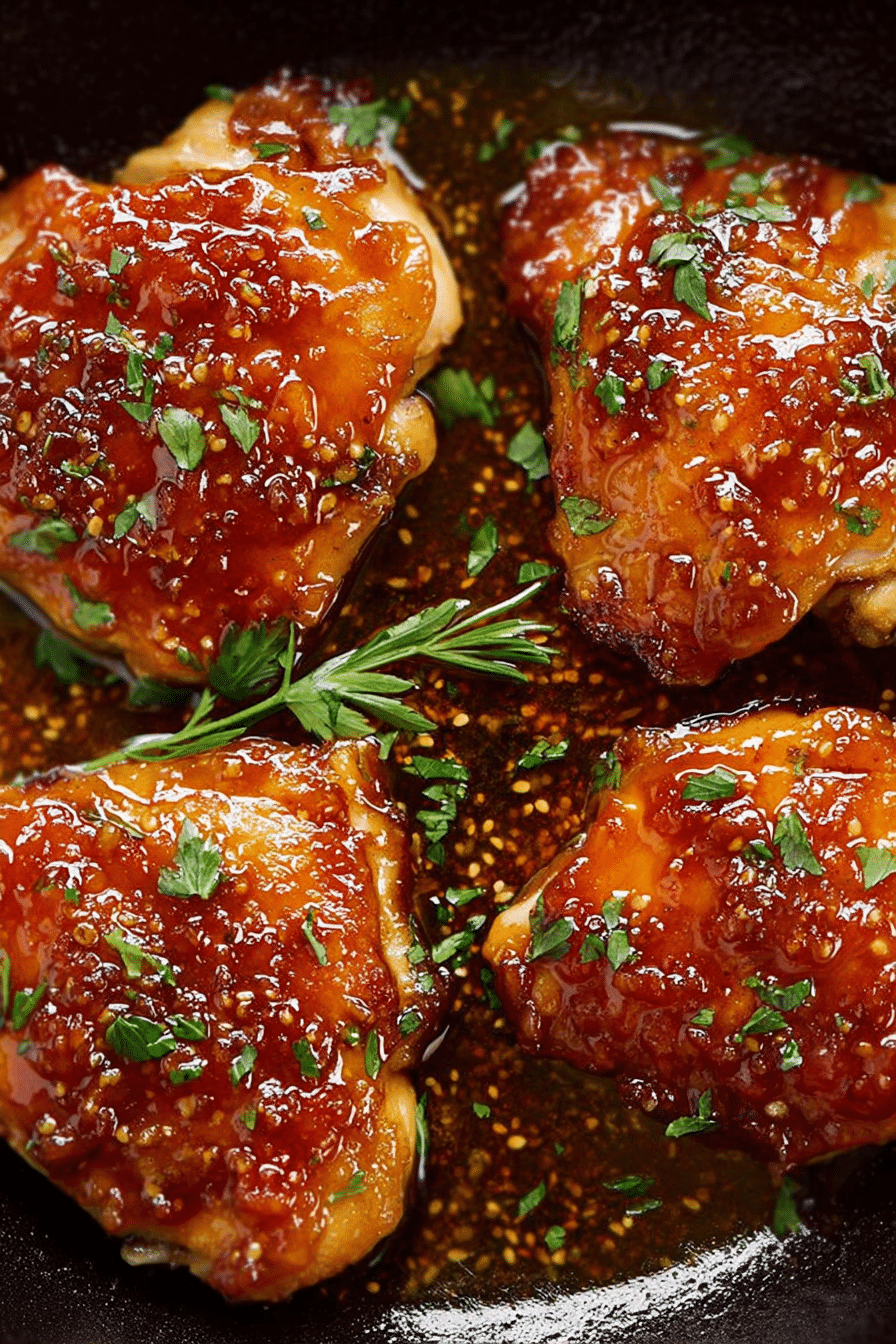
Easy Apricot-Glazed Chicken
Ingredients
Method
- Arrange a rack in the middle of the oven and heat to 350°F.
- Place the apricot preserves, vinegar, tamari or soy, ginger, garlic, and red pepper flakes in a small bowl and whisk to combine; set aside.
- Pat the chicken thighs dry with paper towels and season on both sides with salt and pepper. Heat the oil in a large cast iron or oven-safe skillet over medium-high heat until shimmering but not smoking. Add the chicken skin-side down and cook until the fat is rendered and the skin is crisp and golden-brown, adjusting the heat if the skin begins to burn, 6 to 8 minutes.
- Flip the chicken thighs and carefully pour the glaze evenly over them. Transfer the skillet to the oven and cook, spooning some of the glaze in the skillet back over the chicken halfway through, until chicken reaches an internal temperature of 165°F, 10 to 12 minutes total. Sprinkle the chicken with cilantro and serve, with plenty of the sauce, over rice.