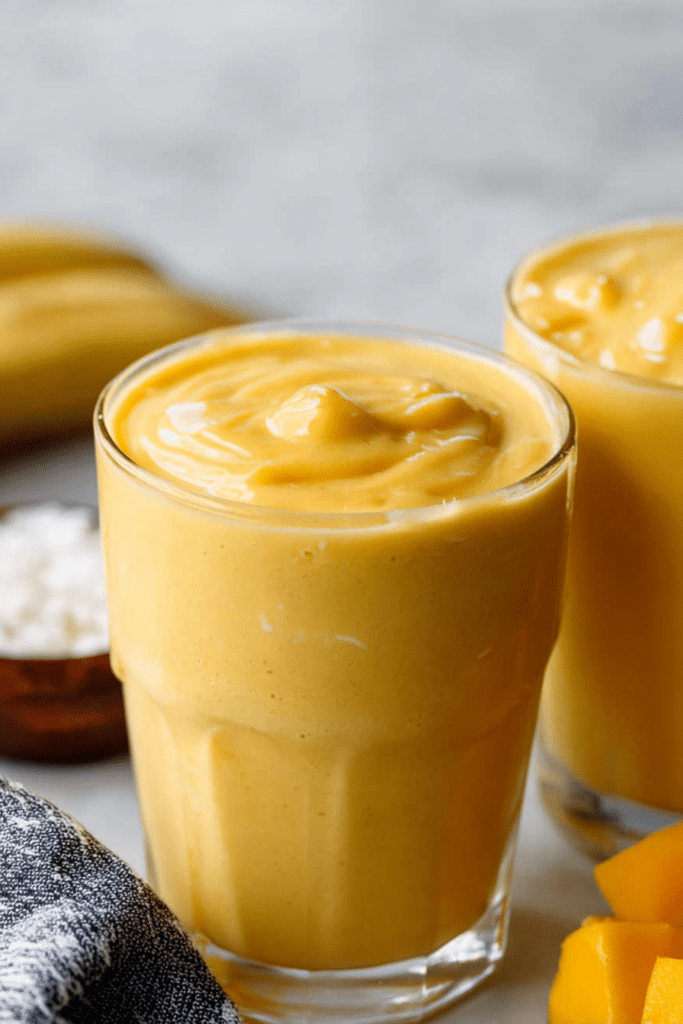
I make this mango coconut milk smoothie on mornings when I want something bright, creamy, and fast. It takes minutes to pull together and keeps my kitchen feeling fresh — that vibrant orange color, the cool, silky mouthfeel, and the sweet tropical aroma mean I can get out the door without fuss. I like that it’s simple enough to make every day but still feels like a treat.
In my kitchen I rely on a few pantry staples: frozen mango, banana, coconut milk, and a squeeze of citrus. Those four things give the smoothie body, natural sweetness, and a refreshing tang without dairy. Over the years I’ve learned small habits — like blending in stages or using a frozen banana — that keep the texture consistently smooth, even with a modest blender.
I appreciate recipes that respect busy mornings: minimal prep, straightforward ingredients, and flexible add-ins so you can tailor the smoothie to your needs. If you need a change, a quick swap of fruit or a spoonful of protein can turn this from a light snack into a filling breakfast. The result is always the same: a satisfying, creamy drink with a tropical aroma that brightens the start of the day.
Why this mango coconut milk smoothie is ideal for busy, health-conscious mornings
The appeal is simple: it’s quick to make, uses just a handful of ingredients, and delivers a good balance of natural sugars and healthy fats to keep you moving. Mango and banana provide fast energy and plenty of vitamin C and potassium, while coconut milk adds creaminess and a hint of healthy fats without dairy.
Sensory notes: the color is a sunny orange that looks like summer, the texture should be velvety on the tongue, and the aroma leans sweet and tropical. Because it’s so fast, I often prepare it on days when I need something nutritious but can’t spend time cooking.
Everything You Need for Mango Coconut Milk Smoothie
Below I list the ingredients and basic equipment you’ll want on hand. If you don’t have anything fancy, a basic countertop blender and a sturdy cup will do just fine.
- Frozen mango – The backbone of the flavor and body; frozen fruit also chills and thickens the drink.
- Banana – Adds natural sweetness and helps create a creamy texture; ripe is best for sweetness.
- Coconut milk – Provides the silky, dairy-free creaminess and a touch of healthy fat; use the carton variety for a lighter pourable texture or canned if you want it richer.
- Lemon juice – A little acid brightens the fruit and keeps the flavors lively.
- Optional sweetener – Honey or maple syrup can be used if your fruit isn’t sweet enough, but often you won’t need it.
- Ice (if needed) – Use only if your blender needs help achieving thickness or if you used fresh mango instead of frozen.
- Basic blender – A standard blender works; see the pro tips below if yours is low-powered.
For a refreshing variation, consider trying our tropical hibiscus tea pineapple smoothie alongside your mango coconut smoothie ingredients — it’s a good way to switch up the flavor profile without changing technique.
The secret to silky texture (no dairy needed)
Silky texture comes down to three straightforward things: the right ratio of frozen fruit to liquid, proper blending, and a slow integration of ingredients so nothing sits unmixed. Coconut milk gives the creaminess you’d expect from dairy, while banana and frozen mango create a smooth mouthfeel.
- Start with liquid in the blender so the blades move easily and incorporate solids without stalling.
- Blend in stages: add some frozen mango first, then the banana and coconut milk; pause and scrape down the sides to keep everything uniform.
- If you want even more creaminess, add a bit of ripe avocado or a spoonful of nut butter; both blend into a velvet-like texture without changing the tropical flavor much.
How to boost protein and vitamins—easy add-ins
Making this smoothie more filling or nutrient-dense is as simple as tossing in one or two additions. These keep the smoothie aligned with a health-conscious routine while still being fast to prepare.
- Greek yogurt or plant-based yogurt – Adds protein and gives a tangy richness; choose plain to avoid extra sugar.
- Protein powder – A scoop of your favorite powder is an easy way to increase protein without changing texture much.
- Chia or flax seeds – Add fiber, omega-3s, and a slight thickening effect when blended.
- Leafy greens – Spinach or mild young kale blends invisibly and boosts vitamins and minerals.
- Spices – A pinch of cinnamon or turmeric adds complexity without adding sugar.
Add a burst of flavor by including ingredients from our orange creamsicle smoothie to your mix for extra vitamins — try a little citrus zest or extra orange for a vitamin C bump.
How to Make Mango Coconut Milk Smoothie (Step-by-Step)
- Place a small amount of coconut milk into the blender first so the blades can circulate easily.
- Add about half of the frozen mango, then add the sliced banana and a squeeze of lemon juice; include any optional sweetener if you want it sweeter.
- Blend until the mixture looks smooth, stopping to scrape down the sides as needed so every bit of fruit gets incorporated.
- Add the remaining frozen mango and blend again until silky and uniform; if the texture is too thick, add a splash more coconut milk and pulse until combined.
- If you used fresh mango or prefer a thicker smoothie, add a few ice cubes and blend briefly until they’re crushed and the drink is chilled.
- Pour into glasses and enjoy immediately for best texture and flavor.
Pro Tip for mango coconut milk smoothie: blend without a high-powered blender
- I often use a modest blender and get great results by blending in stages rather than dumping everything in at once.
- Start with liquid and softer items (coconut milk and banana) so the motor can move the ingredients, then add frozen fruit gradually.
- If your blender struggles, let frozen fruit sit at room temperature for a few minutes to soften slightly, or chop frozen mango into smaller pieces before freezing for easier blending later.
- Make smaller batches — your blender will handle less volume more smoothly and give a more consistent texture.
How to Store, Make-Ahead, and Freeze This Smoothie
- Store leftover smoothie in a sealed jar or bottle in the fridge for up to 24 hours; expect some separation and just shake or stir before drinking.
- For make-ahead portions, freeze smoothie in ice cube trays or wide-mouth jars. Thaw in the fridge or blend the frozen cubes with a splash of coconut milk to refresh the texture.
- Use airtight containers to avoid flavor loss; glass jars with tight lids work well and keep the smoothie tasting fresh.
Unique variations of the smoothie
- Swap some mango for pineapple for a tangier tropical twist; this pairs nicely with coconut milk for a bright flavor profile. For a ready-made alternative, try the pineapple coconut smoothie.
- Add a handful of spinach for a green version — the fruit masks the flavor while you gain extra vitamins.
- Stir in a dash of ground turmeric and black pepper for anti-inflammatory benefits and a warm, slightly spicy note.
- Blend in frozen berries for a deeper color and an antioxidant boost; adjust sweetener if needed.
Pairing suggestions for perfect side dishes or snacks
- Light granola or a slice of whole-grain toast makes the smoothie part of a more substantial breakfast while keeping things simple.
- Protein-rich sides like a hard-boiled egg or a small handful of almonds balance the natural sugars with steady energy.
- For a sweeter pairing, a fruit bar or a simple yogurt parfait complements the tropical notes; you might try a fruity counterpart like the strawberry orange banana smoothie for variety.
Troubleshooting
- If the smoothie is too thin, I add more frozen mango or a few ice cubes and blend again until it thickens to my liking.
- If it’s too thick and your blender strains, I thin it with a splash of coconut milk or a little water and pulse until smooth.
- If the flavor is flat, I taste and add a small squeeze of lemon or a touch more sweetener — acid brightens fruit flavors quickly.
- If your blender leaves chunks of frozen mango, let the fruit sit for a minute to soften slightly or chop pieces smaller before freezing next time.
Frequently Asked Questions
Can I use fresh mango instead of frozen mango for this smoothie?
Yes, you can use fresh mango! Just cut it into chunks and you may want to add a few ice cubes to keep the smoothie chilled and thick.
What can I substitute for coconut milk?
You can substitute coconut milk with almond milk, oat milk, or any other non-dairy milk of your choice, but it will alter the flavor slightly.
Can I make this smoothie without sweeteners?
Absolutely! The natural sweetness from the mango and banana usually makes the smoothie sweet enough, but you can adjust as per your taste.
How can I make this smoothie more filling?
You can add Greek yogurt, protein powder, or nut butter for an extra boost of protein and to make it more satisfying.
How long can I store leftovers of this smoothie?
You can store leftover smoothie in the refrigerator for up to 24 hours. Just give it a good shake or stir before drinking, as separation may occur.
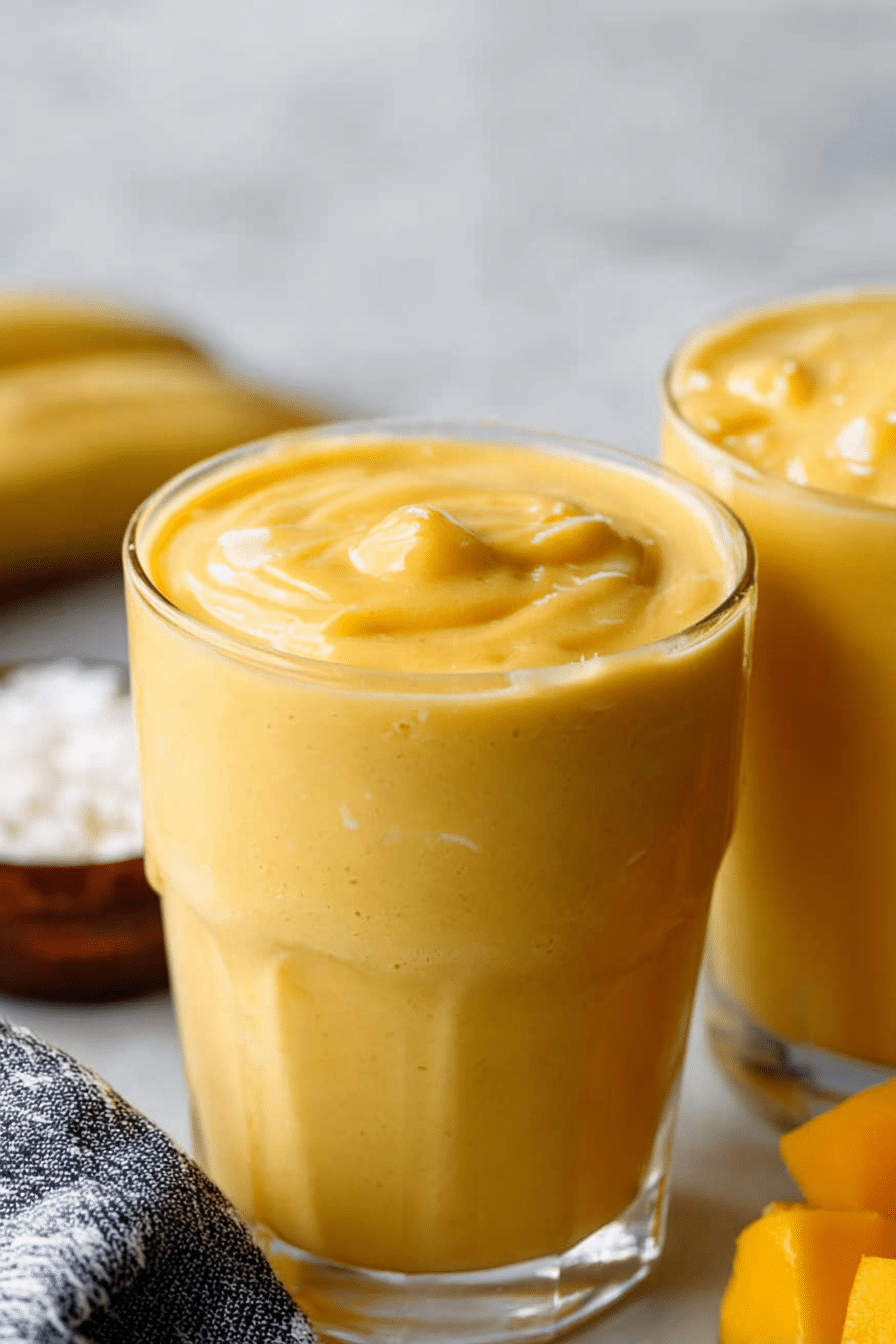
Mango Coconut Milk Smoothie
Ingredients
Method
- Add 1 cup of frozen mango along with the sliced banana, coconut milk, lemon juice, and honey to the blender.
- Blend until smooth, scraping down the sides as necessary. Add the remaining 1 cup frozen mango and blend until smooth. Add 2-4 ice cubes to thicken if needed. Pour the smoothie into a glass and enjoy immediately.