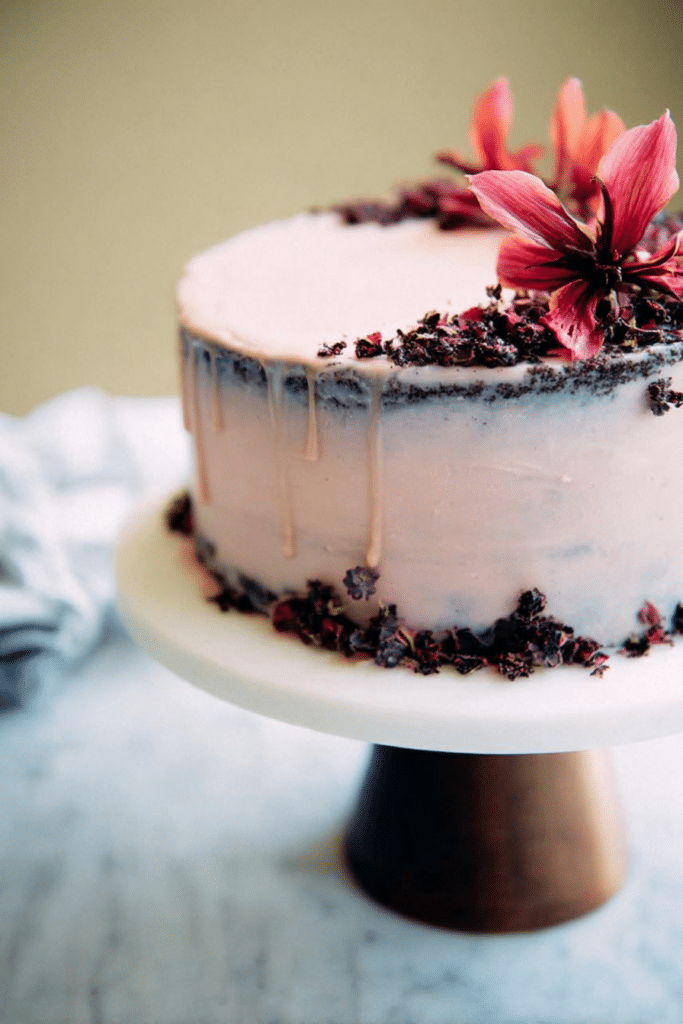
I’ve made this naked hibiscus chocolate cake a handful of times for parties where the dessert needs to do two jobs: taste unforgettable and look like it belongs on the best table. In my kitchen it became my go-to when I wanted something that felt sophisticated but was actually straightforward to bake. Guests always comment first on the contrast—the deep, glossy chocolate layers framed by that soft pale-pink frosting—and then on how the floral note lifts the whole slice.
I learned early that the visual drama of a naked cake comes from restraint: thin, clean layers, just enough frosting peeking through, and a few well-placed florals. I also learned to be bold with flavor—using hot coffee in the batter and a concentrated hibiscus infusion in the frosting gives each forkful a little spark that keeps people returning for a second slice. Making it in my kitchen has taught me the exact spots where small technique choices make the difference between good and show-stopping.
When I bring this cake to a gathering, it turns into the centerpiece—people linger, take pictures, and ask for the recipe. If you like a cake that both looks exciting and holds its own on flavor, this is the one I reach for when I want a dessert that celebrates the moment.
Why this Naked Hibiscus Chocolate Cake is perfect for parties
This cake makes a statement without shouting: the midnight-brown of the chocolate layers set against a pale-pink hibiscus buttercream reads like a festive ribbon around the table. The floral tang from hibiscus cuts through the richness of the chocolate so the cake feels lighter and more celebratory than a straight-up chocolate layer cake. Serve it at a dinner where you want the dessert to start conversations—the contrast of colors and flavors makes people curious and excited.
It’s also practical for parties. The naked finish travels well, slices beautifully, and the cream-cheese–forward frosting keeps each slice from feeling too sweet. Another great option for celebrations is the
Another great option for celebrations is the Strawberry Layer Cake, known for its vibrant colors and delicious flavors.
Everything You Need for Naked Hibiscus Chocolate Cake
Set up your work station so everything is within reach: you’ll want clean pans, a reliable mixer, and a cooling area. Accurate measuring and good tools make the process feel calm—and they keep the cake consistent every time.
- Equipment – Two round cake pans, mixing bowl and paddle or whisk, offset spatula or bench scraper, parchment paper, cooling racks, and a fine sieve for the hibiscus tea.
- Quality cocoa and good coffee – Use a flavorful unsweetened cocoa and freshly brewed hot coffee to intensify the chocolate notes.
- Freshness matters – Fresh baking powder/baking soda and fresh dried hibiscus flowers make a noticeable difference in lift and color.
Ingredient discussion (conversational):
- All-purpose flour – Provides structure; you can swap for a gluten-free blend that includes a binder if needed.
- Granulated sugar – Sweetness and tenderness; brown sugar can add deeper caramel notes if you prefer.
- Cocoa powder – The backbone of chocolate flavor; Dutch-processed gives smoother notes, natural cocoa gives brighter chocolate.
- Baking soda and baking powder – Leavening agents; make sure they’re fresh so your layers rise evenly.
- Kosher salt – Balances the sweetness and lifts flavors.
- Buttermilk – Adds tang and moistness; if you don’t have it, a simple milk-plus-acid substitute works well.
- Neutral oil – Keeps the crumb tender and moist more reliably than butter alone.
- Eggs – Structure and richness; room-temperature eggs incorporate more evenly.
- Hot coffee and water – Deepens chocolate flavor and helps dissolve cocoa for a smooth crumb.
- Dried hibiscus flowers – Steeped for the frosting color and tang; fresh hibiscus works best as a garnish rather than a substitute for steeping.
- Cream cheese and unsalted butter – For the frosting base; cream cheese gives tang and stability while butter lightens and smooths the texture.
- Confectioners’ sugar – For structure and sweetness in the frosting; sifted for smoothness.
Why hibiscus works with chocolate (flavor science)
Hibiscus brings bright acidity and floral-fruity notes that cut through cocoa’s natural bitterness. Chemically, hibiscus is rich in organic acids—citric and malic among them—which give a refreshing tartness. It also contains anthocyanins, pigments that provide the vivid pink-red hue and act as antioxidants. When paired with chocolate, that acidity balances the cake’s sweetness and activates your perception of fruitiness in darker cocoa.
Beyond taste, hibiscus contributes vitamin C and antioxidants that can complement the flavanols in dark chocolate—together they form a dessert that feels indulgent and a little lively rather than heavy. For a lighter dessert option to pair with this cake, consider serving slices alongside a smooth mousse like the
For a lighter dessert, consider serving slices with our Three Ingredient Chocolate Mousse.
The secret to an extra-moist chocolate layer
- Use buttermilk for tang and tenderness; its acid reacts with baking soda to create a finer, moister crumb.
- Hot coffee dissolves cocoa and intensifies chocolate notes while keeping the batter fluid—this helps produce a tender, evenly baked cake.
- A neutral oil in the batter keeps the crumb soft even after refrigeration.
- Mix just until combined; overmixing develops gluten and leads to a denser cake.
- Troubleshooting (bulleted for quick reference) – I include the things I’ve fixed by hand in my kitchen:
- If your cake is dry the next day, I brush the layers lightly with a thin sugar syrup or a flavored liqueur before frosting to restore moisture.
- If the crumb is gummy, it was likely underbaked—extend baking time in 3–5 minute increments and test with a skewer.
- If the cake domes too much, I level it with a serrated knife once cooled and chill before frosting to make slicing easier.
How to Make Naked Hibiscus Chocolate Cake (Step-by-Step)
- Preheat your oven and prepare two round cake pans by greasing and lining them; this ensures clean release and even bottoms.
- Whisk together dry ingredients so the cocoa, leaveners, sugar, and salt are evenly distributed—this prevents pockets of cocoa or soda.
- Combine wet ingredients separately, then stream them into the dry mixture on low speed to avoid overworking the batter.
- Slowly add hot coffee and any additional water while mixing to create a glossy, pourable batter that bakes into a tender crumb.
- Divide the batter evenly between pans and bake until a skewer comes out with a few moist crumbs; let layers cool completely before handling.
- Wrap cooled layers and chill for at least a couple of hours—this firms the crumb and makes trimming and frosting much easier.
- Make the hibiscus infusion by steeping dried flowers in hot water, then strain and cool before adding to your frosting base.
- Prepare the cream-cheese frosting by creaming cream cheese and butter until smooth, gradually beating in sifted confectioners’ sugar, then adding hibiscus tea until you reach a delicate pale-pink hue and spreadable texture.
- Temper the frosting temperature—if it’s too warm it will run; if too cold it will be firm and hard to spread. Chill briefly if needed before finishing your cake.
Pro Tip for naked hibiscus chocolate cake: Steep hibiscus tea for the truest pink
- Steep time matters—longer steeping pulls deeper color and more acidity; I usually steep until the water turns a rich magenta, then taste for brightness.
- If you don’t have dried flowers, use a concentrated hibiscus syrup or a rooibos-hibiscus blend to mimic color and flavor.
- Add the hibiscus tea to the frosting one teaspoon at a time so you control color intensity; too much liquid will thin the frosting.
- For the most elegant pale-pink, strain the tea through a fine sieve or cheesecloth to remove fine particles that can cloud the frosting.
How to assemble, frost, and style a naked cake for maximum wow
- Chill your layers before assembly so they’re firm—this helps you spread an even, thin layer of frosting without tearing the crumb.
- Place the bottom layer on a flat cake board; add a modest layer of frosting (you want crumbs to peek through), then gently press the next layer on top so the silhouette stays straight.
- Use an offset spatula and bench scraper to smooth a thin crumb coat, then chill briefly and apply a thinner finishing coat to create the naked effect.
- Leave a visible gap of cake on the sides so the color contrast reads clearly; a little imperfection looks intentionally elegant.
- Garnish with a scatter of dried hibiscus petals, a few fresh edible flowers, or a ring of fresh berries on top for color and textural contrast.
How to store, make-ahead, and easy variations (vegan & gluten-free options)
- Storage: Refrigerate the assembled cake in an airtight container for up to five days. For longer storage, wrap cooled layers tightly in plastic and freeze for up to three months; thaw in the refrigerator overnight before assembling.
- Make-ahead: Bake and chill your layers a day ahead; prepare the hibiscus frosting the morning of the event for the freshest color. For more fruity options, try serving slices with a simple jam—
For a fruity twist, try making a Classic Strawberry Jam as a topping that pairs beautifully with the cake.
- Vegan variation: Replace eggs with flax or aquafaba and use a plant-based buttermilk and butter substitute; choose a vegan cream-cheese alternative for the frosting and adjust sugar for texture.
- Gluten-free variation: Use a 1:1 gluten-free flour blend that contains xanthan gum or add a binder; watch the bake time—it may brown faster.
Unique serving suggestions or pairing ideas for the cake
Serve slices with lightly whipped cream or a small scoop of vanilla bean ice cream to balance the hibiscus tang. Fresh berries—particularly raspberries or blackberries—echo the floral-fruit notes and make the plate pop visually. For beverages, bright teas, a chilled rosé, or an espresso work beautifully as contrasts to the cake’s flavors.
For a lighter experience, try pairing slices with a simple chocolate mousse to give guests the option of a second, airy chocolate element—
For a lighter dessert, consider serving slices with our Three Ingredient Chocolate Mousse.
Detailed health benefits of hibiscus and chocolate when combined
Hibiscus is a natural source of vitamin C and antioxidants such as anthocyanins, which have been studied for their potential to support healthy blood pressure and offer anti-inflammatory effects. Dark chocolate (when used in higher-percentage cocoa) contains flavanols that are associated with cardiovascular benefits and improved circulation. Together, they offer antioxidant support and a mood-brightening effect—enjoyed as an occasional indulgence, this cake can feel like a treat with a little nutritional upside. For a deeper read into chocolate’s benefits, see this primer on dark chocolate health facts:
Explore the health benefits of dark chocolate to understand why it’s a great addition to our cake.
Comparative analysis with other floral-infused desserts
Compared with lavender and rose, hibiscus reads as brighter and tangier: lavender is resinous and perfumy, while rose is rounder and more honeyed. Hibiscus brings a citrus-like lift that pairs exceptionally well with cocoa’s bitterness. In baking traditions, flowers like orange blossom or elderflower are used for subtle perfume; hibiscus is less shy—its tartness changes how the chocolate is perceived, making the dessert feel less heavy and more festive. If you want a floral note that plays well with chocolate’s depth without overwhelming it, hibiscus is an excellent, distinctive choice.
Frequently Asked Questions
Can I use fresh hibiscus flowers instead of dried for the cake?
While dried hibiscus flowers are recommended for the tea used in the frosting, fresh hibiscus can also be used as a garnish for decoration. Just ensure to steep them properly to extract the flavor.
How can I make this cake gluten-free?
To make the Naked Hibiscus Chocolate Cake gluten-free, substitute the all-purpose flour with a gluten-free flour blend. Make sure the blend you choose includes xanthan gum for the best texture.
What can I use instead of buttermilk?
If you don’t have buttermilk on hand, you can make a substitute by combining milk with a small amount of vinegar or lemon juice. Let it sit for about 5 minutes before using it in the recipe.
How should I store the cake once it’s made?
Store the cake in an airtight container in the refrigerator for up to 5 days. If you need to keep it longer, you can freeze individual layers wrapped in plastic wrap for up to 3 months.
Can I use a different type of frosting for this cake?
Absolutely! While the hibiscus cream cheese frosting is delightful, you can use any frosting of your choice, like a classic chocolate buttercream or a whipped cream frosting.
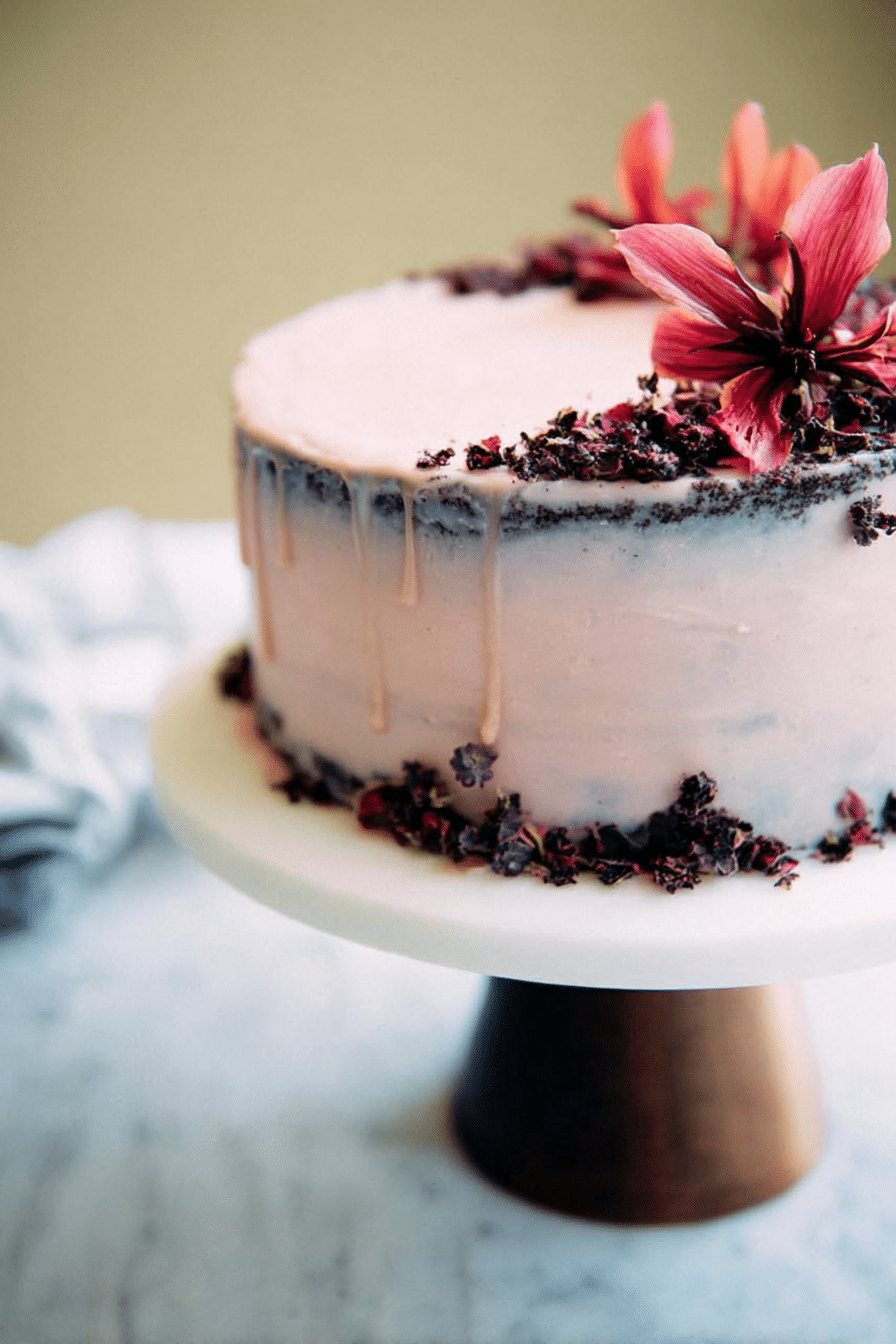
Naked Hibiscus Chocolate Cake
Ingredients
Method
- Preheat the oven to 350°F. Prepare two 8-inch round cake pans.
- Combine dry ingredients in a mixer and mix on low speed.
- Mix wet ingredients in a separate bowl and combine with dry ingredients.
- Pour batter into prepared pans and bake for 35 to 40 minutes.
- Cool cakes and wrap them in plastic wrap, chilling for at least 2 hours.
- Prepare hibiscus tea and strain it.
- Beat cream cheese and butter, incorporate sugar, and add hibiscus tea.