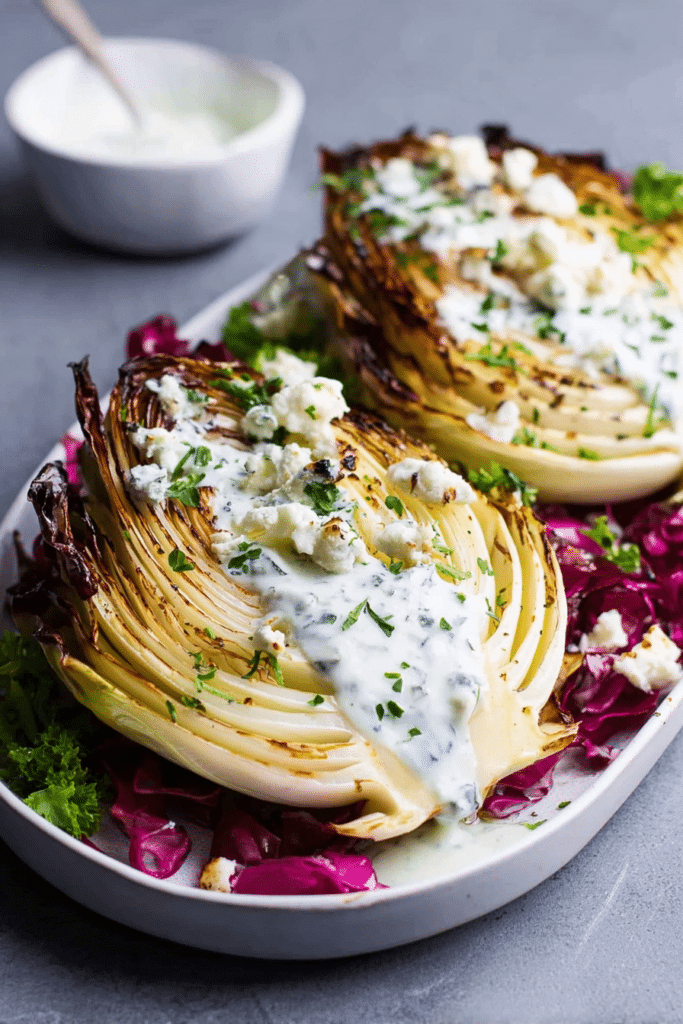
I fell for roasted cabbage the first time I coaxed its flat, pale leaves into gold. In my kitchen, a simple head of cabbage went from forgettable to magnetic with a hot oven, a slick of oil, and patience at the edge of caramelization. I love how the exterior crisps into browned shards while the core stays tender — it feels like a small miracle every time.
What turned this into a signature dish for me was the sauce: a velvety blue cheese drizzle that balances tang, cream, and a deep savory note. I’ve learned to temper the cheese gently so the sauce glides across the cabbage without breaking, and to finish the plate with a scattering of fresh herbs for brightness.
I cook this when I want to impress without fuss. It’s luxe yet approachable — a side that reads elegant on the plate and humble in its ingredient list. Over the years I’ve chased crispy edges, silky sauce, and smarter shortcuts that save time without dulling flavor.
Read on for everything I use, the small techniques that make a world of difference, and creative ways to adapt the dish for different diets and cooking equipment. You’ll see how a handful of choices — cabbage variety, oil, heat, and patience — lift this humble vegetable into something memorable.
Everything You Need for Roasted Cabbage with Blue Cheese Sauce
Below I list the tools and the key ingredient roles so you can gather everything before you start. I recommend quality blue cheese and a heavy roasting pan; little upgrades go a long way here. If you prefer plant-based options, I note substitutions that keep the dish luxurious.
- Head of cabbage – The centerpiece; choose a compact head for cleaner wedges or a looser type if you want more leaf exposure.
- Olive oil (or neutral oil) – Helps brown and crisp the edges; use a sturdier oil if you’ll push the oven hotter.
- Salt & pepper – Simple seasoning that amplifies caramelization.
- Heavy cream or cream alternative – Forms the base of the sauce; swap for coconut cream or a high-fat plant milk for dairy-free versions.
- Blue cheese (or blue cheese alternative) – The flavor anchor; choose a well-aged, crumbly variety for tang and umami, or a cultured plant-based blue for veganism.
- Worcestershire or savory umami boost – A small amount deepens the sauce; use a vegan Worcestershire or a splash of tamari as needed.
- Fresh herbs (optional) – Parsley or chives to finish and bring brightness to the plate.
Essential tools: a sturdy roasting pan or rimmed sheet, an ovenproof thermometer (helpful), a saucepan for the sauce, and a whisk. If you want a smokier finish, have a grill or a hot air-fryer on standby.
The Secret to Ultra-Crispy Cabbage Edges
Getting the edges perfectly crisp is less about tricks and more about attention to moisture and heat. Here are the practical actions I use every time.
- Pat the wedges dry before oiling so surface moisture doesn’t steam the cabbage.
- Make sure wedges are single-layered on the roast pan with air between them — crowding causes steaming instead of browning.
- Use enough oil to coat the flat surfaces; the oil promotes even conduction and quick browning.
- Start the oven hot (high-mid range) so the outside sears quickly. If you want even deeper color, finish under the broiler for a minute — watch carefully to prevent burning.
- Place the pan toward the upper third of the oven for more direct heat on the exposed edges; the rack position can change the final crispness dramatically.
- If you prefer an extra nutty note, swap part of the oil for browned butter just before roasting (add after roasting if you want to avoid melting the butter in the oven).
How to Make a Silky Blue Cheese Sauce Without Curdling
Silky sauce depends on gentle heat and the right dairy chemistry. Use these steps to keep your sauce smooth and glossy.
- Warm the cream slowly over low heat — avoid boiling. Gentle warmth makes the cheese melt into the cream instead of separating.
- Whisk constantly as you add broken or crumbled blue cheese so it disperses gradually into the warm cream.
- Once the cheese has melted into the cream base, allow the mixture to reach a bare simmer, then remove from heat immediately; residual warmth finishes the emulsion.
- If you’re using a lower-fat milk substitute, add a small binder like a touch of cornstarch slurry or a spoon of tahini to help emulsify and thicken without overheating.
- Finish with a splash of Worcestershire or soy-based umami and a pinch of black pepper to round the flavor; avoid bright acids like lemon until the sauce is fully combined or it may seize.
Exploring Different Cabbage Varieties: Green, Savoy, and Napa with Tips for Selection
Different cabbages will change texture and appearance. I choose based on how the dish will be served and the texture I want to showcase.
- Green cabbage – Firm heads, tight leaves, and classic cabbage flavor. It crisps beautifully and holds wedges well for plating.
- Savoy cabbage – Wrinkled, more delicate leaves with a tender bite. It roasts quicker and offers a softer textural contrast to the sauce.
- Napa cabbage – Softer, lighter, and sweeter; it caramelizes quickly and is lovely when you want more leaf surface and less density.
- Selection tips – Look for heavy, compact heads with crisp outer leaves and no soggy spots. For sweeter flavor, choose smaller heads that are younger and denser.
- Nutritional note – All cabbages are low in calories and a good source of fiber and vitamin C; your choice mostly affects texture and sweetness.
How to Make Roasted Cabbage with Blue Cheese Sauce (Step‑by‑Step)
Below I break the whole process into clear, actionable steps and include timing tips. Follow them to avoid common mistakes.
- Preheat your oven to a high-mid temperature so it’s fully hot when the cabbage goes in.
- Slice the cabbage into even wedges through the core so each wedge holds together during roasting.
- Remove the bottom portion of the core if it prevents the wedges from sitting flat; flat surfaces brown best.
- Pat wedges dry, drizzle and rub with oil, and season generously with salt and pepper on all exposed surfaces.
- Arrange wedges flat side down with space between them on a rimmed roasting pan; do not crowd.
- Roast until the edges are deeply browned and the cores are tender when pierced; timing varies by size and cabbage type — plan for a substantial roasting period rather than a quick bake.
- While cabbage roasts, gently warm cream and Worcestershire in a small saucepan, then whisk in crumbled blue cheese off heat until smooth and glossy; bring briefly to a bare simmer then remove.
- Serve wedges with a generous drizzle of the sauce and scatter parsley or chives for color and freshness.
Troubleshooting — things I watch for:
- If the cabbage seems steamed, it was likely crowded or not dried enough — remove any excess water and roast on a single layer.
- If the sauce breaks or looks grainy, you likely overheated it; cool slightly and whisk in a small splash of warm cream or a touch of olive oil to re-emulsify.
- If the wedges fall apart, they were cut too thin through the core — keep wedge size sturdy so they hold together while roasting.
Pro Tip for Roasted Cabbage with Blue Cheese Sauce: Make a Dairy‑Free Blue Cheese Alternative
I often make a dairy-free version for guests who avoid dairy; it still feels indulgent and creamy. Here are the steps I rely on.
- Use a full-fat coconut cream or blended cashew cream as the base to mimic the mouthfeel of heavy cream.
- Stir in a cultured, dairy-free blue-style cheese if available, or blend a tangy base from soaked cashews, nutritional yeast, a touch of apple cider vinegar, and a smoked salt to suggest the funk of blue cheese.
- Warm gently and whisk until smooth; add a little miso or tamari for umami depth in place of Worcestershire.
- Finish with fresh herbs or chives to brighten the profile and offset any sweetness from coconut.
Alternative Cooking Methods: Grilling or Air‑Frying Cabbage
When you want different textures or a smoky note, these alternative methods shine. I use them depending on weather, time, and the flavor I’m after.
- Grilling: Brush wedges with oil and grill over medium-high heat. Cook cut-side down until deep char marks form, then finish over indirect heat until tender. The grill adds a lovely smoky backbone that plays beautifully with blue cheese.
- Air‑frying: Smaller wedges work best. Arrange in a single layer, spray lightly with oil, and air-fry at a hot temperature until edges crisp. Air-frying delivers fast, very crisp results with less oil.
- Adjust times: Grilling will be faster on direct heat but requires attention to avoid flare-ups; air-frying shortens overall time but benefits from flipping halfway for even browning.
Suggested Pairings for Roasted Cabbage
Think contrast: rich sauce and crisp edges want something with structure and, ideally, a bit of sweetness or smoke to balance. Here are pairing ideas I serve often.
Consider pairing your roasted cabbage with delectable Honey Mustard Grilled Chicken with Blue Cheese Dressing for a complementary flavor experience.
Enhance your meal with Creamy Garlic Parmesan Mushrooms, which pair wonderfully with the roasted cabbage.
Try serving your roasted cabbage with the Best Ever Spinach Balls Appetizer for a delightful contrast.
Your roasted cabbage can be perfectly complemented by our Cajun Honey Butter Salmon Recipe for a flavor-packed meal.
For beverages, go with a medium-bodied white like Chardonnay or a lighter red with moderate tannin; a crisp lager also pairs well with the dish’s richness.
How to Store, Reheat, and Make‑Ahead Roasted Cabbage
Leftovers keep well if stored and reheated properly. I prepare elements ahead when entertaining so finishing touches are quick.
- Store: Keep roasted cabbage and sauce in separate airtight containers in the refrigerator for up to three days to preserve texture.
- Reheat cabbage: Use a hot oven or air-fryer to re-crisp edges — avoid the microwave if you want that fresh-roast texture.
- Reheat sauce: Warm gently on low, whisking to recombine; add a splash of cream or non-dairy milk if it feels too thick.
- Make-ahead: Roast cabbage a few hours ahead and reheat as above; prepare the sauce just before serving for the best texture and flavor.
Variations on Roasted Cabbage: Exploring Global Cuisines
Use spice and herb swaps to take the dish in new directions. I often tweak the profile depending on the protein or theme of the meal.
- Middle Eastern: Finish with toasted cumin, a drizzle of tahini, and lemon zest for warmth and brightness.
- Italian‑inspired: Add garlic and rosemary to the oil before roasting, and finish with grated aged pecorino in place of or alongside the blue drizzle.
- Smoky Spanish: Sprinkle smoked paprika over the wedges before roasting and serve with a sherry‑fortified blue sauce.
- Asian twist: Use a miso-umami boost in the sauce, and top with toasted sesame and scallions for contrast.
I love how small swaps let you reinvent the dish while keeping the same satisfying contrast of crispness and cream.
Frequently Asked Questions
Can I use a different type of cabbage for this recipe?
Absolutely! You can experiment with varieties like Savoy or Napa cabbage for different textures and flavors.
How can I make the blue cheese sauce dairy-free?
You can create a dairy-free version by substituting heavy cream with coconut cream and using a dairy-free blue cheese alternative.
What can I serve with roasted cabbage?
Roasted cabbage pairs wonderfully with grilled meats, roasted chicken, or as part of a hearty vegetarian meal.
How do I store leftovers?
Store any leftovers in an airtight container in the refrigerator for up to 3 days. Reheat in the oven for best results!
Can I grill or air-fry the cabbage instead of roasting it?
Yes! Both grilling and air-frying are great alternatives that can produce deliciously crispy results.
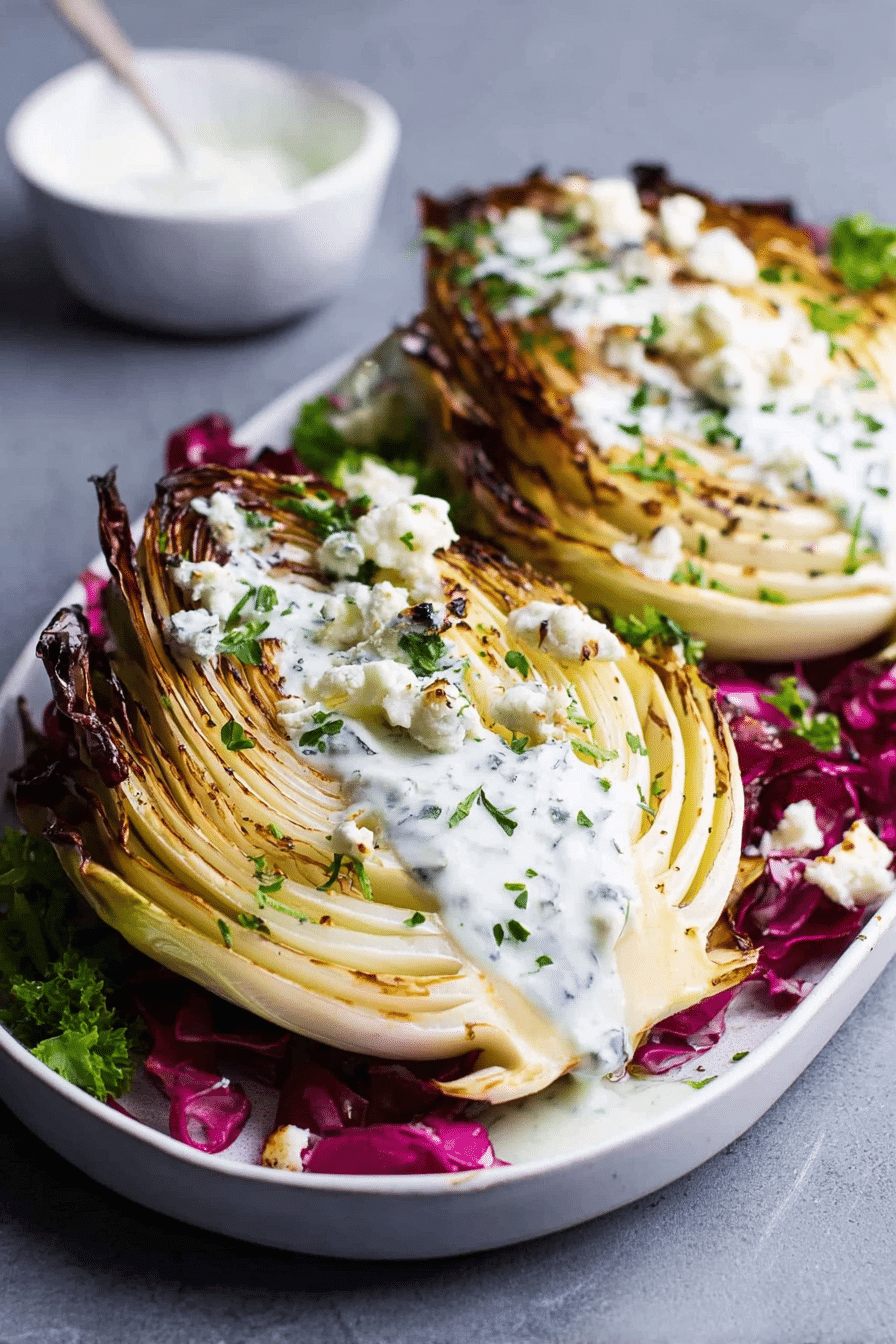
Roasted Cabbage with Blue Cheese Sauce
Ingredients
Method
- Preheat oven to 400 F.
- Slice the cabbage through the middle of the core and continue all the way through.
- Remove the bottom half of the core from each piece.
- Cut each half into half again through the core area, and repeat again. In the end there will be 8 wedges.
- Drizzle olive oil all over the bottom of a roasting pan.
- Place each wedge flat side down in the oil, rub then flip over again.
- Roast for 45 minutes, or more depending on how crispy you want the cabbage to be.
- While the cabbage is roasting, place the cream, Worcestershire and blue cheese together in a small saucepan.
- Heat them together on medium low heat, whisking as it warms up.
- Once the blue cheese has incorporated into the milk, allow to come to a slight simmer then immediately remove from the heat.