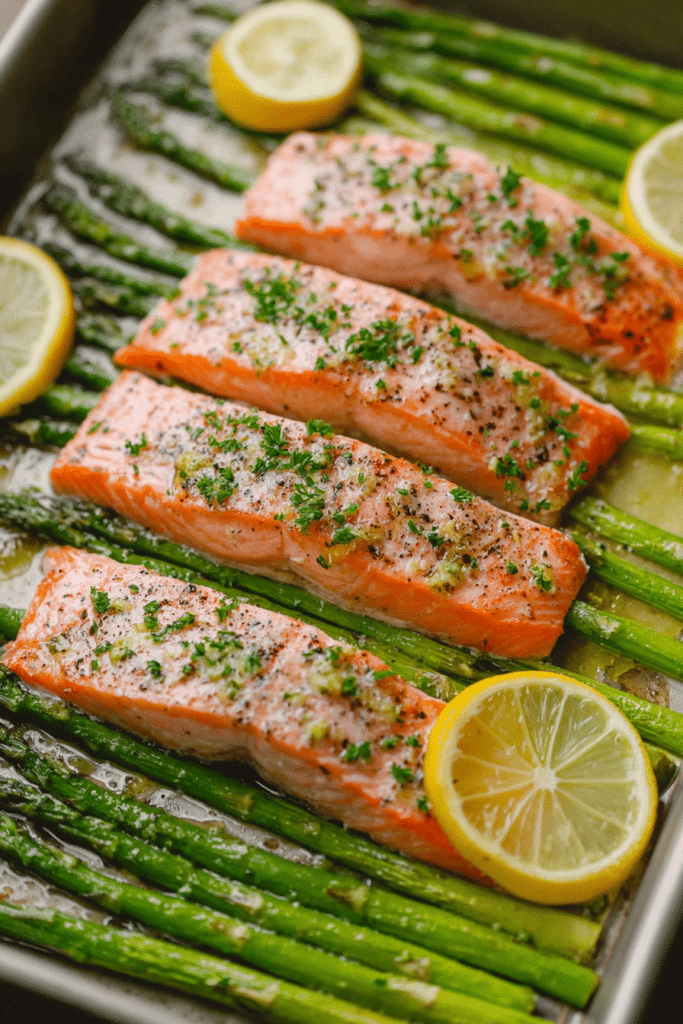
I make this sheet pan salmon and asparagus any time I need dinner on the table fast. It takes a little prep, then the oven does most of the work—only one pan to wash and a dinner that looks like you spent more time than you actually did. The lemon-garlic-herb butter I use keeps the salmon moist while giving the asparagus bright, savory notes.
On hectic nights I appreciate how predictable this recipe is: if the oven is fully preheated and the fillets are similar in thickness, the timing is consistent. I can walk away, finish a quick side, and come back to a tray that smells of roasted garlic and lemon, with salmon that flakes easily and asparagus that still has snap.
I used to overcook salmon until I started using a thermometer and paying attention to fillet thickness. That small shift made a huge difference—I now get tender, flaky salmon every time without stress. This is the kind of recipe I turn to when I want a healthy meal that feels special but doesn’t take hours.
Why this sheet pan salmon and asparagus is perfect for busy weeknights
This method is built for simplicity and speed. You cook protein and vegetable together on one tray, which cuts prep and cleanup time in half. A quick flavored butter does most of the heavy lifting for taste, so you don’t need long marinating times. The result is a colorful plate: pink salmon, bright green asparagus, and slices of lemon that caramelize slightly while roasting. It’s straightforward, reliable, and fast.
Everything You Need for Sheet Pan Salmon and Asparagus
- Salmon – The main protein; choose portions that are similar in thickness so they cook evenly.
- Asparagus – Quick-roasting vegetable; trim fibrous ends so each spear is tender through.
- Olive oil – Keeps the asparagus from drying out and helps browning.
- Butter + lemon + garlic + herbs – The flavored butter keeps salmon moist and seasons the asparagus; use fresh herbs when possible for cleaner flavor.
- Salt & pepper – Small amounts applied right before baking bring all the flavors together.
- Parchment paper or a rimmed baking sheet – Parchment prevents sticking and makes cleanup fast; trim it so it doesn’t hang over the pan edges.
- Instant-read thermometer – Optional but highly recommended to check doneness without cutting into the fish.
- Substitutions – Use dairy-free butter or olive oil for a dairy-free option; swap in other quick-veggies if asparagus isn’t available.
The Secret to fast, flaky salmon and tender asparagus
To get reliably flaky salmon and asparagus that still has a bit of bite, you need two things: consistent oven heat and attention to fillet thickness. Preheat the oven thoroughly so the surface of the salmon sears quickly and the flesh cooks evenly. Aim for a final internal temperature of 145°F as your target; this ensures the salmon flakes but doesn’t dry out. For asparagus, choose stalks that are similar in diameter and trim the woody ends—thin spears will be tender more quickly, while thick spears need the full bake time.
Why oven temperature and timing matter
High heat helps develop a light crust on the salmon and concentrates flavor in the asparagus. Baking at 450°F gives you roast browning in a short time. If your oven is cooler or not preheated, the fish will take longer and can steam rather than roast, yielding soggy asparagus and dull color on the salmon. Using the broiler for the final minute or two is optional but useful if you want a golden top—just watch closely so the lemon doesn’t burn.
How to Make Sheet Pan Salmon and Asparagus (Step-by-Step)
- Preheat your oven to a high temperature with the rack in the upper third so the salmon and asparagus sit where heat concentrates.
- Line a rimmed baking sheet with parchment and trim it so it doesn’t hang over the edges (this prevents charring under the broiler).
- Place salmon portions down the center of the sheet and arrange trimmed asparagus along the sides so everything has some breathing room.
- Drizzle the asparagus lightly with olive oil and season both the fish and veg with salt and pepper.
- Make the lemon-garlic-herb butter by mashing softened butter with lemon juice, garlic, chopped parsley, salt, and pepper until it’s a spreadable consistency; spoon most over the salmon and dab the rest on the asparagus.
- Bake at high heat until the salmon flakes easily—timing depends on thickness. If you want color, switch to broil for the last 2–3 minutes while watching closely to prevent burning.
- Use an instant-read thermometer to confirm doneness at about 145°F at the thickest part, then rest briefly before serving.
For an even quicker option, check out our easy sheet pan salmon dinner that pairs perfectly with your asparagus.
Quick Variations: swap veggies, flavors, and quick sides
- Swap vegetables: use broccoli florets, sugar snap peas, or sliced bell peppers—choose quick-roasting options so everything finishes together.
- Different flavors: try an Asian twist with soy, sesame oil, and ginger, or a Mediterranean version with oregano, lemon zest, and olives.
- Protein swaps: use shrimp or thin chicken cutlets if you prefer; adjust cooking time so the protein cooks through without overcooking the veggies.
- Lower fat: skip some butter and finish with a squeeze of lemon juice instead to brighten the dish.
Consider adding garlic butter shrimp for a flavorful twist to your sheet pan meal.
For another delicious veggie option, consider our honey glazed roasted Brussels sprouts as a side dish.
Pro Tip for sheet pan salmon and asparagus: timing and thermometer rules
- Always preheat your oven fully—baking into a hot oven gives predictable timing and better browning.
- Use an instant-read thermometer and aim for 145°F at the thickest part of the fillet for safe, flaky salmon.
- Place fillets similar in size together so they finish at the same time; thicker pieces need more minutes.
- Give the fish a short rest after baking so juices redistribute before you slice or serve.
- Leave space between items on the pan to promote even air circulation and even cooking.
Troubleshooting
- Salmon dry? You likely overcooked it—next time pull it a few degrees earlier and rest for a couple minutes.
- Asparagus limp? Either it was overcrowded or too thick for the bake time; remove thicker stalks or roast them a bit longer.
- Butter not spreading? Let the butter come to room temperature or mash it well so it spreads easily over the fillets.
- Lemon slices burning under broiler? Move the tray down a rack or broil for a shorter time while watching closely.
How to Store, Reheat, and Meal-Prep Leftovers
- Refrigerate leftovers in an airtight container within two hours of cooking; consume within 3–4 days.
- To freeze, portion the salmon and asparagus into meal-sized containers and freeze for up to 2 months; thaw overnight in the fridge before reheating.
- Reheat gently in a low oven or covered in a skillet with a splash of water to keep the salmon moist; avoid microwaving too long or the fish will toughen.
- For meal prep, portion fish and veg into individual containers with a fresh wedge of lemon and a small container of extra herb butter or sauce to brighten before serving.
Choosing Fresh Salmon and Asparagus
Fresh salmon should smell faintly of the sea, not fishy, with firm flesh and vibrant color. Look for fillets that spring back slightly when pressed and avoid any with a strong odor. Fresh asparagus stalks should be firm and straight, with tightly closed tips and a bright green color; bend one to check for crispness—fresh stalks snap cleanly.
Buying seasonal produce when asparagus is in peak makes a noticeable difference in flavor and texture. If you want another seafood option to pair with these flavors, try these lemon garlic lobster tails which complement your main dish beautifully.
Nutrition Breakdown and Dietary Swaps
- Overview: This is a protein-forward meal with moderate fat from butter/olive oil and low carbs from the vegetables.
- Dairy-free swap: Use a plant-based butter or extra olive oil to keep richness without dairy.
- Lower-fat option: Reduce the butter used and finish with extra lemon juice and fresh herbs for brightness.
- Vegan alternative: Replace salmon with firm, marinated tofu or seasoned chickpeas and roast with the asparagus—keep the same herbs and lemon for flavor.
- Gluten-free: The recipe is naturally gluten-free; double-check any added sauces or seasonings for hidden gluten.
Frequently Asked Questions
How long does it take to make sheet pan salmon and asparagus? This recipe takes a total of about 20 minutes, including 5 minutes of preparation and 15 minutes of cooking time.
What temperature should I set my oven to for this recipe? You should preheat your oven to 450°F for baking the salmon and asparagus.
Can I use frozen salmon for this recipe? Yes, you can use frozen salmon, but ensure it is fully thawed before cooking for even results.
What are some good substitutes for asparagus? You can swap asparagus with other quick-cooking vegetables like green beans, broccoli, or bell peppers.
How do I know when the salmon is done cooking? The salmon is done when it flakes easily with a fork and reaches an internal temperature of 145°F.
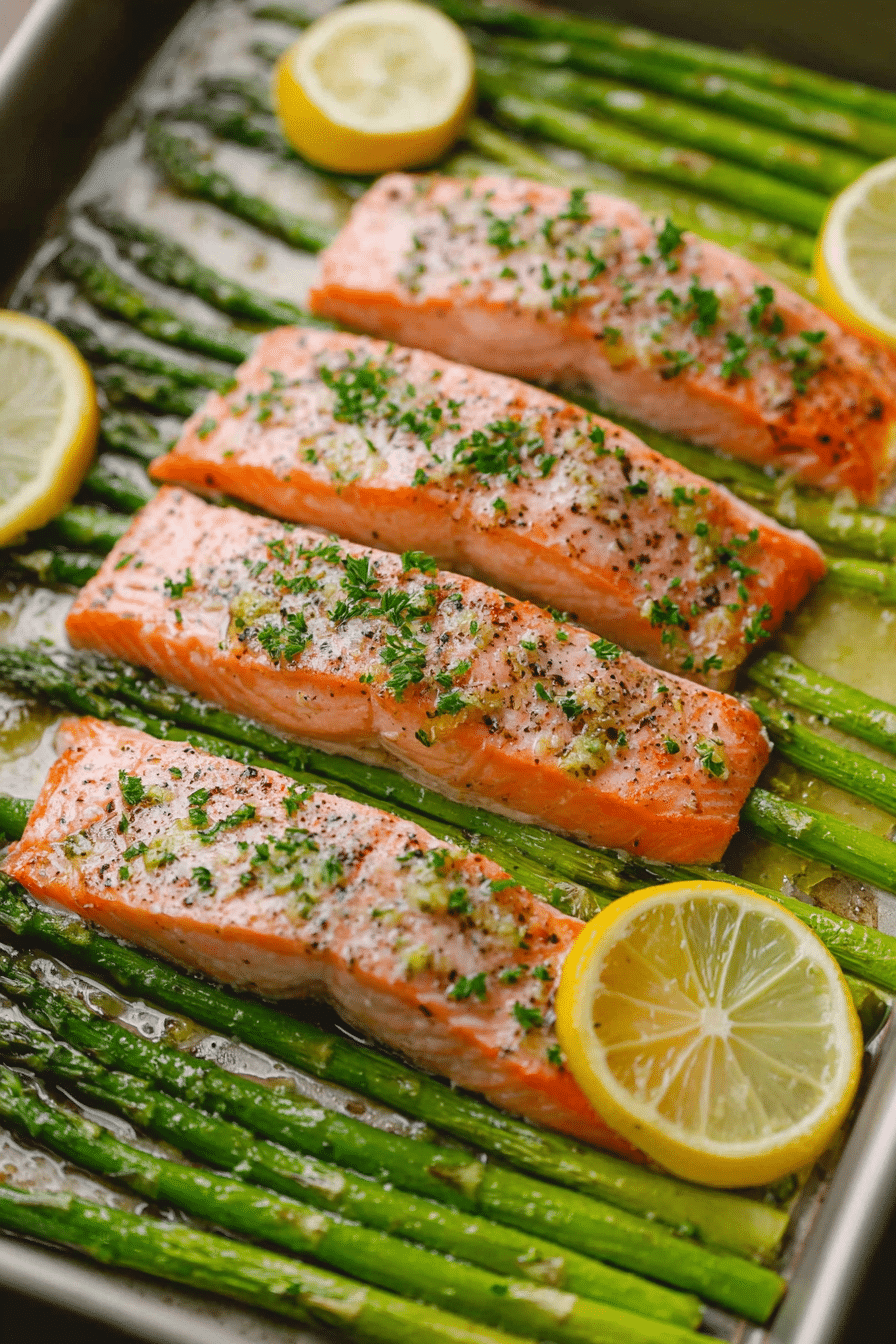
Sheet Pan Salmon and Asparagus
Ingredients
Method
- Preheat oven to 450˚F with oven rack in top third. Line large rimmed baking sheet with parchment paper.
- Place salmon filets in a row down the center of your lined baking pan. Arrange trimmed asparagus on the sides of the salmon.
- Drizzle asparagus lightly with olive oil and roll to coat. Sprinkle both asparagus and salmon with salt and pepper.
- In a medium bowl, mash together the ingredients for flavored butter and spoon 3/4 of it over the salmon.
- Top each salmon filet with a slice of lemon and bake uncovered for 10-12 minutes. Broil for an additional 2-3 minutes.
- Bake until salmon is flaky and cooked through, internal temperature of 145˚F.