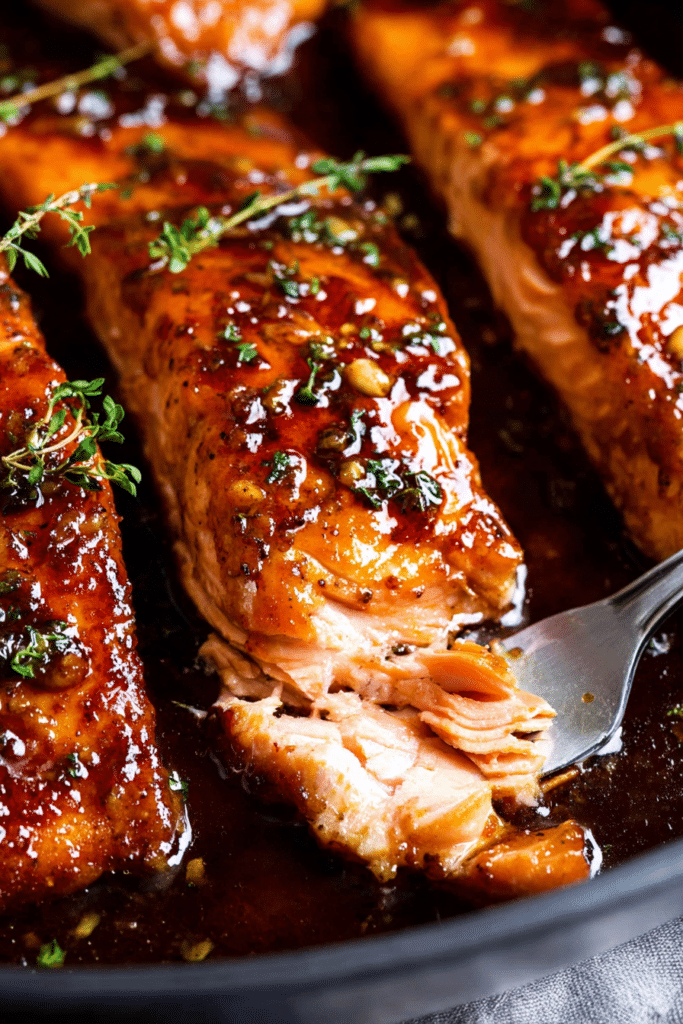
I cook this honey garlic glazed salmon on nights when time is short but everyone still wants something comforting and flavorful on the table. I like that it comes together fast: a quick sauce, a hot pan, a short broil, and you’ve got a glossy glaze that smells like garlic and warm honey filling my kitchen. It’s the sort of dinner I reach for when I want something impressive without pacing around the stove for an hour.
I learned a few things the hard way: drying the fish first matters, basting while it cooks keeps the flesh moist, and keeping the broiler rack mid-level prevents the glaze from turning bitter. After a couple of attempts (one scorched tray and a few sticky fingers later), I now make this in about the same time it takes to set the table.
What I love most is how pantry staples — honey, soy sauce (or a gluten-free alternative), garlic, butter, and a squeeze of lemon — combine into a sauce that browns quickly and clings to the salmon. The finish is glossy, slightly charred at the edges, and the aroma alone usually bills dinner as officially ready before anyone sits down.
This recipe is built for busy weeknights: one pan, short clean-up, and flexible enough to adapt if someone at the table needs a gluten-free or lower-sodium option. Read on for what I keep in my kitchen to make this work consistently, plus tips that save time and keep the salmon tender every single time.
Everything You Need for Honey Garlic Glazed Salmon
Below I cover the ingredients and tools that make the recipe fast and reliable. I also include a quick note on nutrition so you can decide whether this fits your meal plan.
- Salmon (filets or portions) – The main ingredient; choose firm, fresh filets or thawed frozen portions. Skin-on helps during pan searing and keeps the fish moist.
- Salt & pepper – Basic seasoning to enhance the salmon’s natural flavor.
- Paprika or smoked paprika – Adds color and a little warmth; smoked paprika gives a subtle smoky note.
- Butter – Adds richness and helps the sauce coat the fish; swap for ghee if you’re dairy-free.
- Olive oil or neutral oil – Prevents sticking and keeps the pan hot for a quick sear.
- Garlic (fresh, minced) – Provides the savory backbone of the glaze; powdered garlic won’t give the same bite.
- Honey – The sweet component that caramelizes; start with real honey for best texture.
- Soy sauce or tamari – Adds umami and salt; use tamari or coconut aminos for a gluten-free swap.
- Sriracha or hot sauce – Brings a little heat; sub with chili flakes or omit for kids.
- Lemon juice – Brightens the glaze and balances the sweetness.
- Oven-safe skillet – Necessary if you plan to finish the salmon under the broiler; a heavy-bottomed pan works best.
- Probe thermometer (optional) – Helpful for checking doneness, especially if you’re cooking to a specific internal temperature.
Nutrition snapshot (per serving, approximate): 481 kcal, 21 g fat, 38 g carbs, 36 g protein. It’s a high-protein weeknight option — swap the honey for less if you want lower carbs, or pair with a hearty vegetable to balance the plate.
The Secret to a Sticky, Caramelized Glaze
The glaze becomes sticky because honey and the sugars in the sauce reduce quickly under high heat; the water evaporates and the sugars concentrate, allowing caramelization. Butter contributes fat that carries flavor and helps the glaze coat the salmon smoothly while also encouraging browning. Basting during the initial pan time and once while broiling helps the sauce cling and keeps the surface from drying out.
Technically, you’re looking for a glaze that thickens enough to coat the back of a spoon — when you pull the spoon through the sauce, it should leave a visible trail instead of immediately closing. If it’s too thin, it won’t stick; too thick and it can burn fast under the broiler.
- Keep the sauce hot and bubbling briefly before adding the fish so sugars are activated and the sauce will start to reduce.
- Add a small splash of water if the glaze thickens too quickly while you’re basting; this keeps the sauce glossy.
- Watch the edges during broil — high heat caramelizes quickly, so timing is everything.
Why Temperature and Timing Matter for Tender Salmon
High, direct heat (broiling on high) gives you caramelization but can overcook the interior if the fish starts too cold or the rack is too close to the element. A mid-level rack position keeps the top from burning while still allowing that golden-brown finish. Use a probe thermometer if you can: I aim for an internal temperature in the mid-120s°F for a moist, slightly rosy center, and up to the low-130s°F if you prefer a firmer, fully-cooked texture. Always rest the salmon a few minutes—carryover heat finishes it gently.
Visual cues: the fish should flake easily with a fork but still appear slightly translucent in the center when it’s at the lower end of the temp range. If it flakes apart too easily and looks dry, it’s overcooked.
For a different take that also demonstrates how temperature affects texture and flavor, try this related sweet and spicy version: sweet and spicy honey sriracha baked salmon.
How to Make Honey Garlic Glazed Salmon (Step-by-Step)
- Pat the salmon dry with paper towels, then season both sides with salt, pepper and paprika. If your salmon has skin, keep it on and place skin-side down first.
- Move your oven rack to the middle position and preheat the broiler so it’s ready; this prevents the glaze from burning if the fish hits the heat while the oven is still cold.
- Heat an oven-safe skillet over medium-high heat with butter and a touch of oil. Once the butter melts, add minced garlic and quickly stir to wake the aromatics without browning them.
- Add honey, soy sauce (or tamari), a bit of water, sriracha, and lemon juice to the pan and let the mixture warm so the honey thins slightly and everything combines — this takes only seconds.
- Place salmon in the pan, skin-side down if applicable, and cook for a few minutes so the bottom forms a slight crust. Frequently spoon the sauce over the tops to baste and build layers of glaze.
- Transfer the skillet to the oven and broil on high for a few minutes, basting once halfway through the broil. Watch carefully: you want caramelization without burning.
- Remove from oven when caramelized and cooked to your preferred doneness. Let the salmon rest for a few minutes so the juices redistribute and the glaze sets.
Troubleshooting (I’ve found these fixes helpful):
- I noticed scorch when the rack was too close to the broiler—move the rack lower to avoid bitter spots.
- If the glaze seems too thin and won’t stick, simmer it a little longer before adding the fish until it coats the back of a spoon.
- If the salmon is drying, lower the broil temperature or finish for less time and rely on residual heat during resting.
Pro Tip for honey garlic glazed salmon: Keep the Rack Mid-Level
- Place the oven rack in the middle position to prevent the glaze from burning while still getting a strong broil for caramelization.
- If your broiler is especially powerful, move the rack one notch lower than the middle to give yourself an extra safety margin.
- Use an oven-safe thermometer or peek quickly through the oven window—opening the door repeatedly drops temperature and stretches cooking time.
- I always baste once while the fish is broiling; that single baste locks in gloss without risking a burnt sauce.
Easy Variations and Side Pairings for Families
Pro-Tips, Troubleshooting, and Variations are presented below as bulleted lists for quick scanning.
- Milder kid-friendly glaze – Omit the sriracha and add a touch more lemon for brightness while keeping sweetness.
- Gluten-free swap – Use tamari or coconut aminos in place of soy sauce for a gluten-free glaze.
- Lower-sugar option – Reduce the honey and add a splash more lemon or a pinch of grated ginger to keep balance.
- Herb-forward – Finish with chopped parsley, cilantro, or thinly sliced green onions for freshness.
- Spicy twist – Stir a little extra sriracha or chili flakes into the glaze for a bolder kick.
- Low-carb plate – Serve with roasted cauliflower rice or a crisp green salad instead of grains.
- Sides that work well – Steamed broccoli, roasted potatoes, jasmine rice, or a bright cabbage slaw make easy family-friendly pairings.
If you’re looking for a different take, try pairing your honey garlic glazed salmon with our delicious garlic butter salmon recipe!
Add a zing to your dinner rotation with our cajun honey butter salmon recipe that complements the sweet and savory notes of honey garlic nicely.
How to Store, Reheat, and Make-Ahead Honey Garlic Glazed Salmon
Store leftover salmon in an airtight container in the refrigerator for up to three days. For longer storage, flash-freeze portions on a tray then transfer to a freezer-safe bag for up to one month. I label the container with the date so I don’t lose track.
- Reheating in the oven – Warm at a low temperature (around 275°F) in a covered dish with a splash of water or extra glaze to keep the fish moist; heat until just warmed through.
- Stovetop – Gently reheat in a skillet over low heat with a spoonful of sauce; cover briefly to trap steam and prevent drying.
- Microwave (quick) – Use short bursts at 50% power and cover with a damp paper towel to retain moisture; check frequently to avoid overcooking.
- Make-ahead – Mix the glaze ahead and store in the fridge; pat the fish dry, season, and let it sit in the glaze for a short time before cooking. I often prep the sauce in the morning so dinner is practically ready when I get home.
For a delightful side, try our honey garlic roasted baby carrots that will pair perfectly with your salmon leftovers!
User-Generated Variations or Personal Stories
I’ve had neighbors, busy parents, and college students tell me they turn to this recipe when they’re short on time but want something a little special. One friend swapped the soy for tamari for a gluten-free dinner while another doubled the glaze for a saucier finish that fed two hungry teenagers.
If you try your own twist, tag a photo on social with a short note about your version — I love seeing how people adjust the heat, swap sides, or add herbs. Sharing tweaks helps other busy cooks find the right balance for their family’s tastes.
Frequently Asked Questions
How long does it take to make honey garlic glazed salmon?
This delicious dish takes just 20 minutes to prepare and cook!
Can I use frozen salmon for this recipe?
Yes, you can use frozen salmon, but make sure to fully thaw it before cooking for the best results.
What can I serve with honey garlic glazed salmon?
This salmon pairs well with rice, steamed vegetables, or a fresh salad. Feel free to get creative!
How do I ensure my salmon is cooked perfectly?
Baste the salmon while it broils and keep an eye on the timing. Aim for a slightly caramelized exterior and tender interior.
Can I make this recipe ahead of time?
Yes! You can prepare the glaze and marinate the salmon in advance. Just cook it fresh when you’re ready to enjoy.
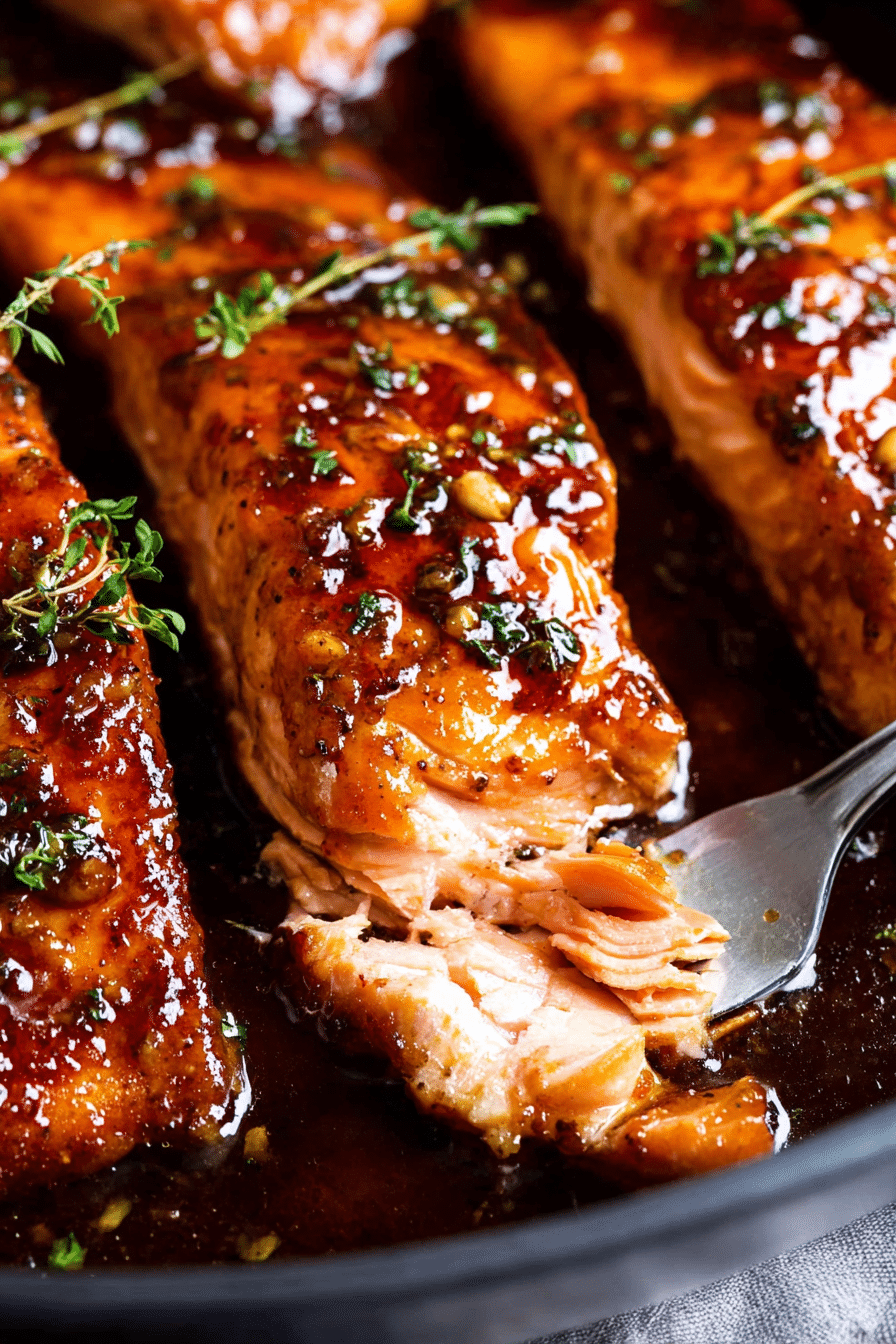
Honey Garlic Glazed Salmon
Ingredients
Method
- Pat salmon dry, then season with salt, pepper, paprika and blackening seasoning (if using). Set aside.
- IMPORTANT: Adjust oven rack to middle position, then preheat broiler.
- Add butter and oil to a large, oven-safe skillet over MED-HIGH heat. Once butter is melted, add garlic, water, soy sauce, sriracha, honey and lemon juice and cook 30 seconds or so, until sauce is heated through.
- Add salmon, skin side down (if using salmon with skin), and cook 3 minutes, basting frequently with sauce from the pan.
- Broil salmon on high for 5-6 minutes until caramelized and cooked to desired doneness, basting with sauce once during broil.
- Garnish with minced parsley if desired.