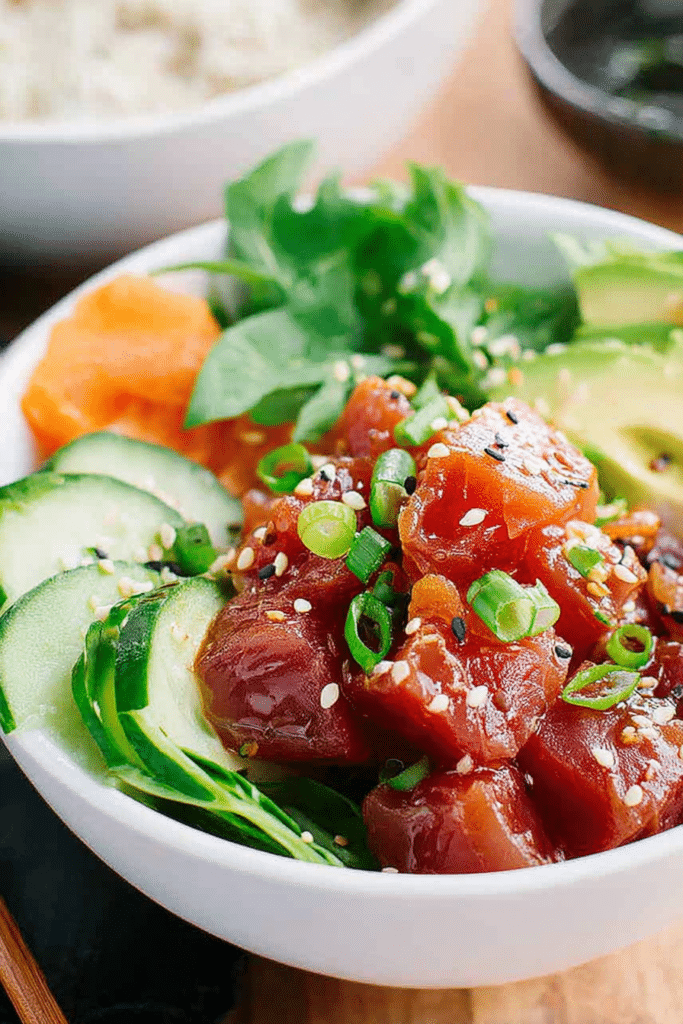
I make a lot of quick dinners in my kitchen, and ahi tuna poke has become a go-to when I want something fresh, fast, and satisfying. The first time I prepped this bowl for a weeknight, I was struck by how little active cooking it demands: most of the time is hands-off while rice cooks and tuna briefly marinates. I love that I can have a bright, restaurant-style bowl on the table in about 30 minutes.
What I appreciate most is the balance—lean, cold tuna against warm, slightly chewy rice and crisp vegetables. The contrast in textures and the pop of sesame and scallions make it feel special without a lot of fuss. I also keep a few components prepped (rice, quick pickles, and sliced green onions) so assembling bowls on busy nights is effortless.
I’ll walk you through the exact things I do in my kitchen to keep this tuna poke simple, safe, and flavorful. I’ll share the small timing tricks that protect the texture of the fish, how I source sashimi-quality tuna responsibly, and a handful of fast variations for different diets so you can tailor the bowl to your weeknight schedule and taste.
If you like fast seafood dinners, you might also enjoy this easy sheet pan salmon dinner that pairs well with the same pantry staples I use for poke.
Why This Ahi Tuna Poke Is Ideal for Busy Weeknights
This recipe is built around speed, nutrition, and flexibility. The total time is short because only the rice requires heat—everything else is assembly. For busy nights I often stagger the prep: start the rice, slice the veg, then marinate the tuna for a short period while the rice finishes. That way everything comes together at once.
Specific benefits you’ll feel right away: it’s high in lean protein to keep you full, it’s easy to portion for meal prep, and the components are interchangeable so it fits gluten-free, low-carb, or plant-forward swaps. Imagine the bright pink tuna, deep green avocado, and glossy soy-marinated cubes—visual cues that make a simple meal feel thoughtfully made.
Because the tuna isn’t cooked, freshness and minimal handling are essential. I’ll show exactly when to marinate and how long to refrigerate so you get peak flavor without sacrificing texture or safety.
Everything You Need for Ahi Tuna Poke
Here’s a quick, organized look at the ingredients and why each matters. I keep a short shopping list so you can run in and out of the store and still assemble a bowl that looks and tastes like you just ordered it at a quality poke spot. Add some freshness with homemade tzatziki sauce that pairs wonderfully with the poke if you want a creamy contrast.
- * Ahi tuna (sashimi-grade) – The star: firm, clean-tasting cubes provide texture and protein. Use the freshest fish you can source.
- * Soy sauce or tamari – Brings savory umami; tamari is the gluten-free swap.
- * Rice vinegar – Adds brightness and balances the soy; too much acid will alter the fish texture.
- * Sesame oil – Small amount for toasted, nutty aroma that carries through the bowl.
- * Red pepper flakes – Provide heat and visual contrast; substitute with chili oil for a different flavor profile.
- * Green onions – Freshness and a mild onion bite; add late so they stay crisp.
- * Sesame seeds – Tiny crunch and more nuttiness; finish with extra for garnish.
- * Rice (brown or white) – The base: brown rice adds fiber and chew; white rice gives that classic stickier poke texture.
- * Salad greens or mix – For freshness and color; baby greens or a crisp romaine work well.
Nutrition Breakdown: Protein, Carbs, and Calories
This bowl is built to be a balanced, energizing meal for busy people. Per serving estimates for a typical assembly of tuna, rice, and greens are approximately 293 kcal, 33 g protein, 28 g carbohydrates, and 5 g fat. The tuna provides the bulk of the protein, making this a satisfying post-workout or office-lunch option.
Using brown rice increases the fiber versus white rice, which helps steady blood sugar and keeps you feeling fuller longer—handy on days packed with back-to-back tasks. If you need lower carbs, swap rice for extra greens or cauliflower rice and you’ll reduce carbohydrate load while keeping the protein high.
Small swaps make a meaningful difference: choosing tamari instead of regular soy reduces problematic gluten, and limiting sesame oil keeps total fat low while still delivering plenty of flavor.
The Secret to Perfect Texture in Your Tuna
The two most important things for texture are cut size and marinating time. I cut my tuna into uniform cubes so each bite is consistent—this also ensures the marinade coats each piece evenly. Visualize firm, jewel-like cubes against the softer rice; that contrast is what makes the bowl feel refined.
- Cut the fish into even, bite-sized cubes so they hold shape and absorb flavor uniformly.
- Marinate briefly: a short soak lets surface flavor penetrate without softening the interior. I aim for just long enough to coat and season—any longer risks a mushy mouthfeel.
- Avoid heavy acids for extended marinating; vinegar will start to alter the texture if left too long.
Why Temperature and Timing Matter for Freshness
Temperature control is non-negotiable with raw fish. Keep your tuna refrigerated up until the moment you marinate and serve; it should feel cold and firm to the touch. Aim to marinate shortly before serving for peak freshness. If you must prepare ahead, refrigerate the marinated tuna covered and consume within two hours for best quality.
Concrete timing guidelines I use in my kitchen:
- Prepare rice first so it’s warm when you assemble bowls.
- Marinate the tuna for a short window—typically under 30 minutes—unless you’re refrigerating immediately and serving cold within two hours.
- Keep the fish below safe refrigeration temperatures (at or below 40°F) from purchase through assembly.
How to Make Ahi Tuna Poke (Step-by-Step)
- Cook the rice according to the package or your cooker’s instructions; aim for fluffy, separate grains if using brown rice, or slightly sticky if using sushi-style white rice.
- While the rice cooks, cut the tuna into uniform cubes and thinly slice green onions and any vegetables you’re using.
- In a bowl, combine soy (or tamari), a splash of rice vinegar, sesame oil, crushed red pepper, sliced green onions, and sesame seeds. Toss the tuna gently to coat.
- Let the tuna sit briefly—just enough to pick up the marinade—then assemble bowls with warm rice, salad greens, and the marinated tuna on top. Garnish with extra sesame seeds and any toppings you like.
- For other simple seafood weeknights, try this easy sheet pan salmon dinner that’s just as simple to prepare.
Pro Tip for Ahi Tuna Poke: How to Source Sashimi-Grade Tuna Safely
- Look for tuna labeled as sashimi-grade or sushi-grade at a reputable fishmonger; ask when it was purchased and how it was stored.
- Good visual cues: clean, translucent color without brown edges and a neutral, briny scent—not fishy. If the fish smells off, don’t buy it.
- Buy from trusted markets or grocery stores with high turnover—freshness is easier to guarantee when fish moves quickly through inventory. You can also check for responsible sourcing or sustainability labels if that matters to you.
- If you enjoy other tuna recipes, consider trying a jalapeño tuna melt for a cooked alternative that still highlights the tuna flavor.
How to Store, Reheat, and Make-Ahead Ahi Tuna Poke
For short-term make-ahead, prepare the rice and chop vegetables in advance and keep the tuna separate. Marinate just before serving or up to two hours refrigerated if you need the bowl pre-assembled.
- Refrigerate components in airtight containers; assembled bowls are best eaten within two hours if refrigerated with raw fish.
- Do not freeze the raw marinated tuna—freezing alters texture and is not recommended for a fresh poke experience.
- Leftover tuna can be repurposed cold over greens or mixed into a salad; use within 24 hours for quality and safety.
Troubleshooting
- If the tuna tastes mushy: you’ve likely marinated too long or the fish was starting to break down—reduce marinating time next time.
- If the bowl is bland: add a pinch more salt-forward soy or a squeeze of fresh citrus to brighten the flavors.
- If rice is gummy: you likely used too much water or overcooked—rinse rice before cooking and use a precise water ratio for the rice type.
- If toppings get soggy: keep avocado and crunchy elements separate until serving to preserve texture.
Easy Variations and Substitutions (Vegan, Gluten-Free, Low-Carb)
This bowl is purposefully modular: swap proteins or carbs to suit diet needs while keeping the same layered-build approach. If you’re not a tuna fan or need another protein option, there are easy swaps that keep the same punchy flavors.
- Vegan: Replace tuna with marinated cubes of firm tofu or young jackfruit tossed in the same marinade for a plant-based option.
- Gluten-free: Use tamari instead of regular soy sauce to keep the full flavor without gluten.
- Low-carb: Replace rice with cauliflower rice or extra salad greens to cut carbs while maintaining volume and texture.
- Seafood swap: Try garlic butter shrimp for a cooked variation if raw fish isn’t for you.
With a few pantry staples and a short bit of prep, you can have a bright, nourishing ahi tuna poke bowl on the table in about 30 minutes. It’s a reliable, flexible meal I turn to when time is tight but I still want something fresh and satisfying.
Frequently Asked Questions
What kind of tuna should I use for Ahi Tuna Poke?
For the best results, use sushi grade ahi tuna, also known as sashimi-grade, to ensure safety and optimal flavor.
Can I make Ahi Tuna Poke ahead of time?
Yes, you can prepare the poke ahead of time, but it’s best to marinate the tuna just before serving for maximum freshness. You can refrigerate it covered for up to 2 hours if needed.
How can I make this recipe gluten-free?
To make this Ahi Tuna Poke recipe gluten-free, simply substitute regular soy sauce with gluten-free tamari.
What are some toppings I can add to my poke bowl?
You can customize your poke bowl with toppings like avocado, seaweed, pickled ginger, or additional vegetables for extra flavor and texture.
Is this recipe healthy?
Absolutely! Ahi Tuna Poke is packed with protein, healthy fats, and fiber, making it a nutritious choice for any meal.
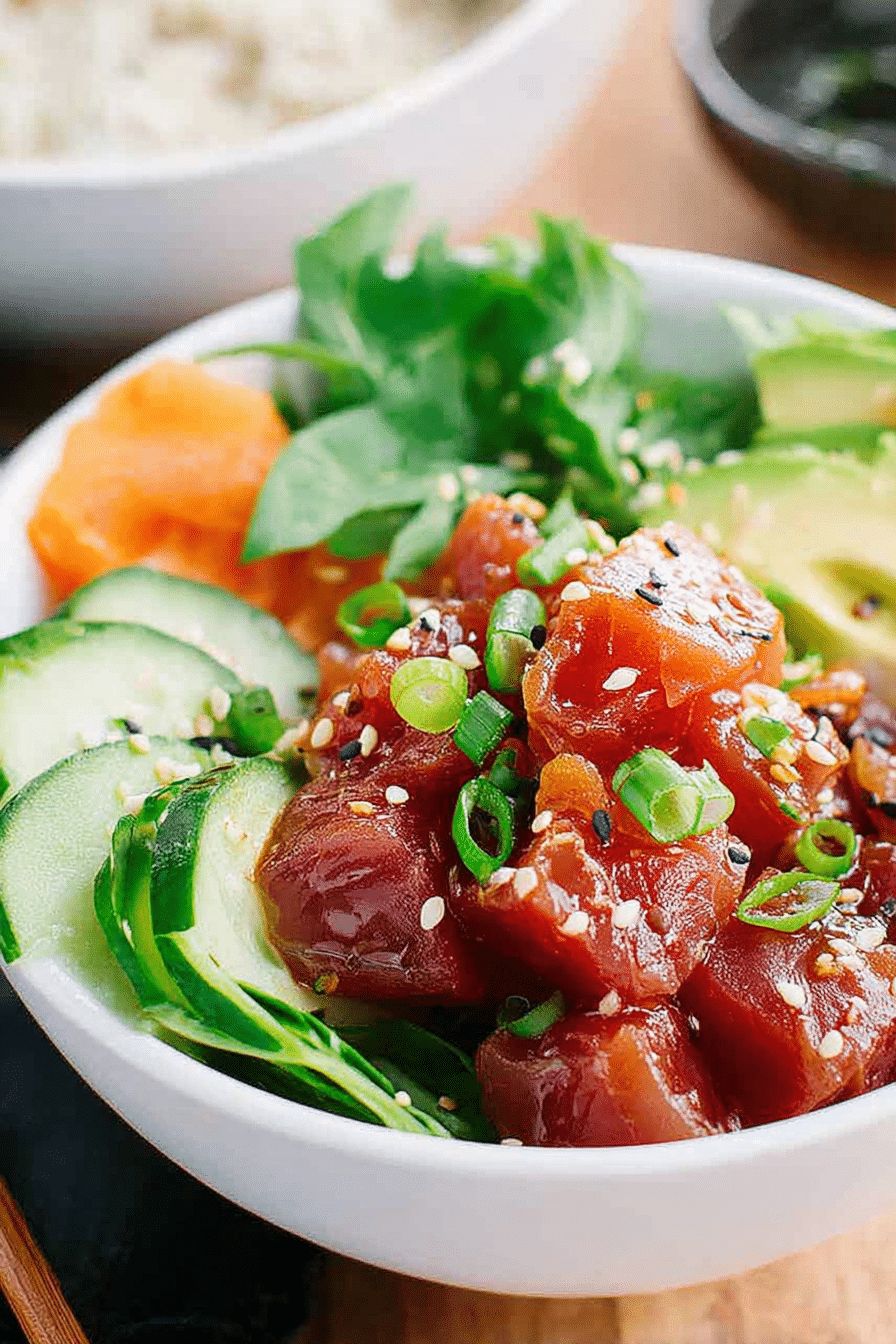
Best Ahi Tuna Poke
Ingredients
Method
- Wash the rice under running water and cook it according to the manufacturer's instructions.
- In a medium-sized bowl combine ahi tuna, soy sauce, rice vinegar, sesame oil, crushed red pepper flakes, green onions, and sesame seeds.
- Add the cooked rice, salad, tuna, and desired toppings to each bowl. Serve immediately or refrigerate covered for up to 2 hours before serving.