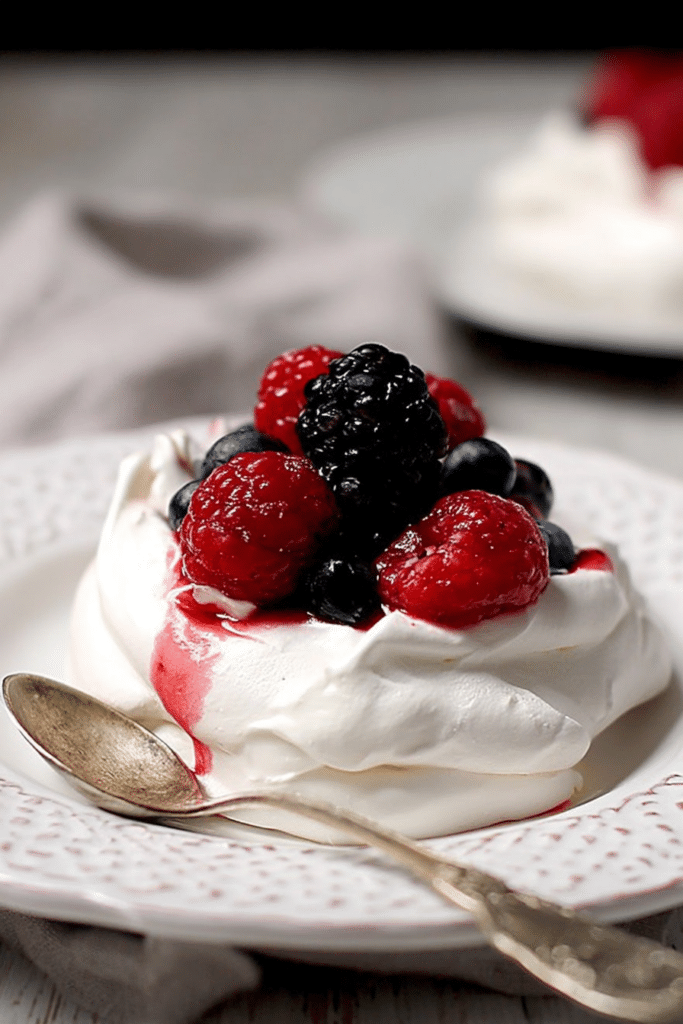
I learned to love pavlova the hard way: through a trail of cracked shells, weeping toppings, and under-whipped whites. In my kitchen I tested oven times, egg temperatures, and different sugars until the meringue produced that mirror-bright shell with a pillowy interior that holds up at a dinner party. When it works, the effect is quietly show-stopping—guests smile before they taste it.
What keeps me coming back to this dessert for entertaining is how forgiving the timeline can be. The meringues can be baked well in advance and stored at room temperature; the berries and cream are quick to prepare just before guests arrive. The pavlova’s naturally gluten-free profile also makes it a welcome option when you are hosting friends with varied dietary needs.
The contrast is what wins people over every time: a thin, crisp, glossy shell that gives way to a soft, marshmallow-like center, piled with lightly macerated berries and a cloud of vanilla-scented cream. The aroma of fresh berries and warm sugar is subtle but unmistakable as you assemble the last touches—bright red juices, glossy blackberries, and the slow perfume of whipped cream.
Everything You Need for Mixed Berry Pavlova
Quality matters in every component: fresh, firm berries; fresh eggs; and a sugar that dissolves cleanly into the whites. Use room temperature egg whites for the most stable foam and choose a fine-grain sugar if you want the quickest dissolution. A stand mixer makes the process effortless, but you can do it by hand if you have patience and a large, clean bowl.
- Egg whites – The structural backbone of the meringue; room temperature whites whip to greater volume and a silkier texture.
- Vanilla – Adds warmth and depth; use pure vanilla extract or vanilla bean for a floral note.
- Cream of tartar – A stabilizer that helps the foam hold shape and resists weeping.
- Sugar – Fine sugar dissolves fastest; you can use caster sugar for a smoother finish or super-fine sugar for a glossy shell.
- Fresh berries – A mix of strawberries, raspberries, and blackberries gives contrasting textures and color; choose ripe but firm fruit.
- Whipping cream – Heavy whipping cream gives the best stability and mouthfeel; lightly sweeten and flavor with vanilla.
- Tools – Stand mixer (or whisk and stamina), baking sheet, parchment paper, an offset spatula or large spoon for shaping meringues, and a fine sieve for dusting sugar if needed.
Visualize the mise en place: glossy whites in a bowl, a small mound of sugar in a jar, and berries ranging from deep purple to bright scarlet. The contrast between the snowy meringue and jewel-toned fruit is part of the dessert’s charm.
The Secret to a Crisp Outer Shell and Soft Center
Getting the shell and center right is a balance of technique, sugar integration, and gentle heat. I watch the whites transform from foamy to glossy and stop the process at the exact moment the peaks speak without falling apart. The oven’s low, steady heat and a long cooling period inside the turned-off oven are essential; that slow cooldown prevents cracks and encourages the airy interior.
- Beat the egg whites in stages: start at a lower speed to build foam, then raise speed to develop soft peaks before adding sugar.
- Add sugar very gradually, a spoonful at a time, making sure it dissolves fully; a gritty feel means more whipping is needed.
- Whip to stiff, glossy peaks—when you lift the whisk the peak should hold its shape without flopping but still look satiny, not dry.
- Shape each mound into a shallow bowl to cradle cream and berries; this helps keep the center soft while keeping the edges crisp.
- Bake at a low temperature and then turn the oven off and let the pavlovas cool inside for hours; this gentle cooldown preserves the shell and prevents sudden contraction that causes cracking.
- Monitor humidity: on damp days meringues absorb moisture from the air; if your kitchen is humid, extend bake and cool times and keep meringues sealed until use.
Why Egg Temperature and Whipping Matter
The science here is simple and reliable: room-temperature whites trap air more readily, producing a larger, more elastic foam. Cream of tartar slightly lowers the pH and stabilizes the proteins so they form steady bonds. Avoid any fat or yolk contact—these will ruin the foam’s ability to form stiff peaks.
- Room-temperature eggs whip faster and to greater volume than cold eggs; if you’re short on time, set eggs out ahead or place them in a bowl of warm water briefly.
- Cream of tartar (or a small pinch of acid) stabilizes the foam and improves resilience during baking and cooling.
- Common mistakes: starting at too high a speed (creates large, unstable bubbles), adding sugar too quickly (causes graininess), or using a plastic bowl that harbors grease—use glass, metal, or ceramic.
- Check for dissolved sugar by rubbing a little between your fingers—no grittiness should remain before you finish whipping.
How to Macerate Berries for Color and Juiciness
Maceration softens the fruit slightly and draws out juices that glaze the berries and deepen their color. I usually sweeten the fruit just enough to coax out flavors without drowning brightness. For tart berries like raspberries, a touch more sugar balances acidity; for very sweet strawberries, less is needed.
- Gently toss the berries with a small amount of sugar and let them sit until they release their juices—this should take only a few minutes for ripe fruit.
- If using larger berries like strawberries, slice them so they macerate evenly and sit attractively on the pavlova.
- For added brightness, stir in a splash of citrus juice or a bit of liqueur to enhance aroma and color without adding extra moisture.
- Reserve some whole berries for garnish to give a variety of textures on the plate.
Learn how to macerate berries to enhance their flavor and juiciness for your pavlova topping.
How to Make Mixed Berry Pavlova (Step-by-Step)
- Preheat and prepare: position the rack mid-oven and line a baking sheet with parchment so the meringues rest on a clean, dry surface.
- Beat the whites: start the egg whites at medium-low until foamy, then increase the speed to reach soft peaks—this builds a stable base for sugar incorporation.
- Add sugar gradually: once soft peaks form, add sugar slowly while whipping to glossy, stiff peaks. Test by rubbing a bit between fingers—no grit should remain.
- Shape the pavlovas: scoop mounds onto the sheet and form shallow bowls with the back of a spoon to hold cream and berries.
- Bake gently: bake until the outside looks dry and set. Turn the oven off and leave the meringues inside to cool fully so they finish drying without cracking from a sudden temperature change.
- Macerate the fruit: toss berries with sugar and let them sit until juicy; about ten minutes is usually plenty for ripe berries.
- Whip the cream: whip cream with vanilla and a touch of sugar to soft peaks—lightly sweetened cream complements, rather than overwhelms, the berries.
- Assemble at the last moment: spoon cream into each meringue bowl, top with macerated berries and any extra juices, and serve immediately for best texture.
Handle the cooled meringues gently—the shells are crisp but fragile. If you must move them after baking, slip the parchment onto a rigid tray to prevent breakage.
Pro Tip for mixed berry pavlova: Prevent Soggy Meringue Centers
- I always keep the meringue shells, whipped cream, and berries separate until the last possible moment to maintain crispness.
- Serve within minutes of assembling. If guests arrive at the same time, ask them to take their seats while you finish the final spooning—presentation should be quick.
- Use low-moisture toppings where possible: macerate lightly and reserve juices rather than pouring them into the meringue bowls.
- If you expect humidity, plan to bake meringues earlier and store them airtight in a dry place; humid air will soften shells faster than normal room conditions.
How to Store, Make-Ahead, and Easy Variations
Make-ahead is the pavlova’s party superpower: bake the meringue shells a day or two in advance and keep them airtight at room temperature. I recommend storing the cream and berries separately in the fridge and assembling just before serving for the best texture.
- Storage – Store baked, cooled meringues in an airtight container at room temperature. Keep cream refrigerated and berries in a separate container until assembly.
- Make-ahead timeline – Meringues hold well for up to two weeks when fully dry and sealed; cream and fruit should be prepared the day of service.
- Variations – Try different fruit combinations by season: stone fruit and a drizzle of honey in late summer; citrus segments with a sprinkle of finely chopped pistachio in winter; or a simple chocolate shard for contrast. If you’re interested in variations, check out our recipe for Classic Strawberry Jam to complement your pavlova.
Comprehensive Troubleshooting Tips for Common Pavlova Issues
- I’ve faced weeping meringues—if juice forms between cream and fruit, assemble sooner and reduce the sugar used to macerate the fruit; also make sure sugar is fully dissolved in the whites when whipping.
- If your whites won’t reach stiff peaks, check for any trace of yolk or fat in the bowl; start again with a perfectly clean bowl and fresh whites.
- Cracks in the meringue are often caused by rapid temperature changes—cool the meringues slowly in the turned-off oven to minimize cracking.
- Overly soft centers? Either increase the bake time slightly or ensure the meringues have fully cooled in the oven before removing them to room air.
- Gritty texture from sugar means it wasn’t fully dissolved; continue whipping and consider using a finer sugar next time.
Pairing Suggestions for Beverages or Other Desserts
The bright berries and creamy center pair beautifully with a lightly sparkling wine or a late-harvest white that mirrors the fruit’s acidity. For a non-alcohol option, a chilled herbal tea with citrus notes complements the dessert’s freshness. For a dessert duo that doubles the berry fun, consider serving a pavlova alongside a berry-based accompaniment.
Consider pairing your Mixed Berry Pavlova with a refreshing Berry Trifle for a delightful dessert duo.
For a classic flavor combination, serve your pavlova alongside a luscious Strawberry Cheesecake.
Quick Video Tutorials or User-Generated Content
- Look for short clips that show the meringue stages—foam, soft peaks, glossy stiff peaks—so you can match visuals to your mixture.
- Share your results on social channels and invite friends to post their pavlovas; seeing slight variations helps normalize small imperfections.
- Record a quick assembly video to remind yourself of timing and presentation when hosting larger groups.
Frequently Asked Questions
Can I make the meringue in advance?
Yes! You can bake the meringue ahead of time and store it in an airtight container at room temperature for up to 2 weeks.
What kind of berries can I use for the pavlova?
You can use a variety of berries such as strawberries, raspberries, and blackberries. Feel free to get creative with your favorite seasonal fruits!
Why is my meringue not getting stiff?
Make sure your egg whites are at room temperature and that no yolk gets into the whites. Whipping at the right speed and gradually adding sugar is also important for achieving stiff peaks.
How can I prevent my pavlova from getting soggy?
To keep your meringue crisp, assemble the pavlova just before serving and avoid adding the whipped cream and berries until you’re ready to eat.
What is the best way to store leftover pavlova?
Store any leftover assembled pavlova in the refrigerator, but it’s best to keep the meringue, whipped cream, and berries separate for maximum freshness.
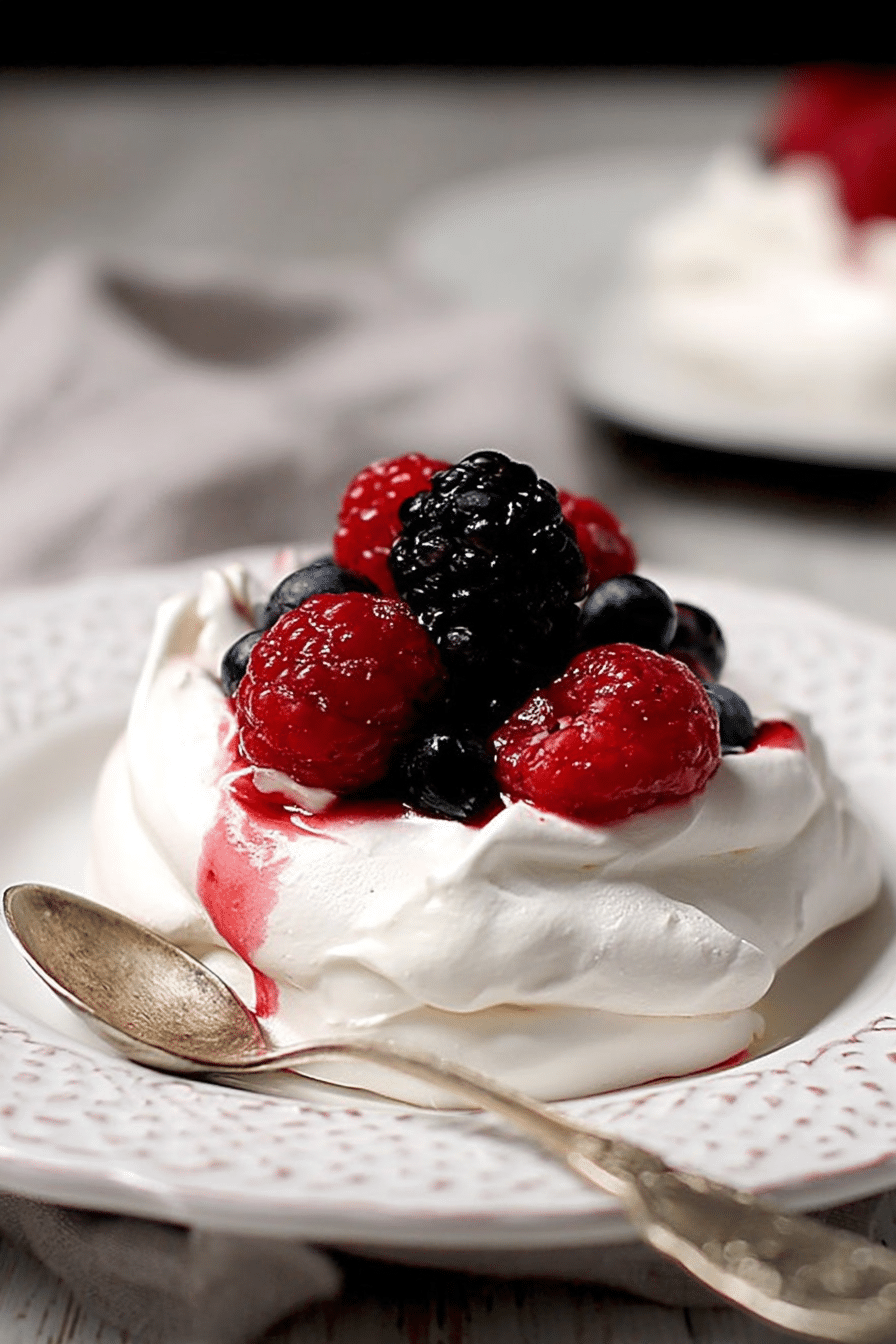
Mixed Berry Pavlova
Ingredients
Method
- Adjust oven rack to the medium position; heat oven to 200°F. Line a baking sheet with parchment paper.
- Whip egg whites, vanilla extract, and cream of tartar in a stand mixer on medium-low speed until foamy. Increase speed to medium-high and whip until soft peaks form. Gradually add sugar while continuing to whip until stiff peaks form.
- Scoop mounds of meringue onto the baking sheet and form into a bowl shape. Bake until dry, about 2 hours. Turn off oven and let meringues harden for 2 more hours.
- Toss strawberries, raspberries, and blackberries with sugar and let sit until juicy.
- Whip cream with vanilla extract and sugar until soft peaks form.
- Spoon whipped cream onto each meringue and top with berries. Serve.