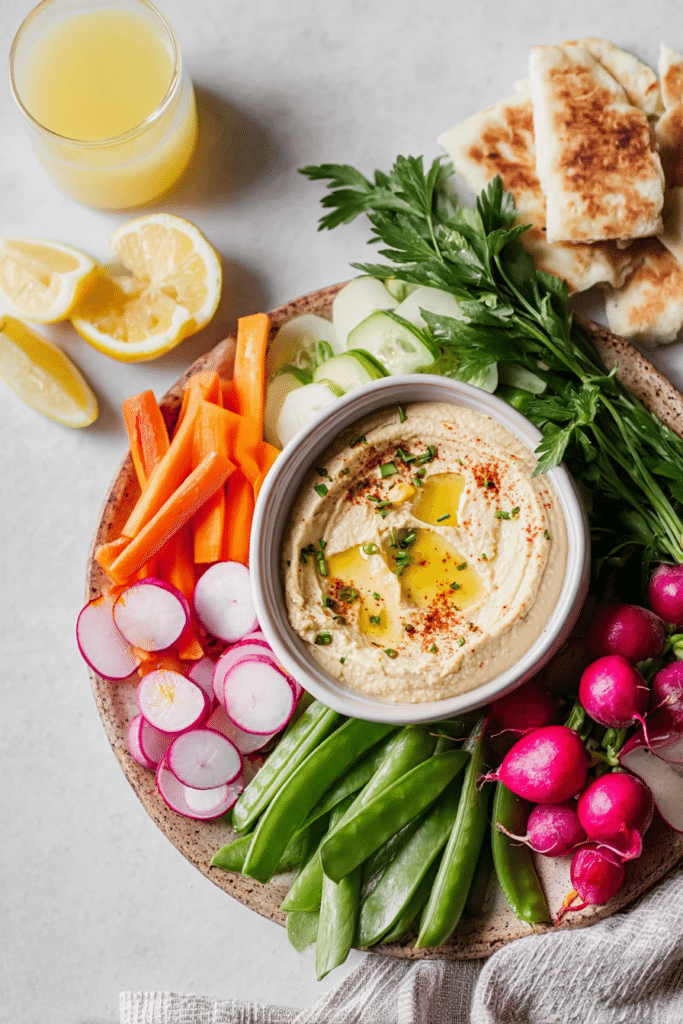
I make this spring hummus platter whenever friends drop by without fuss. I love how a single bowl of silky hummus becomes the visual anchor of a table full of crunchy, bright vegetables — it feels like spring on a platter. Over the years I learned small habits in my kitchen that cut prep time and make the spread feel thoughtful rather than thrown together.
In my kitchen I focus on texture and color: the hummus should be whipped light enough to hold a drizzle of oil, while the vegetables stay crisp and fragrant. I also pay attention to little finishings that read as intentional at a party — a squeeze of lemon, a sprinkle of herb, a scattering of spice. Those small touches make guests pause and really dig in.
Whether I’m setting this out for an afternoon gathering or a casual evening, the platter plays well with different diets and tastes. I’ll share what I keep on hand, how I get the hummus impossibly smooth, and a few creative dipper ideas that make the spread feel special. Stick with the simple rhythm and you’ll have a centerpiece your guests return to all night.
Why the Spring Hummus Platter Is Ideal for Casual Gatherings
Here’s why this platter stands out for easy entertaining: the colors draw people in, the variety of textures keeps everyone reaching across the table, and the components are forgiving to prepare ahead. The communal nature of a platter encourages conversation and nibbling, which I find perfect for relaxed get-togethers.
- Visual impact: Bright carrots, glossy snap peas, and peppery radishes create contrast that makes the platter look abundant.
- Flexibility: You can adapt the hummus seasoning and dippers to dietary needs without changing the overall feel of the spread.
- Portion guidance: For a small gathering plan on a modest bowl of hummus per 4 people with plenty of vegetables; for larger groups double the base hummus and add more dippers.
Think of the platter as modular: add or subtract elements depending on guest preferences and table space. The result is an approachable, colorful center that invites people to graze and chat.
Everything You Need for Spring Hummus Platter
Gather everything you need here: fresh spring vegetables, a good-quality tahini and olive oil, fresh lemons, and a sturdy platter to arrange everything. I keep a simple toolkit nearby: a food processor, a citrus juicer, and small bowls for toppings.
- * Chickpeas – The creamy base; if you want extra silk, reserve the cooking liquid or aquafaba to thin while you blend.
- * White beans – Add body and a softer flavor that mellows the chickpeas.
- * Tahini – Provides that nutty, slightly bitter backbone; swap for sunflower seed butter for nut-free options.
- * Olive oil – For richness and a glossy finish; finish the bowl with extra oil for presentation.
- * Lemon – Fresh lemon brightens and balances the hummus; bottled juice won’t give the same lift.
- * Garlic & spices – Garlic gives aroma and bite, cumin adds warmth; adjust to taste.
- * Veggies – Choose crisp, seasonal options for color and crunch, and keep them chilled until service.
- * Bread & crackers – Naan, pita, or chips add chew; see Creative Dippers below for alternatives.
Consider making a small additional dip to expand the flavor range on the board. For instance, try a fresh radish hummus to add a peppery twist: fresh radish hummus.
The Secret to Silky, Light Hummus
Here’s the key to making silky hummus: pay attention to texture at each step and use emulsifiers and liquid to create a velvety mouthfeel. Removing chickpea skins and leveraging the liquid from the can or the reserved cooking water will take a rustic blend into something smooth and light.
- Remove skins when you can: it takes a few extra minutes but the result is markedly smoother and less grainy.
- Use aquafaba or reserved liquid as an emulsifier when blending to trap air and loosen the paste without watering it down.
- Blend long enough: cold ingredients and a brief rest between pulses help the mixture come together; stop and scrape the bowl so everything reincorporates evenly.
- Troubleshooting texture: If the hummus is too thick add small amounts of olive oil and aquafaba until it spreads easily but still holds a drizzle of oil on top.
Choosing & Preparing Seasonal Spring Vegetables
Choose vegetables that will stay crisp on the platter and offer a variety of colors and bites. I focus on texture: some slices should be firm for scooping, others thin and snappy for a fresh contrast. Trim and chill vegetables just before serving to keep their crunch and bright aroma.
- Rainbow carrots and sugar snap peas give sweet, crunchy bites and vivid color.
- Radishes bring peppery snap; thin slices or halved rounds are both pretty and easy to eat.
- Cucumbers and celery are classic crunchy options that refresh the palate between dips.
- Presentation tips: cut vegetables into uniform sticks or neat rounds, fan them on the board, and leave negative space around the hummus bowl so the center piece reads clean and inviting.
- Flavor infusions: quick-pickle radish slices or toss some snap peas in lemon zest and a touch of salt for a subtle lift.
For more guidance on basic vegetable prep techniques, see this practical primer on preparation: basic vegetable preparation techniques.
Creative Dippers: Beyond Carrots and Naan
Go beyond the expected and mix textures and flavors so every dip delivers something new. Try a balance of crunchy, chewy, and slightly sweet dippers so guests can experiment.
- Pita chips and toasted pita wedges for a sturdy, toasty bite.
- Crackers and seeded crispbreads for a thin, crunchy contrast.
- Seasonal fruit like sliced pears or apple for a surprising sweet-and-salty pairing.
- Vegetable chips or roasted chickpeas for extra crunch and snackability.
- Homemade options: roast pita until crisp and tear into rustic pieces, or bake thin zucchini slices for a lighter chip alternative.
For a less obvious, homey option try adding a slice of quick-bake zucchini bread to the board as a playful, slightly sweet dipper: zucchini bread.
How to Make Spring Hummus Platter (Step-by-Step)
- Prepare the hummus: add chickpeas, white beans, tahini, olive oil, aquafaba, lemon juice, garlic, salt, and cumin to your food processor and blend until smooth and creamy.
- Adjust the texture: if the hummus is too thick, add a little more olive oil and aquafaba, blending between additions until it reaches a spreadable, airy texture.
- Taste and season: sample the hummus and add more salt, lemon, or cumin to balance brightness and depth.
- Transfer and finish: spoon the hummus into a shallow bowl, create a central well for a glossy drizzle of olive oil, a squeeze of lemon, and a sprinkle of chopped parsley and zaatar.
- Arrange the platter: place the hummus bowl on a large board, fan vegetables around it, tuck in toasted naan or dippers, and add small bowls of olives or pickles if you like.
- Serve at the right time: take the hummus out of the fridge 10–15 minutes before serving so the flavors relax and the oil gleams on top.
Pro Tip for spring hummus platter: Make-ahead, storage & leftovers
I often make the hummus a day ahead; it actually benefits from a little rest in the fridge. Store hummus in an airtight container and keep vegetables wrapped or in containers with a paper towel to maintain crunch. When transporting, pack the hummus bowl upright and chill the veggies separately to keep everything pristine on arrival.
- Make-ahead: Hummus keeps well for up to 3–4 days refrigerated; finish with oil and herbs right before serving.
- Packing for transport: use leakproof containers for hummus and layered, ventilated boxes for veggies so nothing gets soggy.
- Eco-friendly tips: use reusable beeswax wraps for veggies and glass containers for dips to cut waste.
- Leftover portioning: divide hummus into serving-size containers so you only open what you need and keep the rest fresh longer.
Also, consider prepping additional make-ahead appetizers to streamline service; a neutral crowd-pleaser I keep on rotation is a simple deviled egg macaroni salad that travels well and complements the platter: deviled egg macaroni salad.
Pro-Tips, Troubleshooting, and Variations below are presented as bulleted lists for quick scanning.
How to Store, Transport, and Repurpose Leftover Platter Items
Keep leftovers organized so nothing goes to waste and you can reinvent the components into new meals. Use airtight containers and separate elements by type to preserve texture and flavor.
- Hummus storage: airtight glass jar in the fridge; press a thin layer of oil on top to slow oxidation.
- Vegetable storage: wrap cut vegetables in a damp paper towel inside a sealed container to preserve snap for 2–4 days.
- Transport tips: place hummus in a small leakproof bowl in a cooler; keep vegetables chilled separately in a shallow container.
- Repurposing ideas: spread leftover hummus on sandwiches or toast, use sliced veggies in grain bowls, or toss remnants into salads for flavor and texture.
- Presentation tip for leftovers: replate a small fresh bowl of hummus with an herb garnish and a handful of crisp veggies to make a weeknight lunch feel special.
Frequently Asked Questions
What vegetables are best for a spring hummus platter? For a spring hummus platter, consider using vibrant seasonal vegetables like rainbow carrots, sugar snap peas, radishes, and cucumber slices. These will add a fresh crunch to your platter!
How can I make my hummus extra creamy? To achieve an extra creamy texture, blend your ingredients in a food processor until smooth, and if necessary, add a bit more aquafaba or olive oil to thin it out. Removing chickpea skins helps too!
Can I prepare the hummus ahead of time? Absolutely! You can make the hummus a day in advance. Just store it in an airtight container in the refrigerator, and drizzle with olive oil when serving.
What can I serve with hummus besides naan and vegetables? Get creative with your dippers! You can serve hummus with pita chips, crackers, pretzels, or even use grilled bread to accompany the platter.
Is the Spring Hummus Platter suitable for dietary restrictions? Yes, this platter can be adapted for various dietary needs. It’s vegan, and you can adjust the dippers to accommodate gluten-free or nut-free diets.
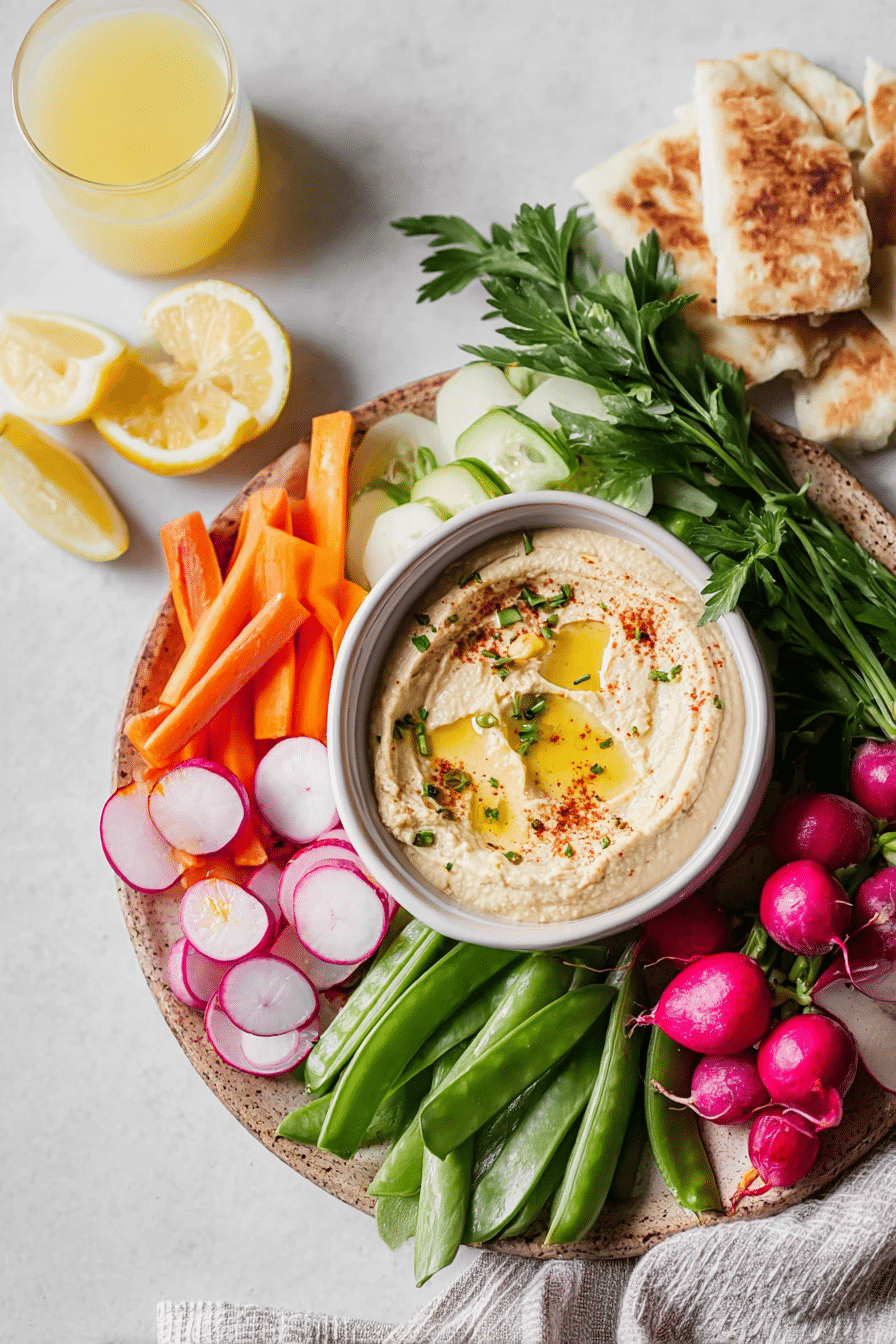
Spring Hummus Platter
Ingredients
Method
- In a food processor, add the chickpeas, white beans, tahini, 1/4 cup olive oil and 1/4 cup aquafaba, lemon juice, garlic cloves, 3/4 teaspoon salt, and cumin and blend until smooth and creamy.
- If hummus is too thick, add extra tablespoon of olive oil and aquafaba to thin out slightly.
- Taste and adjust seasoning if necessary (may need to add the extra 1/4 teaspoon salt).
- Transfer the hummus to a bowl and top with olive oil, lemon juice, and parsley. The batch makes enough for 2 serving bowls so can save the second half for later if desired.
- Place bowl on platter. Serve with naan and vegetables.
- Enjoy!