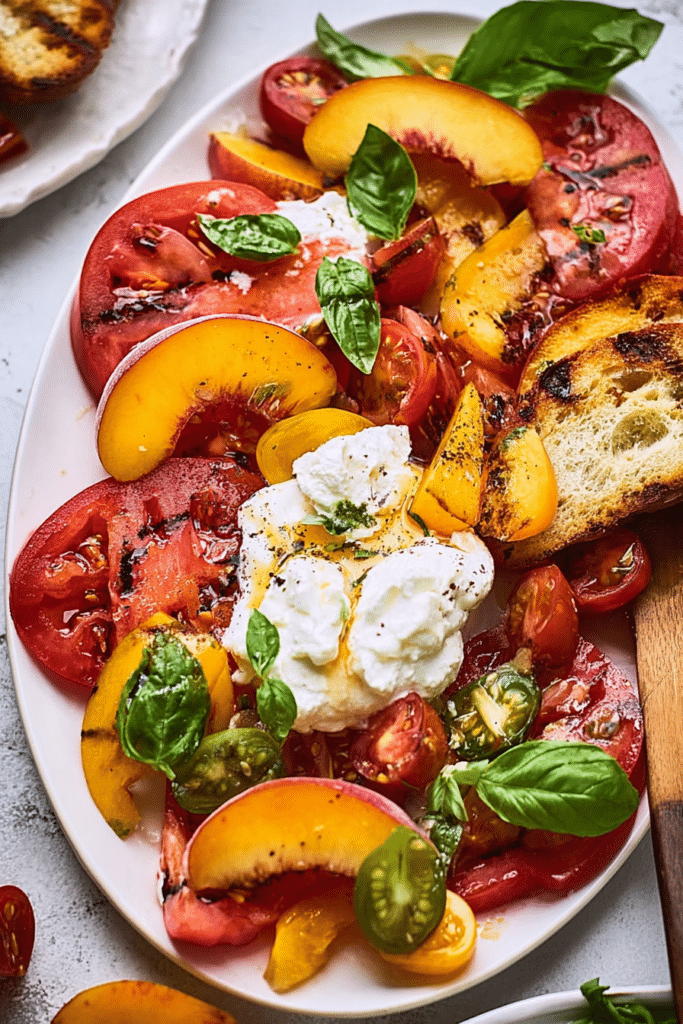
I make this salad every summer the first time peaches hit the market, and it immediately becomes the thing I bring to backyard dinners. The color alone—peachy orange, ruby tomatoes, and glossy basil—draws people in before they even take a bite. I love how quick it is to assemble so I can spend more time with guests and less time at the counter.
In my kitchen, the pleasure comes from placing one perfect ball of burrata at the center of a simple arrangement and letting its creamy interior mingle with sweet fruit and bright tomatoes. There’s a casual elegance to it: rustic slices, a few halved grape tomatoes, torn basil, and a drizzle of olive oil and balsamic glaze. I’ve served it as a light lunch and as a plated appetizer at dinner parties, and it always looks like more work than it took.
I’ll share the small handling tricks that make the burrata sing, plus tips for choosing peaches and heirloom tomatoes at their peak. If you like variations, try pairing this with prosciutto and extra herbs for a salty-sweet finish — for one riff I love, see this Prosciutto Burrata Peach Salad I sometimes serve alongside it:
If you’re looking for more inspiration, try our Prosciutto Burrata Peach Salad that highlights the sweetness of summer fruits.
Why this Tomato Peach Burrata Salad is perfect for summer entertaining
Bright, simple, and unfussy—this salad is designed to be made at the last minute so you can stay present with your guests. The vivid colors make it a centerpiece-worthy platter, and the contrasts (silky cheese, juicy fruit, tender tomatoes) keep mouths interested in every bite. It’s easy to scale up across a long serving board and pairs well with grilled bread, making it ideal for buffet-style gatherings.
The aroma of ripe peaches and basil fills the room when you bring the platter out, which always prompts conversation. Because the assembly is minimal, you can prep most elements ahead and finish with a dramatic tear into the burrata just before serving—an effect guests always comment on.
Everything You Need for Tomato Peach Burrata Salad
Gather quality ingredients and a few simple tools; the salad isn’t about technique so much as ingredient integrity. If you want a smoky-sweet note, consider adding grilled peaches to the mix for an extra layer of flavor.
- Burrata – The creamy centerpiece; buy the freshest you can find and handle gently.
- Heirloom tomatoes – Provide color and texture contrasts; ripeness matters more than variety.
- Peaches – Sweetness and juicy texture that complements the tomatoes.
- Grape or cherry tomatoes – Small bursts of acidity and color; halved at service.
- Fresh basil – Fragrant finish; tear rather than slice to avoid bruising.
- Olive oil – A high-quality extra virgin for drizzling.
- Balsamic glaze – Adds a glossy sweet-tang finish; use sparingly.
- Kosher salt & black pepper – Season simply to let the produce shine.
- Grilled bread (optional) – For serving; provides crunch against the creamy burrata.
The Secret to a Creamy Burrata Center
Burrata is delicate: its shell holds a silky interior that should spill gently when broken. Treat it like a ripe peach—cold from the fridge it’s firm; at room temperature it becomes indulgent and almost buttery. I always take the burrata out 20 to 30 minutes before serving so the center relaxes and the texture becomes pillowy.
When you’re ready to serve, gently pat the exterior dry so oil and glaze cling to it rather than pooling. Use a small knife or your fingers to tear the top and let the creamy stracciatella flow onto the fruit and tomatoes—this is the moment the salad goes from pretty to irresistible. Keep the torn pieces large so the cheese maintains presence on the platter rather than disappearing into the mix.
How to Choose Peak Peaches and Heirloom Tomatoes
Picking the right fruit is half the battle. For peaches, look for a golden or blush skin (not green), a sweet aroma at the stem end, and a gentle give when pressed—too soft and they’ll bruise during prep; too firm and they won’t be flavorful. For heirloom tomatoes, choose ones with deep color streaks and a slight give that still holds shape when sliced.
Seasonality matters: buy peaches and heirlooms when local farms bring them in. Farmers markets and small neighborhood grocers often have the best selection and flavor; if you can, build a relationship with a vendor so you’ll know when prime picks arrive.
Plating Tips for a Colorful, Crowd-Ready Salad
Presentation makes this salad party-ready. Think large platter, layered elements, and an intentional center for the burrata. Follow current plating trends by keeping the arrangement loose but composed—overly symmetrical can look staged.
- Start with alternating slices of heirloom tomato and peach in overlapping rows to create visual rhythm.
- Scatter halved grape tomatoes in clusters rather than evenly distributing them; this creates pockets of color.
- Place the drained burrata slightly off-center and tear it open at the table for drama.
- Finish with torn basil leaves and a light drizzle of olive oil and balsamic glaze, focusing the glaze in thin lines rather than puddles.
- Serve with grilled bread arranged alongside the platter so guests can spoon the creamy mix onto crostini.
How to Make Tomato Peach Burrata Salad (Step-by-Step)
- Slice heirloom tomatoes and peaches to a similar thickness so they layer nicely on the platter.
- Arrange alternating slices of tomato and peach on a large serving board or platter, leaving a central space for the burrata.
- Scatter the halved grape or cherry tomatoes over and between the slices for pops of color.
- Drain and pat the burrata dry, then place the whole ball in the center; keep it intact until the final moment.
- Season the arranged fruit and tomatoes lightly with kosher salt and freshly cracked black pepper.
- Just before serving, tear open the burrata so the creamy interior spills over the fruit and tomatoes.
- Drizzle with olive oil and a modest amount of balsamic glaze, then garnish with torn basil leaves.
- Serve immediately with grilled bread on the side if desired.
Note: Pro-Tips, Troubleshooting, and Variations are presented as bulleted lists for quick scanning.
Pro Tip for Tomato Peach Burrata Salad: Scale it without losing texture
- I recommend prepping fruit and tomatoes up to a few hours ahead and keeping them chilled separately; assemble just before guests arrive to preserve texture.
- When scaling up, use multiple burrata balls spaced across a long board so every guest reaches a creamy center—don’t rely on one large mound of cheese.
- Keep dressings minimal when serving buffet-style; offer extra olive oil and balsamic glaze on the side so people can add to taste.
- Store sliced peaches in a bowl with a bit of lemon juice if you must cut them early—this slows browning without changing flavor.
How to Store, Make-Ahead, and Adapt Tomato Peach Burrata Salad for Parties
You can prep many components ahead, but assembly is best last-minute. Store sliced peaches and tomatoes separately in airtight containers in the refrigerator for a few hours. Keep burrata chilled until just before serving and blot dry to remove excess moisture.
- Make-ahead: Slice fruit and tomatoes and store them layered with paper towels to absorb moisture; refrigerate until service.
- Short-term storage: Leftovers keep for about a day in an airtight container, but the tomatoes will release juices and the burrata will lose its texture.
- Adaptations: Swap peaches for nectarines or grilled peaches when you want a smoky note; use cherry heirlooms or sunburst tomatoes if available.
Variations
- Prosciutto & Burrata: Add thin prosciutto slices around the platter for a salty counterpoint.
- Herb-forward: Mix basil with mint or tarragon for an aromatic twist.
- Greens base: Serve over peppery arugula or baby spinach for a sturdier salad version.
- Vegan swap: Replace burrata with a chilled dollop of coconut yogurt and toasted pine nuts for a dairy-free option.
Troubleshooting
- If the burrata seems dry or rubbery, I find letting it sit at room temperature for 20 minutes revives the texture.
- If peaches are underripe, marinate thin slices briefly in a little honey and lemon to add softness and sweetness.
- If the platter weeps too much juice, drain sliced fruit on paper towels before arranging to keep the presentation tidy.
- If guests prefer less richness, offer the burrata in smaller portions alongside extra citrus or vinegar-based dressings.
Nutritional Information for Health-Conscious Consumers
A single serving of this salad is light but satisfying—roughly 130 calories per serving with most calories coming from healthy fats in the burrata and olive oil. Expect moderate protein from the cheese and a small amount of carbohydrate from the fruit. The salad provides vitamin C, potassium, and antioxidants from tomatoes and peaches, and fresh basil adds phytochemicals with anti-inflammatory properties.
Nutrition snapshot (approximate per serving):
- Calories: 130 kcal
- Fat: 10 g (primarily from cheese and olive oil)
- Carbohydrates: 8 g
- Protein: 8 g
Allergy note: contains dairy. For plant-based diets, substitute the burrata as noted in Variations.
Pairing Recommendations with Beverages or Main Dishes
This salad is refreshing and pairs well with light wines, crisp beers, or non-alcoholic spritzers. For a more luxurious spread, serve it alongside rich seafood or grilled mains—the contrast keeps the meal balanced. For one elegant pairing I sometimes make together, try serving the salad with creamy garlic butter lobster tails:
For a luxurious pairing, serve this salad with creamy garlic butter lobster tails.
- Wine: A crisp Pinot Grigio or unoaked Chardonnay complements the creaminess without overpowering the fruit.
- Beer: A light pilsner or wheat beer keeps the pairing refreshing.
- Non-alcoholic: Sparkling water with lemon or a cucumber-mint spritz offers a bright, inclusive option.
- Main dishes: Grilled fish, simply roasted chicken, or a chilled pasta salad complete a summer menu without competing for attention.
Frequently Asked Questions
What is the best way to select ripe peaches for this salad?
Look for peaches that are slightly soft to the touch and have a sweet aroma. They should have a vibrant color without any green patches.
Can I make this salad ahead of time?
Yes, you can prep the ingredients a few hours in advance. However, it’s best to assemble the salad just before serving to keep the burrata creamy and the ingredients fresh.
What can I substitute for burrata cheese?
If you can’t find burrata, you can use fresh mozzarella or ricotta cheese as a substitute, though the flavor and texture will differ slightly.
How should I store leftovers?
To store leftovers, place them in an airtight container in the refrigerator. It’s best to consume them within a day for optimal freshness.
What are some good beverage pairings for this salad?
This salad pairs beautifully with a crisp white wine, sparkling water, or a light beer to complement the fresh flavors!
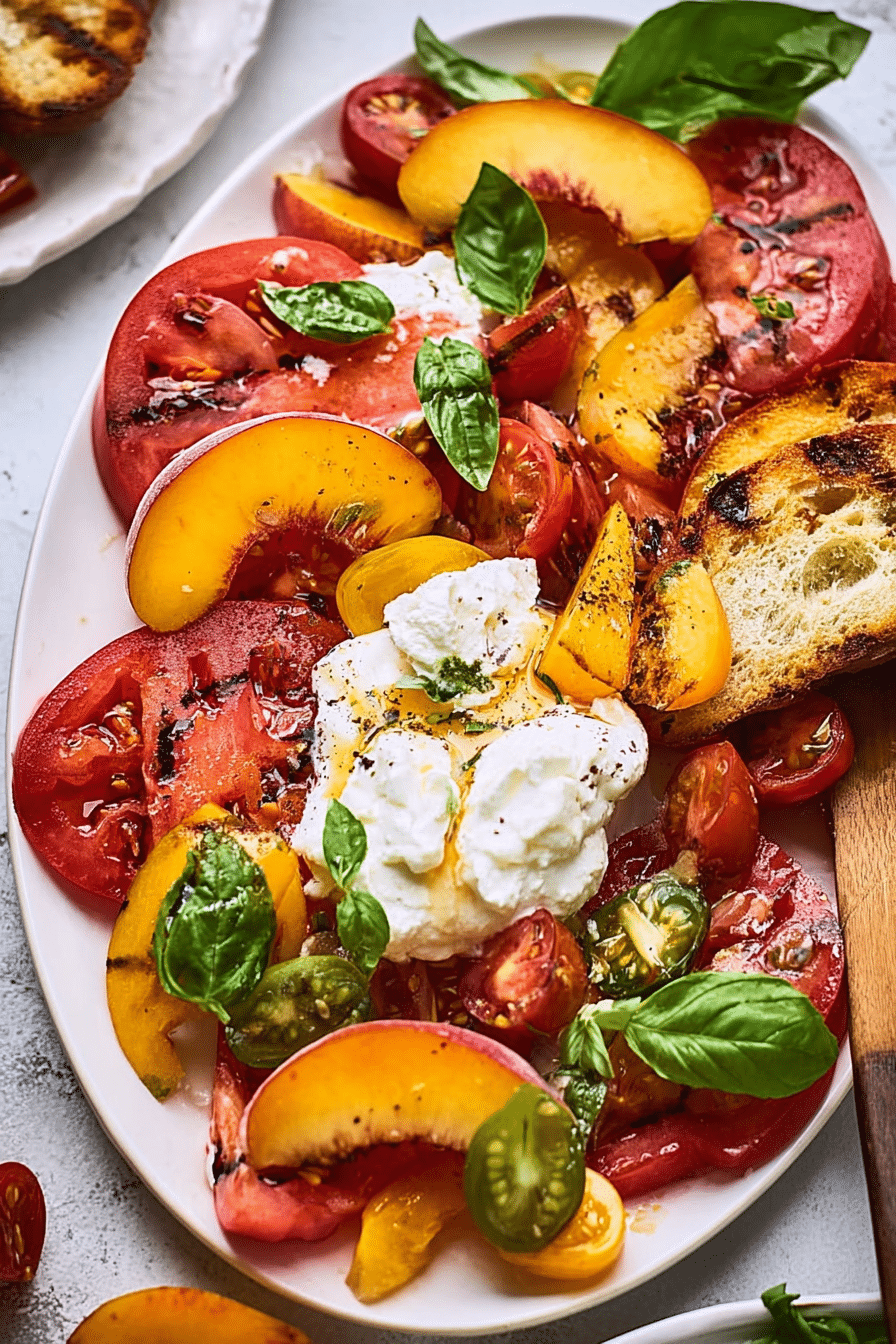
Tomato Peach Burrata Salad
Ingredients
Method
- Arrange the sliced tomatoes, peaches, and grape tomatoes on a large platter. Break apart the ball of burrata cheese and arrange it on top of the salad. Season with salt and pepper.
- Drizzle with a little olive and balsamic glaze. Garnish with fresh basil. Serve with grilled bread, if desired.