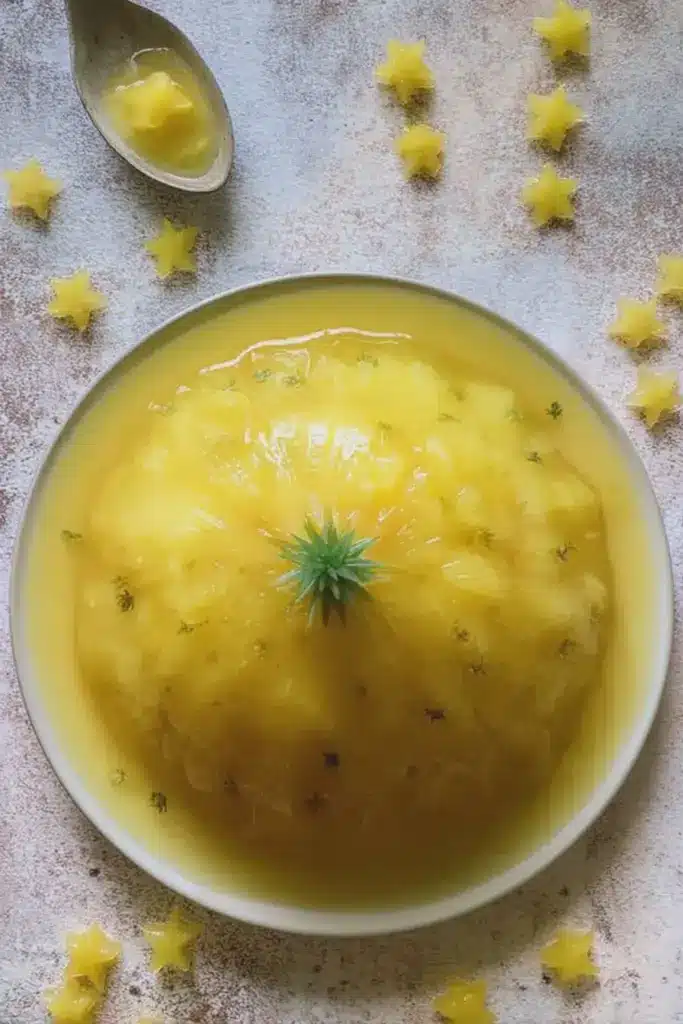
I started making pineapple jelly the summer I refused to throw away another pineapple crown. I remember simmering the discarded skin with a little sugar and water while the kitchen filled with that sharp, tropical aroma — bright, almost floral — that instantly cooled the room. The first spoonful of the set jelly felt like a breeze on a sweltering afternoon: light, slightly fibrous, and perfectly refreshing.
I like this recipe because it feels responsible as much as it feels good to eat. Using the skin lifts the flavor beyond plain fruit juice and keeps citrusy, fermented notes from developing. It also trims waste from my weekly shopping list; a whole pineapple becomes two components of dessert rather than one fleeting snack.
In my kitchen this jelly is the go-to when friends drop by unannounced or when I want a low-calorie treat after a heavy meal. It stores well and behaves predictably if you respect the agar-agar and give it time to set — little habits I picked up after a few batches that either came out too soft or too rubbery. Read on and I’ll walk you through those small adjustments that make a silky, firm jelly every time.
Why this vegan pineapple jelly dessert is a guilt-free, refreshing summer treat
This jelly is naturally low in calories and made entirely from plant-based ingredients, so it fits neatly into a health-conscious, vegan lifestyle. The bright yellow color is as inviting as a scoop of sorbet, but the texture is smoother and more delicate, which makes it feel light on the palate. I often serve it after spicy dinners because its cool, sweet-tart profile calms the palate without adding heaviness.
Sensory note: imagine the smell of simmering pineapple skin — green, tangy and fresh — and the sight of translucent, pale-gold jelly held in a chilled glass. I find that single sensory image convinces people this dessert is worth trying, even if they normally skip sweets.
Everything You Need for Vegan Pineapple Jelly Dessert
Below are the essentials you need in your pantry and kitchen tools. I include substitution ideas so you can adapt the recipe if you want less refined sugar or a different gelling texture.
- Pineapple skin and flesh – The skin gives depth and a slightly tannic brightness; the flesh provides sweetness and body. If fruit is short on sweetness, choose ripe flesh or extend the steeping time for more extraction.
- Agar-agar – A firm, plant-based gelling agent. Use a high-quality powder or flake; it needs full heat to dissolve properly.
- Sugar or sweetener – Caster sugar gives clean sweetness; agave or maple can be used to reduce refined sugar and add a hint of floral or caramel notes.
- Water – The vehicle for infusion. Good-tasting water makes a noticeable difference in a simple dessert like this.
- Optional fresh herbs – Mint is the obvious pairing for freshness; add sparingly so it doesn’t overpower the pineapple.
- Kitchen tools – A heavy-based pan for even simmering, a fine strainer to clarify the infusion, a whisk for dissolving agar-agar, and moulds or a bowl for setting.
Why using the whole pineapple (skin + flesh) matters for flavor and zero waste
Using the whole fruit is about respect and flavor economy. The skin contains aromatic oils and flavorful compounds that the flesh alone doesn’t fully release. When you simmer the skin gently, you get a clearer, brighter infusion — think green-pineapple notes rather than pure candy-sweet juice.
Sustainability matters to me. Turning pineapple scraps into a dish reduces household waste and stretches your grocery budget. If you have other pineapple parts — the core, for example — you can reserve it for smoothies or infuse it with tea for a stronger stock.
The secret to a silky, firm jelly: agar-agar tips and temperature control
Agar-agar behaves differently from gelatin: it needs to reach a full simmer to dissolve properly and it sets as it cools. Here are the technical points I pay attention to when I make jelly:
- Whisk the agar-agar into boiling liquid rather than adding it cold. This prevents clumps and keeps it from sticking to the pan.
- Maintain a rolling boil for a few minutes after the agar-agar is dissolved. This activates the gelling properties — undercooked agar leads to a soft or unset jelly.
- A longer simmer will slightly firm the final texture; a very brief boil leaves a softer, more tender set. Adjust timing to your preferred mouthfeel.
- A gentle cool-down at room temperature before chilling helps avoid condensation on the surface, which can make the top watery.
Flavor boosts: lime, mint, and alternative sweeteners to cut refined sugar
A little acid and herbaceous freshness make this jelly sing. I often add lime zest or a squeeze of lime juice for brightness and a small handful of chopped mint just before serving for an aromatic lift. Alternative sweeteners like agave or maple work well when you want to reduce refined sugar — maple adds a warm note, agave preserves a cleaner fruit-forward taste.
For a tropical twist, try our Hawaiian pineapple coconut fluff, a great way to enjoy pineapple in another refreshing dessert.
How to Make Vegan Pineapple Jelly Dessert (Step-by-Step)
Below are the core steps I follow. I keep the method simple so you can focus on temperature and timing — the two things that most influence success.
- Place the pineapple skin and enough water to cover it into a heavy-based pan with your chosen sweetener. Bring to a boil, then lower to a gentle simmer and steep until the liquid is aromatic and slightly reduced.
- Strain the infused liquid through a fine sieve or cheesecloth into a clean pan; press gently on the solids to extract flavor, but avoid pushing through fibrous bits.
- Bring the strained liquid back to a full boil. Whisk in the agar-agar thoroughly so it dissolves into the hot liquid without clumping; maintain a boil for several minutes to activate the gelling power.
- Add chunks or slices of ripe pineapple for texture and a fresh burst of fruit; simmer briefly so the pieces warm through and mingle with the jelly base.
- Pour into moulds or a shallow bowl and let cool at room temperature before chilling until set. I usually chill for a few hours to ensure a clean set.
- For the sauce (optional), blend fresh pineapple pieces, then simmer the purée with a touch of sweetener for a couple of minutes and cool before serving atop the jelly.
If you love pineapple treats, check out this no-bake pineapple cream dessert that’s easy to prepare and delicious.
Troubleshooting
- If your jelly doesn’t set, return the liquid to the pan and boil for longer with the agar-agar; some brands require more heat to activate.
- If the jelly is too firm or rubbery, reduce the simmer time with agar-agar next batch or slightly increase the ratio of fruit liquid to gelling agent.
- If the surface separates or becomes watery, ensure the liquid was cool enough before refrigeration and avoid covering it tightly until it has firmed.
- If the flavor feels flat, extend the infusion time of the skin or add a splash of fresh pineapple juice or citrus at the end for lift.
Pro Tip for vegan pineapple jelly dessert: Use agave or maple and a longer steep for richer, natural sweetness
I often swap part or all of the caster sugar for agave or maple when I want a more rounded sweetness. I also steep the pineapple skins longer on low heat — an extra 10–20 minutes — to coax out deeper, caramel-like notes that reduce the need for added sugar. These tweaks make the dessert taste fuller without extra calories.
- I recommend tasting the infusion as it reduces; small adjustments to sweetness are easier at this stage than after gelling.
- Try a drizzle of maple or agave into the finished jelly for a glossy finish and a flavor note that complements the pineapple.
- For a savory-contrast serving suggestion, pair this dessert with a bright, buttery main — it contrasts nicely with rich seafood dishes like creamy garlic preparations.
- Pair this dessert with a savory dish like creamy garlic butter lobster tails for a delightful contrast of flavors.
How to Store and Customize Vegan Pineapple Jelly Dessert (Make-ahead & variations)
Storage is simple: keep the jelly covered in the refrigerator to prevent it from absorbing other odors and to maintain a clean surface. It will keep well for several days; I find the texture is best within the first week.
- Store in an airtight container or cover the mould with plastic wrap once the jelly is fully set.
- For make-ahead, prepare the infusion and sauce a day ahead and set the jelly on the day you plan to serve.
- If the jelly loses some elasticity after a few days, serving chilled and slightly under-set (shorter chill time) will restore a pleasant mouthfeel.
Variations
- Add tropical fruit purées: mango or passionfruit added to the sauce layer creates a layered dessert experience.
- Infuse herbs or spices: a strip of kaffir lime leaf during simmering or a touch of fresh ginger adds complexity.
- Make it lighter: replace some of the sweetener with a lower-calorie option like stevia blends, adjusting to taste.
- Play with presentation: unmould into individual cups and top with toasted coconut or a sprig of mint for contrast.
- For another tempting dessert option, you can try making our pumpkin gooey butter cake which can also be customized with various flavors.
Before you go, remember: patience with steeping and heat control with agar-agar are the small practices that transform a good batch into a dependable, elegant one. I keep a jar of extra syrup from the infusion in the fridge to add to smoothies — nothing goes to waste in my kitchen anymore.
Frequently Asked Questions
Can I use other fruits besides pineapple for this jelly?
Absolutely! You can experiment with other fruits like mango or berry juices, but make sure to adjust the sweetness and agar-agar ratios accordingly.
Is agar-agar suitable for all diets?
Yes! Agar-agar is a plant-based gelling agent, making it perfect for vegan diets and suitable for those looking to avoid animal products.
How long can I store the vegan pineapple jelly?
You can store the jelly in the refrigerator for up to a week. Just make sure to keep it covered to maintain freshness.
What can I use instead of caster sugar?
You can substitute caster sugar with alternatives like agave syrup, maple syrup, or even stevia for a lower-calorie option!
How do I make sure my jelly sets properly?
Make sure to follow the agar-agar instructions carefully and allow the jelly to cool in the fridge for at least 2 hours to set properly.
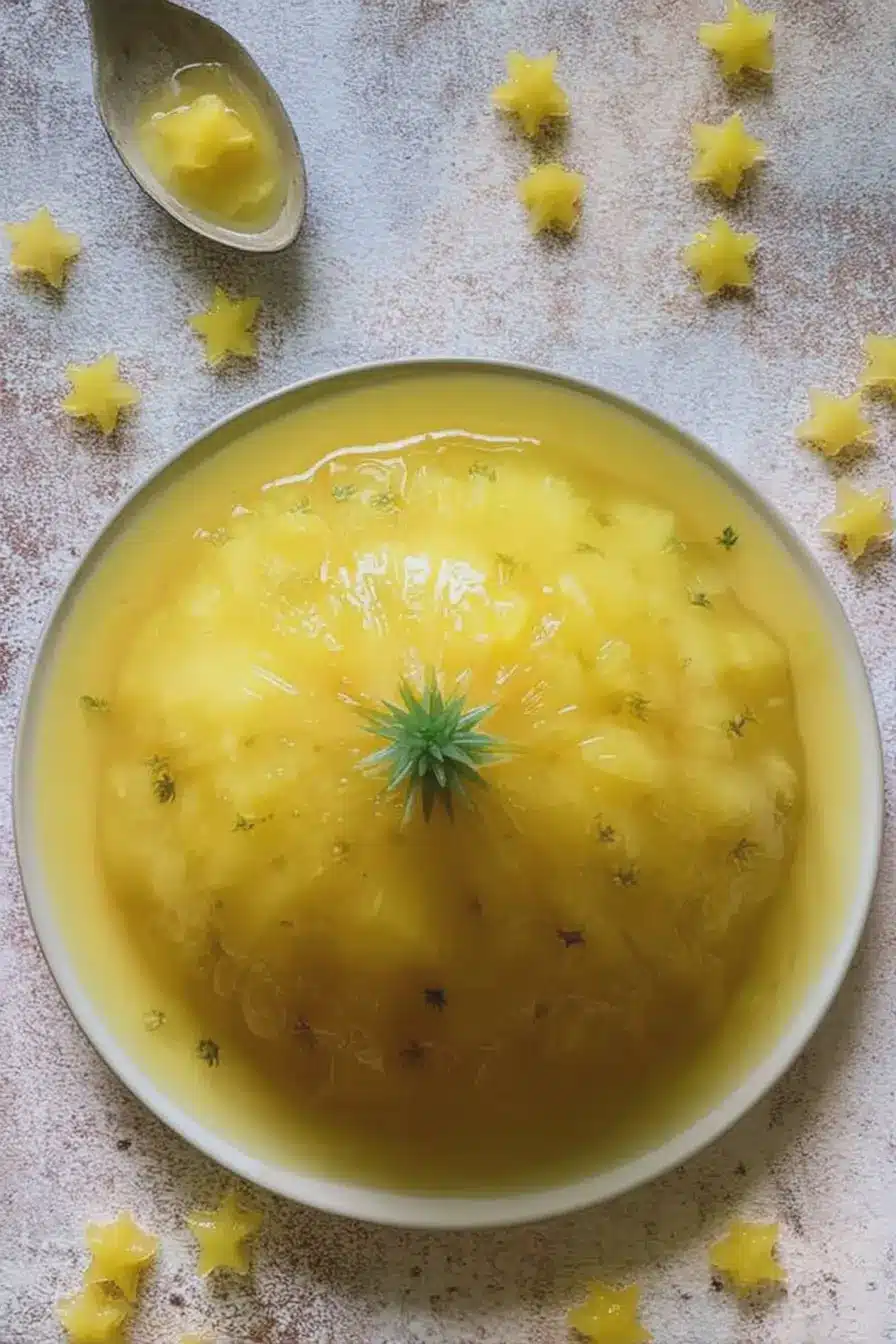
Vegan Pineapple Jelly Dessert
Ingredients
Method
- Boil pineapple skin: Add water, sugar and pineapple skin in a heavy-based pan and bring to the boil. Simmer for 20 minutes.
- Add agar agar: Strain the pineapple-infused water and bring it back to the boil. Using a whisk stir in the agar agar. Boil for 5 minutes stirring continuously.
- Add the pineapple slices and stir well. Boil for another 2-3 minutes. Pour the mixture in a bowl or mould and leave to cool before setting in the fridge for at least 2 hours.
- Pineapple sauce: Blend the pineapple slices in a blender and boil with 1 tsp sugar for 2 minutes. Chill for 30 minutes.
- Serve: Serve the jelly with a garnish of mint leaves and pineapple sauce and enjoy.