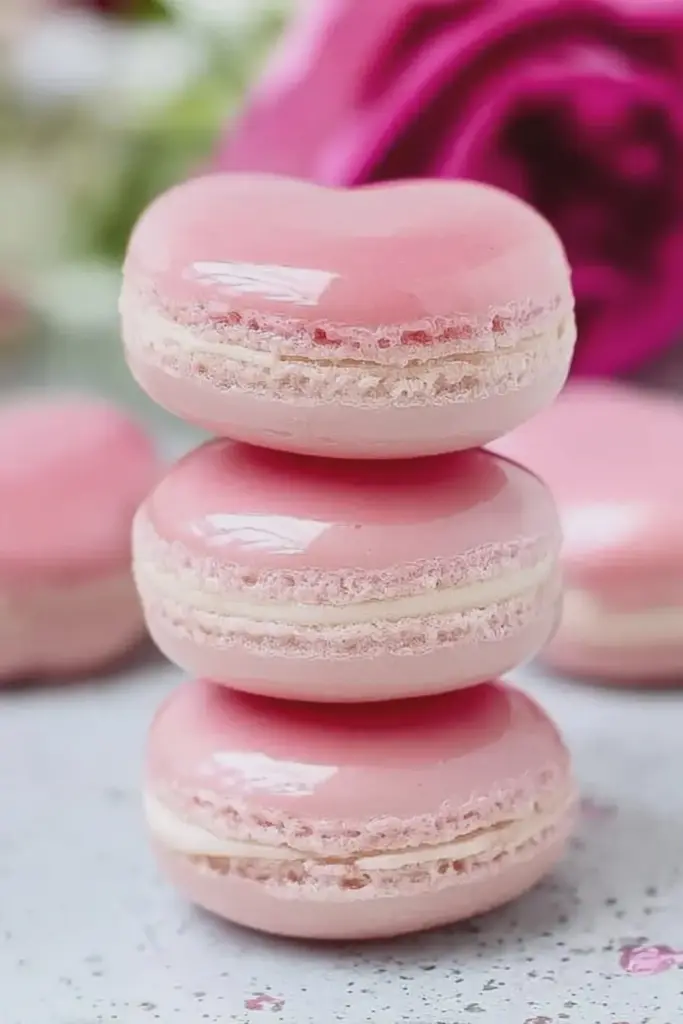
I remember the first time I folded lychee puree into a white-chocolate filling: the room filled with a soft, floral perfume that made every misstep worth revisiting. In my kitchen I refined the balance—less syrupy sweetness, more of the fruit’s subtle acidity—until the filling tasted like a delicate echo of the fresh fruit. These macarons became a practice in restraint as much as technique.
Over several batches I learned how fragile both the shells and the fillings can be: humidity will flatten a promising batter in minutes, and an overly soft buttercream will blur the clean silhouette of a finished macaron. I keep a small notebook of little changes—how long I aged my whites, the exact fold count that gives me glossy, satiny peaks, the rest time that yields a glossy skin.
What I love most about these lychee-rose macarons is how they bridge cultures and moments. The lychee brings a fruit-forward sweetness familiar in Asian desserts; rose water introduces an elegant floral note that should never overpower but must linger. In the paragraphs that follow I will share the technical steps, sourcing advice, and presentation notes that helped me bring these flavors together consistently.
If you are a skilled home baker who appreciates precision, these macarons are an ideal project: they require attention to detail, but the rewards—arresting color, a refined floral aroma, and a tender chew—are worth the care.
Why These Delicate Lychee Rose Macarons Are Perfect for Skilled Home Bakers
These macarons pair a subtle fruitiness with floral nuance in a way that rewards technical care. Because the lychee is naturally sweet with a faint acidity, it harmonizes with rose without one masking the other. You will find this project satisfying if you enjoy refined flavor layering and controlled technique rather than quick improvisation.
What makes this an excellent exercise for advanced bakers is the intersection of precise pastry skills—stable meringue, controlled macaronage, and confident piping—and delicate flavor work: balancing lychee juice, white chocolate, butter, and rose without creating an overly sugary filling. Expect to refine your folding rhythm, bench time, and your sense for batter sheen.
These flavors have cultural resonance across Asia, often chosen for weddings and festivals where a fragrant, floral profile is preferred. Visually, the pale pink shells with their glossy tops and neat feet make a striking presentation for special occasions like tea service or intimate celebrations.
Everything You Need for Delicate Lychee Rose Macarons
Set up like a small pastry station. A clean workspace, a digital kitchen scale, and a reliable stand mixer make reproducibility simple; a good thermometer and a fine-mesh strainer will prevent texture problems later. Source fresh or high-quality canned lychees and a clear, food-grade rose extract—these two ingredients determine the character of your finished macaron.
- Stand mixer with whisk and paddle – Provides the consistent meringue whip and the controlled creaming for buttercream.
- Food processor or blender – For puréeing whole lychees smoothly.
- Fine-mesh strainer – To separate clear lychee juice from pulp for a clean filling.
- Digital kitchen scale – Accuracy in weights is essential for stable shells.
- Silicone baking mats or parchment and macaron template – For uniform shells and even heat distribution.
- Thermometer – For checking meringue temperature when using a warmed-sugar stabilization method.
- Quality lychees (fresh or tin-packed in light syrup) – Fresh lychees give brighter fragrance; canned lychees are convenient year-round. Choose fruit that smells sweet and floral, and avoid overly fermented or dried specimens.
- Food-grade rose water and rose extract – Use a clear, high-quality product; rose water gives subtle aroma while a tiny amount of extract supports the flavor without turning medicinal.
- White chocolate and unsalted butter – White chocolate provides body and stability to the lychee filling; use couverture if possible for a cleaner melt.
Ingredient sourcing tip: for lychees, pick firm fruit with a fragrant aroma if buying fresh; if using canned, choose those packed in light syrup rather than heavy syrup. For rose, look for products labeled for pastry that list only natural distillates or high-quality extracts—cheap rose oils can taste soapy.
How to Make Delicate Lychee Rose Macarons (Step-by-Step)
Below I walk you through the core stages—shells, lychee filling, rose buttercream, and assembly. These are technique-focused steps; exact ingredient weights and baking times belong in the recipe card handled separately.
- Prepare your workspace: weigh dry ingredients, age egg whites if desired, line trays, and preheat the oven when you are ready to bake.
- Process almond flour and icing sugar to a fine, even texture to avoid grainy shells; sift if necessary to remove any lumps.
- Make the meringue using your preferred method (Italian or Swiss gives stability); warm the whites and sugar carefully if using a warmed method and whip to glossy, firm peaks.
- Macaronage: fold the dry mix into the meringue with a spatula. Aim for a lava-like ribbon that flows slowly off the spatula and smooths into the batter in about 10–15 seconds. Stop when the batter reaches that point to avoid overworking.
- Pipe uniform rounds using a template; tap trays firmly against the counter to remove large air bubbles and pop any residual bubbles with a toothpick.
- Allow piped shells to rest until a thin skin forms; when properly rested, the surface will no longer stick to a fingertip and will resist gentle pressure.
- Bake on the middle rack; look for developed feet and a set top. Rotate trays as needed for even color.
- Prepare lychee component: puree lychees, strain for clear juice, and reduce with a little sugar and corn starch to a thickened glaze; combine with chopped white chocolate and butter to form a smooth lychee cream.
- Make rose buttercream: create a stable buttercream using a creamed butter base (or Swiss method) and season it with measured rose water and a drop or two of rose extract. If the buttercream appears curdled while creaming, continue beating; it will come together as it reaches room temperature.
- Assemble: pipe a thin ring of rose buttercream as a dam on one shell, add a small spoonful or piping of lychee cream inside the dam, top with a little dehydrated lychee pulp for texture, then close with the matching shell.
- Mature assembled macarons in the refrigerator for at least 24 hours to allow the flavors to meld and the shells to soften to the ideal texture.
The secret to perfect macaron shells: ageing, folding, and piping
Three elements reliably raise your success rate: aged whites, a disciplined folding technique, and confident piping. Each affects texture and appearance in its own way.
- Aging egg whites – Aging stabilizes proteins by slightly drying the whites, improving meringue volume and consistency. I often age mine overnight in a covered container in the fridge if time allows.
- Folding technique – Use broad strokes: scoop from the bottom, fold across the middle, and turn the bowl. Count folds in batches and watch the batter’s sheen. Stop folding when it forms a ribbon that settles back into the bowl in a slow, continuous stream.
- Piping – Hold the bag vertically about a quarter inch above your template and apply steady pressure. Keep the same wrist angle throughout a tray to create uniform height. Tap the tray to level the tops and release trapped air.
- Aesthetic presentation – For a polished look, pair shells of consistent size and color; a light dusting of edible rose dust or a single tiny lychee piece atop the filling (sealed with a dab of chocolate) can make each macaron look bespoke.
Why temperature and meringue choice change everything
The stability of your meringue and the behavior of your batter in the oven are highly temperature-dependent. Understanding this will reduce cracked shells and hollows.
- Meringue temperature – If you use a warmed-sugar method, heat the sugar to the correct temperature and monitor the mixture with a thermometer so the egg whites are stabilized without cooking. This produces a glossy, stable meringue that holds structure during macaronage.
- Room and oven temperature – High humidity or a very warm kitchen will soften batter and prolong skin formation; humid days often require longer rest times or a dehumidified room. Conversely, overly cool conditions can prevent proper feet from forming.
- Choice of meringue – Italian meringue is the most forgiving for beginners and yields a stable shell; Swiss meringue is also stable but requires careful temperature control. Choose the method that matches your comfort with sugar work and your equipment.
Using real lychees: how to prep pulp, juice, and balance floral sweetness
Real lychees bring brightness and a delicate perfume that canned juice alone cannot fully replicate. Use both juice and a little dehydrated pulp to incorporate texture and true fruit character.
- Puree whole lychees in a food processor until smooth. For a cleaner filling, pour the puree through a fine sieve and reserve the clear juice separately from the pulp.
- Reduce the clear juice gently with a small amount of sugar and a starch slurry to create a glossy, slightly thickened lychee cream. Temper this hot mixture into chopped white chocolate and butter to make a smooth emulsion.
- Save a small amount of the strained pulp. Dry it briefly in the fridge (covered with plastic with holes poked) to concentrate the flavor and prevent the filling from making the shells soggy.
- Balance the floral character by adding rose water sparingly; a little goes a long way. If you prefer a brighter fruit edge, increase a touch of citrus acid (a few drops of lemon) to lift the lychee without making it overtly citrusy.
- Fresh vs canned lychees: fresh fruit has cleaner acidity and a perfume that shines through; canned is convenient and consistent. If using canned, rinse briefly if they are in very sweet syrup, then proceed to puree.
Pro Tip for Delicate Lychee Rose Macarons Made with Real Lychees: Create a Buttercream Dam to Protect Shells
I always build a buttercream dam when assembling fruit-forward macarons. The dam acts as a moisture barrier so the shell maintains its structure while the interior remains soft and flavorful.
- Pipe a ring of stable rose buttercream around the edge of one shell to form a collar or “dam.” The ring should be tall enough to contain the lychee cream without touching the top shell when closed.
- Spoon or pipe the lychee cream inside the dam, then add a small spoonful of the dried/dehydrated lychee pulp for texture.
- Top with another small dab of lychee cream before closing with the matching shell to ensure even contact and to avoid air pockets.
- Consistency note: the buttercream must be firm enough to hold shape at room temperature but soft enough to pipe smoothly; chill briefly if it becomes too loose.
Instruction to the recipe writer: generate the Pro-Tips, Troubleshooting, and Variations sections as bulleted lists for high scannability.
How to Store, Mature, and Serve Delicate Lychee Rose Macarons
Proper storage and maturation improve texture and harmonize flavors. When I plan service, I assemble the macarons a day ahead and refrigerate them to let the lychee and rose meld.
- Short-term storage – Store assembled macarons in an airtight container in the refrigerator; they keep best for up to a week.
- Freezing – Freeze in a single layer in an airtight container for longer storage; defrost in the fridge to avoid condensation on the shells.
- Maturing – A minimum of 24 hours in the fridge after assembly softens the shell just enough and allows the flavors to integrate; this step is essential for the best texture.
- Serving temperature – Serve slightly chilled to showcase the refreshing lychee and the soft buttercream texture.
- Presentation – Arrange macarons on a shallow platter with a light dusting of edible rose powder or a single candied lychee half on top of a few pieces for contrast. Uniform size and neat piping make the display feel professional.
- Pairings – These macarons pair beautifully with light teas such as jasmine, silver needle white tea, or a subtle oolong. For a plated dessert, serve alongside a small scoop of jasmine or lychee sorbet, or a delicate panna cotta infused with rose.
Frequently Asked Questions
What do I need to make delicately flavored lychee rose macarons?
You’ll need almond flour, icing sugar, egg whites, granulated sugar, cream of tartar, pink gel color, corn starch, lychee juice, white chocolate, and butter, along with rose water and rose extract.
How long do I need to refrigerate the macarons before serving?
It’s recommended to assemble the macarons and then refrigerate them for 24 hours to allow the flavors to mature, which enhances their taste and texture.
Can I use fresh lychees instead of canned for this recipe?
Yes, you can use fresh lychees! Just make sure to puree them and strain the juice similar to the instructions provided for canned lychees.
What tips do you have for achieving perfect macaron shells?
A key tip is to ensure your egg whites are aged, fold the batter gently to incorporate air, and practice piping to create uniform shells. Let them rest before baking for a proper crust!
How should I store leftover macarons?
Store leftover macarons in an airtight container in the refrigerator for up to a week, or freeze them for longer preservation.
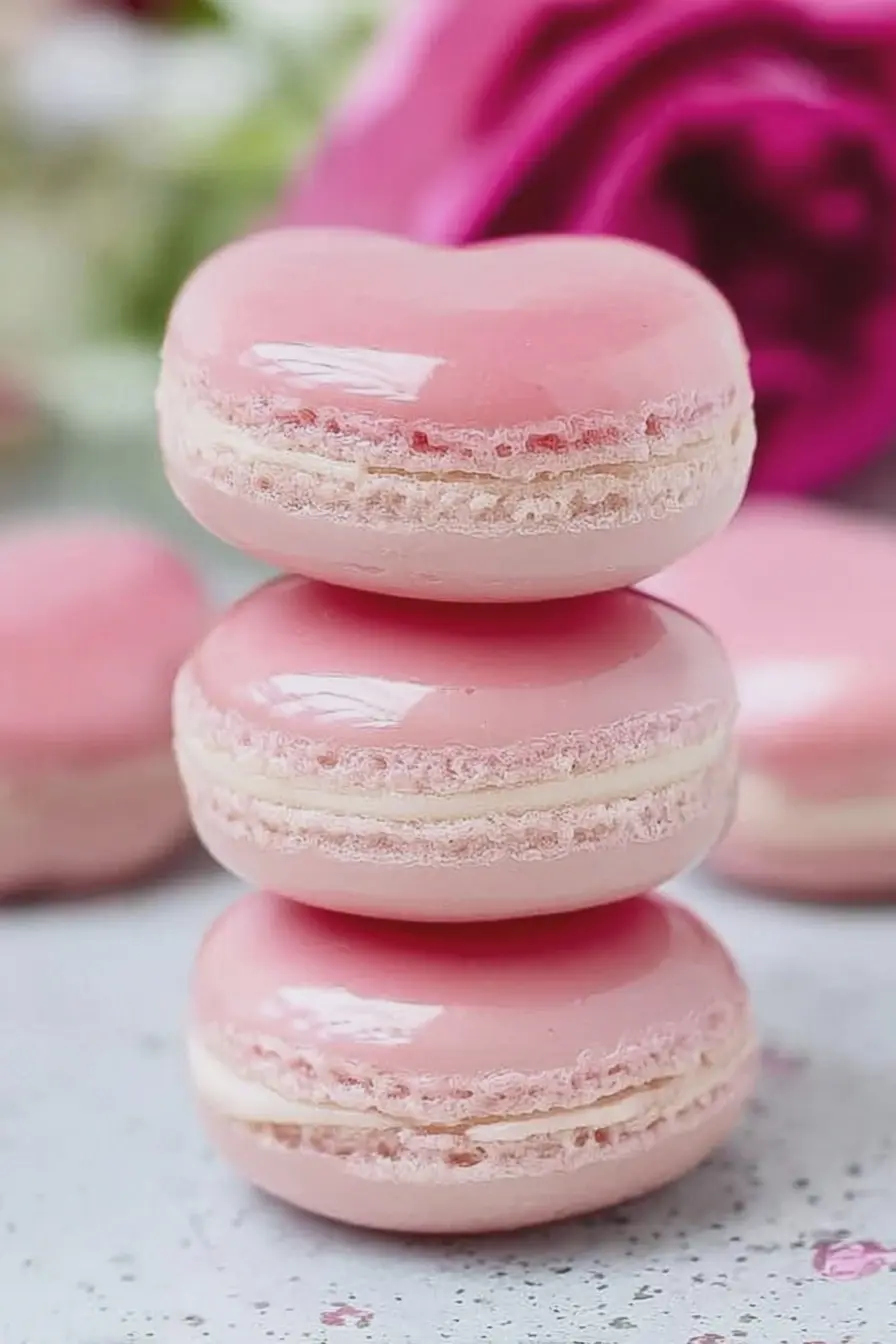
Delicate Lychee Rose Macarons Made with Real Lychees
Ingredients
Method
- Follow the instructions on the Best Macaron Recipe to make the shells.
- Set butter out at room temperature.
- Pulse whole lychees in food processor until you get a fine puree and strain.
- Dehydrate the pulp overnight if possible.
- Chop up white chocolate and make the filling with lychee juice and butter.
- Prepare the buttercream and assemble the macarons.